I’m Not the Mom I Thought I’d Be — And That’s Okay


When I first became a mom, I had ideas.

Not just little ones, but full pictures in my head of how life would look.

What kind of mom I would be.
What kind of home I would create.
Who my kids would grow up to become.

I did not think of it as expectations at the time.
It felt more like hope.

I wanted a doctor.
Two nurses.
A veterinarian.

I wanted stability for them.
Security.
A life that felt a little more certain than the one I had known.

And I worked hard toward that in my own way.
Raising them.
Showing up.
Trying to guide them toward what I thought would give them the best future.

But life does not follow the plans we make in our heads.

And kids are not meant to become our plans.

They are meant to become themselves.

Somewhere along the way, I had to face a quiet truth.

My kids are not who I once imagined they would be.

They are not following the paths I pictured.
They are not fitting into the neat little futures I had hoped for.

And for a moment, that felt like loss.

Not because there is anything wrong with them.
But because I had to let go of the version of their lives that existed in my mind.

That is a hard thing to admit.

As parents, we do not like to say that part out loud.

But here is what I know now.

My kids are good people.

They are strong in ways that do not show up on paper.
They are learning, growing, struggling, and figuring life out in real time.

And they still call me.

When things get hard.
When they need advice.
When they just need someone to listen.

That means something.

Maybe everything.

Because at the end of the day, that was always the goal, even if I did not realize it at the time.

Not perfection.
Not a specific career path.
Not a life that looks impressive from the outside.

But connection.

Trust.

A relationship that lasts beyond childhood.

I am not the mom I thought I would be either.

I have changed.
Life has changed me.

There are things I would do differently if I could go back.
There are things I have had to learn the hard way.

And there are moments where I have questioned myself more than I ever expected to.

But I am still here.

Still showing up.
Still loving them the best way I know how.
Still learning alongside them instead of trying to control the outcome.

And maybe that is what motherhood really is.

Not raising perfect kids.
Not following a perfect plan.

But walking beside imperfect humans as they figure out who they are.

And learning to let them.

So no, my life does not look like I thought it would.

My kids are not who I once imagined.

And I am not the mom I expected to be.

But we are real.

We are connected.

We are still choosing each other, over and over again.

And that is more than enough.
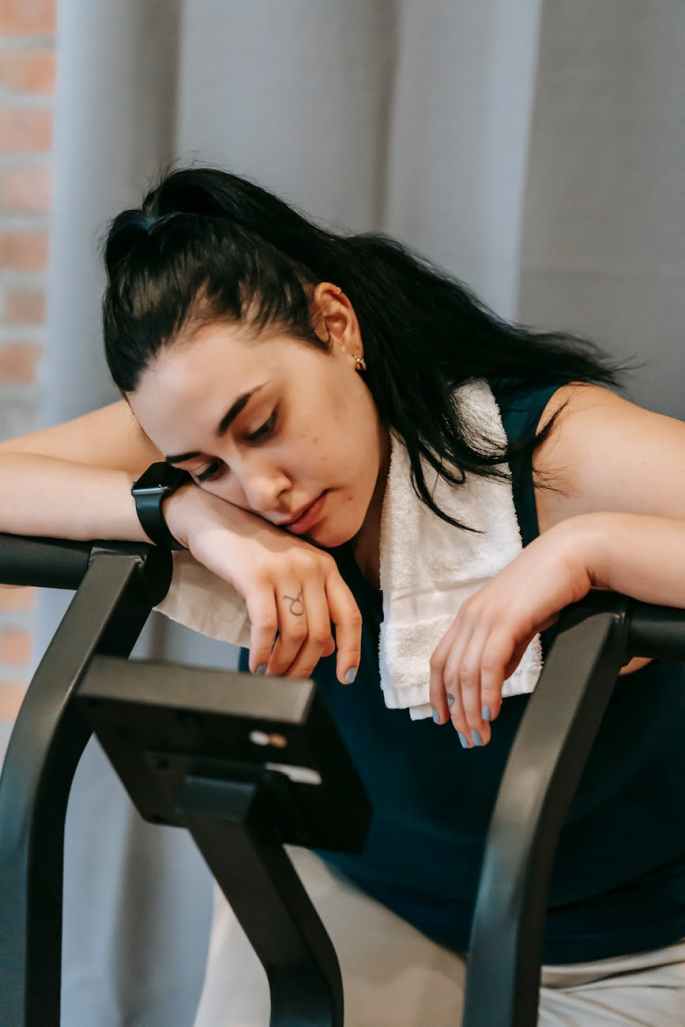
Mom Burnout Doesn’t Always Look Like Breaking Down


When people talk about burnout, they usually picture someone falling apart.

Crying.
Snapping.
Completely overwhelmed and unable to keep going.

And sometimes it does look like that.

But sometimes it doesn’t.

Sometimes burnout is quiet.

It looks like getting up every day and doing exactly what needs to be done, but feeling nothing while you do it.
It looks like checking the boxes, answering the calls, making the meals, showing up for everyone… and still feeling like you are not really there.

Not sad enough to fall apart.
Not okay enough to feel at peace.

Just somewhere in the middle.

Stuck.

I think that version of burnout is harder to recognize, because from the outside, everything looks fine.

You are still functioning.
The house is still running.
The kids are still cared for.
Life is still moving forward.

But inside, something feels off.

You are tired in a way that sleep does not fix.
You are overwhelmed in a way that is hard to explain.
You are needed constantly, and somehow still feel invisible.

And then comes the guilt.

Because how do you admit you are burned out when you are still doing everything you are supposed to do?

How do you say you are struggling when nothing is technically falling apart?

So you don’t.

You push it down.
You tell yourself other people have it harder.
You remind yourself to be grateful.

And you keep going.

That is what a lot of mom burnout actually looks like.

It is not always a breaking point.

Sometimes it is a slow fading.

A quiet losing of yourself in the middle of taking care of everyone else.

A life that starts to feel more like responsibility than something you are living.

And the hardest part is, you can stay there for a long time.

Because nothing forces you to stop.

There is no clear moment where everything crashes and demands your attention.

There is just that quiet voice in the back of your mind that says, something is not right.

If you are in that place, I want you to hear this.

You do not have to fall apart for your burnout to be real.

You do not have to earn rest by reaching a breaking point.

You are allowed to acknowledge that you are tired.
You are allowed to admit that something feels off.
You are allowed to need more than just getting through the day.

Not every season is meant to feel full and meaningful and balanced.

Some seasons are heavy.

But you are still in there somewhere.

Even if you feel a little disconnected.
Even if you are just going through the motions right now.

This is not the end of you.

It is a signal.

A quiet one, maybe.
But an important one.

And maybe the next step is not fixing everything all at once.

Maybe it is just noticing.

Maybe it is just being honest with yourself.

Maybe it is just giving yourself permission to say, this is harder than I thought it would be.

That matters.

More than you think.

The Version of Me I Had to Let Go Of


I used to know exactly where my life was going.

Or at least, I thought I did.

For most of my adult life, I was two things: a mom and a woman working toward becoming an English teacher. Every step I took felt intentional. Every late night, every class, every moment of juggling kids and coursework – it all had a purpose.

There was a finish line.

And I reached it.

I earned the degree. I stepped into the classroom. I became the version of myself I had been building toward for years.

And then, just like that… it was over.

Not because I failed.
Not because I didn’t care.
Not because of the kids.

But because life shifted in a way I didn’t expect.

After two years in the classroom, and after an injury that forced me to stop and really look at everything, I realized something I wasn’t prepared to admit:

Education, in the way it exists right now, wasn’t for me.

That realization didn’t come with relief at first.

It came with grief.

Because I wasn’t just walking away from a job –
I was letting go of a version of myself I had spent years becoming.

And no one really talks about that part.

No one tells you how disorienting it is to outgrow a dream you worked so hard for.
How quiet it feels when the path you were so sure about… just ends.
How you’re left standing there asking, now what?

But it wasn’t just about my career.

I also had to let go of expectations I didn’t even realize I was holding onto.

Who I thought I’d be by now.
Where I thought I’d be by now.
Who I thought my kids would become.

That one is the hardest to say out loud.

Because as parents, we don’t always notice when our hopes quietly turn into expectations. We imagine futures for them – safe ones, successful ones, maybe even easier ones than what we had.

But our kids?

They are their own people.

And the truth is… mine are not who I once imagined they would be.

They are better in some ways.
More complex in others.
They have real struggles, real challenges, real lives that don’t fit neatly into the picture I once held in my mind.

And you know what?

That doesn’t mean anything went wrong.

It means they’re human.

It means they’re becoming.

And somehow, even now – maybe especially now – they still call me when they need a little help. A little guidance. A little piece of home.

So maybe I didn’t fail at motherhood either.

Maybe it just looks different than I expected.

And maybe that’s the theme of this season of my life:

Letting go of what I thought it would be…
to make room for what it actually is.

I won’t pretend that process is easy.

There are still moments where I grieve the life I thought I’d have.
The version of me I thought I’d be.
The timeline I thought I was on.

But there’s also something else, quietly growing underneath all of that:

Space.

Space to ask new questions.
Space to rediscover what I love.
Space to figure out what’s next – not based on who I thought I had to be, but who I actually am.

Because here’s what I’m learning:

Letting go isn’t the end of your story.

It’s the part where you stop following a script… and start writing something real.

I may not be where I thought I would be.

But I am here.

I am okay.

My kids are okay.

And for the first time in a long time, I’m not chasing a version of life that no longer fits.

I’m standing in the middle of what is…

and slowly, honestly, figuring out what comes next.

2026 Saddle Up

2026: Saddle Up – Multiple Streams in a Changing America.   

      We are living in a rapidly shifting America. The news cycle moves at lightning speed, and if you let it, it can leave you feeling overwhelmed and uncertain.    

     Layoffs. Inflation. Political noise. Social division. It is a lot. But here’s the flip side.       

                                        We are also living in one of the most opportunity-rich times in history. Never before have ordinary people had such direct access to tools, platforms, and audiences that allow them to create income outside of a traditional 9–5. And while I have written before about the pressure to monetize every hobby (because yes, that pressure is real), there is a difference between feeling forced… and feeling empowered. If you want to crochet. If you want to sew. If you want to flip furniture. If you want to create content. There is no harm in building something that belongs to you.    

And in 2026 – The Year of the Horse – maybe it is time to ride….       

🧶Turning Hobbies into Income

You do not have to quit your job. In fact, keeping your standard job as a safety net while building something on the side is one of the smartest financial moves you can make.   

Here are some practical ways people are monetizing hobbies right now:  

Handmade & Creative Goods Selling on Etsy.   

Handmade or Vintage finds on eBay 

Local vendor markets and pop-up events.    

Custom orders through social media.

Crochet blankets.  

Quilts.  

Reusable bags. 

Seasonal décor. 

Digital downloads. 

Printable planners.  

There is a niche for almost everything. The key? Start small. Test the waters. You don’t need a warehouse –  you need consistency….   

 ♻️ Refurbish, Repurpose, Resell.  

  Some people see junk. Others see opportunity.   Furniture flipping. Thrift store reselling.     Estate sale sourcing.     Upcycling décor.     Restoring tools or equipment.        A $20 dresser and a weekend of sanding can turn into $200. Small margins add up when you learn what sells. And bonus: you are keeping items out of landfills….      

📱 The Digital Gold Rush: UGC & Affiliate Marketing.  

This is where things get interesting. Many brands now pay everyday people to create UGC (User Generated Content) – short videos, testimonials, product demonstrations -that they use for advertising.You do not need a massive following. You need: Clear audio. Decent lighting. Authentic delivery.             Opportunities include:

UGC creator platforms.    SKOOL, Discord                                    Affiliate marketing (earn commission for recommending products)   

 Amazon storefronts.   

 Digital course creation.

 Print-on-demand merchandising. 

Blogging with ad revenue.    

If you already talk about products you love, why not get paid for it?     

💼 Network & Financial Services Opportunities.   

  Some choose to build businesses through established companies like Primerica, insurance sales, or financial education services. These models require research, licensing, and understanding compensation structures — but for the right personality, they can create residual income streams and team-based growth.   

As with anything: do your homework. Understand the commitment. Make sure it aligns with your values.  

  ⚖️ The Balance: Productivity vs. Peace

Let me say this clearly. Not every hobby needs to become a hustle.The joy of crocheting just to crochet? Sacred. The peace of baking just to share? Beautiful. The creativity of writing just because you must? Necessary.      

But if you feel a pull, not pressure — a genuine curiosity about building something of your own, this is a uniquely powerful time to try.   

        You can:     

✅️Keep your day job.    

 ✅️Protect your benefits.  

✅️Experiment in evenings or weekends.  

✅️Fail quietly.     

 ✅️Learn loudly.       

 ✅️Adjust quickly.  

   Multiple streams of income are not about greed. They are about resilience….       

  🐴 2026: The Year of the Horse. 🐴         The horse represents momentum. Strength. Endurance. Forward motion.    Maybe this is not the year of frantic hustling. Maybe it is the year of intentional building. Start the Etsy shop. List the first item on eBay. Film the first UGC sample. Sign up for the course. Research the opportunity. Draft the business name.You do not have to gallop. You just have to move.  

  2026 is going to be a ride.  Let’s go.

A is for Addiction

Addiction.


Just sit with that word for a moment.
It carries weight. It sounds heavy. Shame-filled. Final. I can’t think of many positive things we associate with it.
I personally smoke cigarettes (working toward quitting), and I am absolutely a caffeine addict — and probably sugar too. But beyond my own habits, I have loved addicts. Not just romantically. Friends. Family. People I would go to the ends of the earth for.


So let’s ask the question plainly:
Is addiction a disease? A condition to be treated? Something recovery is possible from?
Yeah. Yes. It is.


What Is Addiction?
The American Society of Addiction Medicine defines addiction as:
A treatable, chronic medical disease involving complex interactions among brain circuits, genetics, the environment, and an individual’s life experiences. People with addiction use substances or engage in behaviors that become compulsive and often continue despite harmful consequences.


The National Institute on Drug Abuse explains it similarly — addiction is a chronic, relapsing disorder characterized by compulsive drug seeking and use despite negative consequences.
Chronic.
Medical.
Treatable.


Those words matter.


And here’s something else that matters:


In the United States, about 1 in 6 people struggle with a substance use disorder each year.
Millions more struggle with nicotine dependence.
Caffeine dependence is widely recognized.
Studies show that highly processed foods can trigger brain reward systems in ways similar to addictive substances.
This isn’t rare. This isn’t “those people.” This is us. Our neighbors. Our families.


We Joke About It… But Should We?
People casually say, “I’m a coffee addict.”
Or “I’m addicted to Diet Coke.”
Or “Don’t talk to me before my sugar.”
But do we understand the weight of that word?


Yes — you really can be addicted to sugar, caffeine, nicotine, and highly processed foods. That doesn’t make you weak. It makes you human with a brain wired for reward.
Our brains are designed to remember what feels good and to repeat it. Dopamine — the “feel good” neurotransmitter — reinforces behaviors that provide pleasure or relief. Over time, repetition becomes reliance. Reliance becomes dependence.
And dependence, when disrupted, becomes withdrawal.


The Logan Story
Let me tell you a story.
Logan was 10. His mom wasn’t much of a cook, so meals were mostly pre-packaged, fast food, convenient — and let me say clearly: fed is fed. No judgment. Survival comes first.
But when summer came, Logan went to stay with Dad and stepmom. They cooked fresh food. Fruits. Vegetables. Homemade meals. Grilled burgers and hot dogs.
Within days, Logan had what looked like the flu. Headaches. Fatigue. Irritability. Just not himself.
His big sister picked him up, took him to the movies and — yes — McDonald’s.
Miraculous recovery.
Until a week later, when the “flu” returned.
He wasn’t sick. He was withdrawing.
His body had become accustomed to high levels of sugar, sodium, and processed additives. When they disappeared, his system reacted.
Dad refused to reintroduce the fast food. They let his body recalibrate. It was uncomfortable. It was eye-opening. And it was very real.
Logan didn’t know he was dependent.
But his body did.


It’s All the Same Brain
Opioids.
Nicotine.
Methamphetamine.
Alcohol.
Sugar.
Caffeine.


Different substances. Same reward circuitry.
When we remove what the brain has grown used to, the body protests.


Withdrawal can look like:
Headaches
Fatigue
Anxiety
Irritability
Nausea
Depression
Physical pain


Some withdrawals are uncomfortable. Some are dangerous. Some are life-threatening.
But the mechanism? The brain wanting what it has been trained to expect.


So Where Do We Start?


We start by naming it.


Without shame.


We stop whispering about addiction like it’s a moral failure. We stop labeling people as “weak” or “lacking willpower.”
We start asking:
What pain is this numbing?
What pattern is this reinforcing?
What support is missing?
Addiction thrives in isolation. Recovery thrives in connection.
Somewhere, there has to be a conscious decision to become mindful of what we are putting into our bodies — and why.


Not with judgment.
With curiosity.


My Truth
I am a caffeine addict.
I am nicotine dependent.
I am working on both.
And I have loved addicts.


Deeply.


We need to help one another make better choices instead of judging someone’s struggle. Because it could be you. It could be me. It could be someone you love.
Addiction is not a character flaw.


It is a condition.
It is treatable.
Recovery is possible.


And compassion? That should be non-negotiable