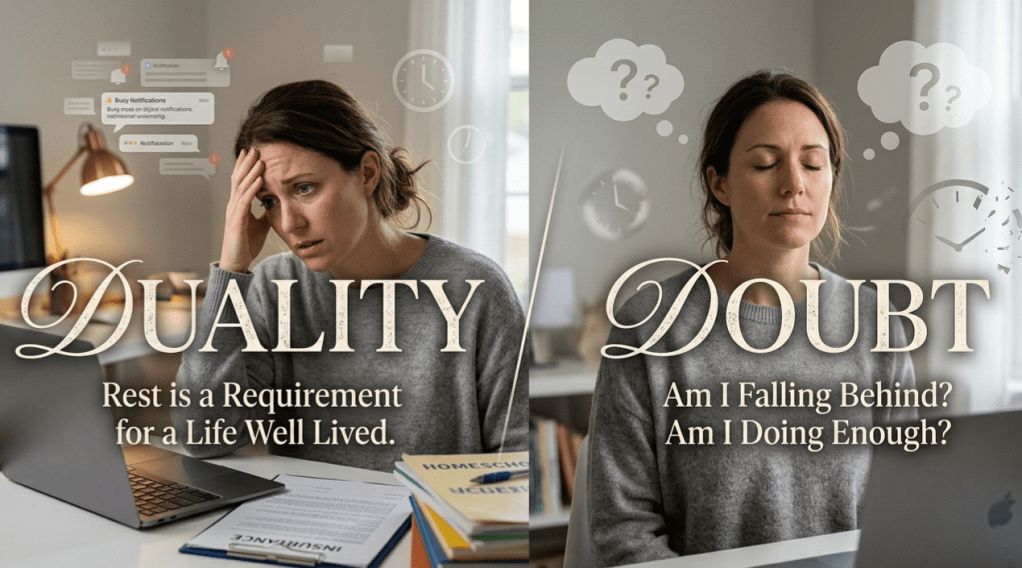
D is for Duality & Doubt: The Monday Morning Backlash


Last week, we waded through the thick of the chaos. We stood face-to-face with the friction of the empty space—that deeply uncomfortable territory where we intentionally stop rushing, clear out the noise, and force ourselves to just sit with the quiet.


If you tried to hold that empty space over the weekend, you know exactly how brutal it is. I personally kept my laptop closed and worked on some things around the house, cleaning, rearranging, and spent some time with my husband. I baked a chocolate cake Sunday afternoon that didn’t quite turn out how I had hoped. But it was a learning experience.


And as the laptop lid lifts open this Monday morning, a brand-new monster is waiting for us.
Welcome to Duality and Doubt.


Once you choose to clear out the chaos, your brain doesn’t just automatically hand you a crown of peace. Instead, a massive internal friction sets in. We find ourselves living a double life inside our own heads.
One version of you—the wise, grounded version—knows deep in your bones that protecting your space is a matter of survival. But the other version, the one conditioned by a world that demands a constant production line, stands over you whispering that your stillness is a failure.


The moment the weekly schedule kicks into gear, these two versions collide, bringing a swift, heavy wave of doubt.
You open the inbox, you look at the tasks ahead—the insurance training and compliance updates, the lesson plans to map out, the physical home to maintain—and the second-guessing begins. Did I lose ground by slowing down? Am I already behind? Did I actually earn the right to breathe?


We are so hooked on constant motion that when we finally create an empty space, we treat it like a crime we have to pay for on Monday morning. We feel the urge to sprint out of the gate at a million miles an hour, frantically overcompensating just to prove we are still worthy.


But true reclamation isn’t about clearing the chaos on Friday just to drown in the doubt on Monday.
The duality we have to master this week is learning how to hold onto our internal stillness while we do the work. It is knowing you can be deeply productive without being frantic.


As you step into the demands of this week, don’t let the Monday morning backlash trick you into running a race you weren’t meant to run. The work will always be there, but your peace belongs to you. Pace yourself today.

Did the doubt hit you the second you opened your screen this morning? How is your brain trying to make you pay for the empty space you kept this weekend?

The Quiet Discomfort of the Closed Laptop

On Monday, we talked about the danger of the blur—that exhausting space where your work life, your home life, and your school day bleed together until you are running on empty. We talked about the antidote: building micro-boundaries, shutting the screen, and putting the phone in a basket.
It sounds so good on paper. It feels like a victory when you actually do it.
But if we are being completely honest, no one talks about what happens right after you shut the laptop or put the phone away.
No one talks about the silence. And no one talks about how incredibly loud that silence can be.
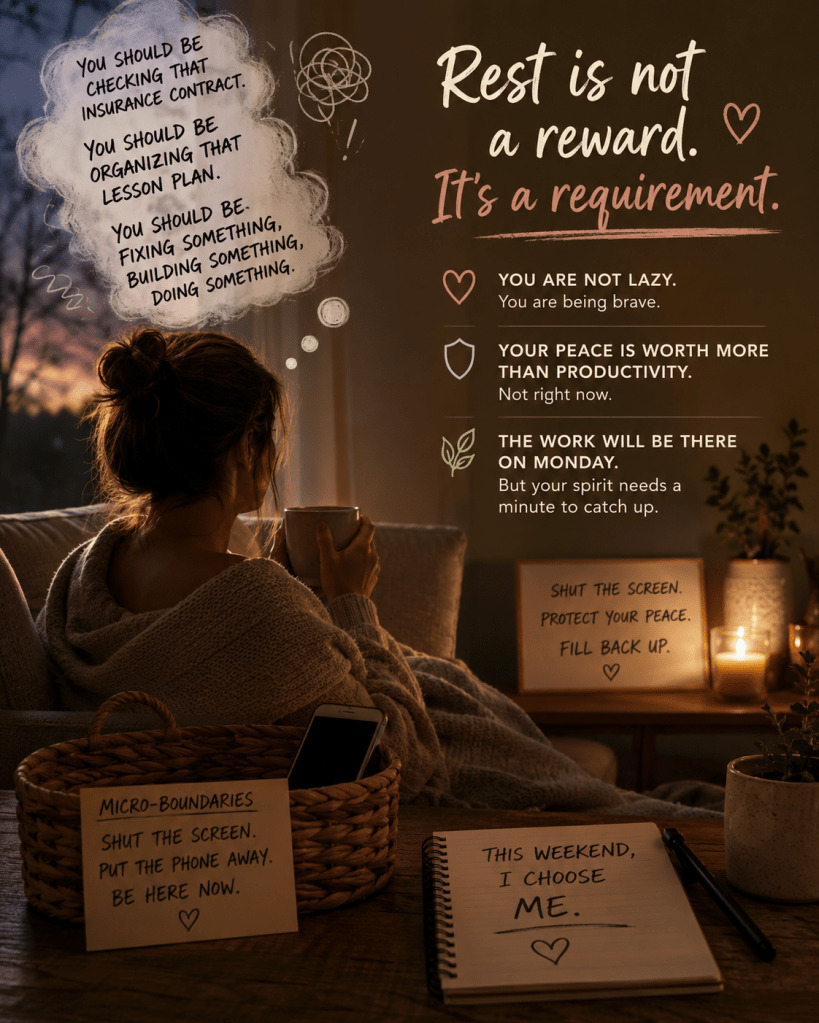
The moment you enforce a boundary and step away from the production line, a weird kind of panic can set in. You sit down on the couch, or you step into the kitchen, and instead of feeling a wave of peace, you feel a wave of guilt. Your brain, which has been conditioned to run at a million miles an hour, starts screaming at you:
You should be checking that insurance contract. You should be organizing that lesson plan. You should be fixing something, building something, doing something.
We live in a culture that treats constant motion as a badge of honor. We are conditioned to believe that if we aren’t producing, we are failing. So when we finally force ourselves to stop, the quiet doesn’t feel like a reward—it feels like an withdrawal.
It is deeply uncomfortable to just sit still.
But here is the truth we have to remind ourselves of as we head into the weekend: Rest is not a reward for a job well done. It is a requirement for a life well lived.
When you choose to step away, you aren’t being lazy. You are being brave. It takes an incredible amount of courage to look at an endless to-do list, look at a world demanding your attention, and say, “Not right now. My peace is worth more than this productivity.”
If you close the screen this weekend and find yourself wrestling with the guilt of doing nothing, take a deep breath. Let the discomfort sit there. It’s just your brain unlearning a bad habit.
The work will be there on Monday. The chaos isn’t going anywhere. But your spirit needs a minute to catch up with your body.
Give yourself permission to sit in the quiet this weekend, even if it feels a little awkward at first. You aren’t falling behind; you are just filling back up.

The Soundtrack of May: Finding the Melody in the Transition


There is a specific frequency to May in this part of Texas. The “blackland” is vibrant, the mornings still hold a lingering coolness, and the world feels like it’s humming a brand-new tune. As a songwriter, I can’t help but listen for the rhythm in it all—the way the wind catches the fence line or the steady, rhythmic chirping of the birds before the afternoon heat settles in.


By May 1st, we aren’t just “planning” for growth anymore; we are living right in the middle of it. If April was about the quiet work of the roots, May is the full-blown chorus.


Listening to the Layers


In a good song, the layers have to work together. You have the steady beat of the drums (the daily chores, the family schedules, the “must-dos”) and the soaring melody (the dreams, the creative sparks, the “could-bes”).


Lately, I’ve been practicing the art of listening to those layers without getting overwhelmed by the noise.
The Steady Beat: The familiar sounds of a full house—the laughter, the front door swinging open, the clatter of life. It’s the anchor that keeps everything else grounded.


The Creative Counterpoint: That sudden lyric that hits you while you’re folding laundry or the melody that starts to form while you’re out walking. It’s the reminder that even in the busiest seasons, there is room for a new song.


Changing the Key


Sometimes, life asks us to change the key. Maybe the pace is picking up, or the “sound” of your season is shifting from a quiet acoustic ballad to something a bit more upbeat and demanding. That shift isn’t a bad thing; it’s just a transition.
I’m learning that you don’t have to fight the change in tempo. You just have to find your footing in the new rhythm.

Whether you are navigating a career shift, a creative milestone, or just the changing needs of your family, there is a melody there if you’re quiet enough to hear it.


What is Your Song Today?


Take a second today to really listen—not just with your ears, but with your heart.


What is the “hook” of your life right now?


Is it a song of peace, a song of hustle, or a song of quiet resilience?


As we step into May, I’m keeping my notebook close and my heart open to the music of the everyday. There is so much beauty in the transition if we just stop to hear it.


I’d love to know: if your life had a soundtrack right now, what would the genre be? Let’s talk about the music of our lives in the comments!

Surviving Overwhelm: Mental Health Tips for Today

Coping With Mental Health in Trying Times: Surviving the Storm When Everything Feels Overwhelming

There are moments in life when it feels like the weight of the world is pressing down on you. The kind of moments where everything seems to be stacking up—the bills are piling high, school is back in session, and the news feels like a relentless wave of tragedy. The pressure builds, leaving you running on fumes, emotionally drained, and unsure of how much more you can take.

Right now, many of us are living through a perfect storm of challenges. The reality of rising costs, personal responsibilities, and the heavy weight of constant bad news can leave you feeling overwhelmed, anxious, and even numb. If you feel like you’re just taking it day by day, doing your best to survive, you’re not alone. And while these times are undeniably difficult, there are ways to cope, find balance, and regain a sense of peace. Here are some strategies to help you navigate the mental strain of living through these trying times in America.

1. Acknowledge the Reality of What You’re Feeling

One of the hardest parts of mental strain is the guilt that often comes with it. We’ve been conditioned to push through, to “keep going” no matter what. But it’s okay to not be okay. When life is overwhelming, acknowledging your feelings is the first step toward healing. Whether you’re angry, scared, numb, or sad, allow yourself the space to sit with those emotions without judgment. You don’t have to be “better” or “stronger” every single moment.

When you name your emotions, you take the first step toward regaining control. Feeling overwhelmed is a natural response to these challenging times, but it doesn’t define you. By validating your emotions, you allow yourself permission to cope, heal, and move forward.

2. Practice Radical Self-Care (Yes, It’s Important!)

Self-care has become a buzzword in recent years, but it’s not just about face masks and bubble baths—it’s about setting boundaries and prioritizing your mental and physical health. In times of stress, it’s easy to forget to take care of yourself, but the reality is that without a solid foundation, it’s harder to weather the storms of life.

Start with small, achievable acts of self-care that nourish your body and mind. This could mean:

  • Sleep: Rest is non-negotiable. When you’re running on empty, a solid night’s sleep is essential for emotional and mental recovery.
  • Nutrition: Eat nourishing foods that give your body the energy it needs to tackle the day, even if it’s just a balanced snack.
  • Movement: Whether it’s a walk, yoga, or a dance party in your living room, moving your body can release stress and elevate your mood.
  • Mindfulness: Practice mindfulness or meditation, even if it’s just five minutes of deep breathing. The present moment is all we have, and grounding yourself can offer some much-needed relief.

3. Limit Your Media Consumption

It can feel like the world is burning down when you’re constantly glued to the news. From national tragedies to political chaos, the media can feel overwhelming and relentless. While staying informed is important, there’s a fine line between being aware and being consumed by it.

Consider setting boundaries on how much news you consume daily, and make time for things that uplift you. Try a digital detox—take a day off from social media, limit your news intake, and focus on things that bring you joy, whether that’s reading a book, spending time with loved ones, or enjoying nature.

4. Reevaluate Your Priorities

When life feels like it’s in constant crisis mode, it’s easy to get caught up in the demands of work, school, finances, and responsibilities. But sometimes, it’s important to step back and ask yourself: What’s really important right now?

  • Can you delegate some tasks to make life a little less overwhelming?
  • Are there things you can let go of, even temporarily, to give yourself space to breathe?
  • Do you have the energy to take on everything on your plate right now, or is it okay to ask for help?

Setting boundaries around your time and energy is not only okay—it’s necessary. Whether it’s saying “no” to an extra project at work or asking a friend or family member for help with errands, reclaiming your personal time is essential for mental health.

5. Find Support in Your Community

You don’t have to go through tough times alone. Whether it’s a trusted friend, a support group, or a therapist, talking about your feelings can help you feel seen, heard, and less isolated. Sharing the burden with others, even if it’s just a text or a phone call, can make a world of difference.

If you’re not already, consider reaching out to a mental health professional. Therapists and counselors are trained to help you navigate difficult emotions and offer tools for coping. Therapy isn’t a sign of weakness—it’s a way to strengthen your resilience and build healthy coping mechanisms for the future.

6. Focus on What You Can Control

In times of chaos, focusing on the things you can control helps to ground you. You may not be able to change the headlines or the world’s circumstances, but you can take control of how you respond.

Maybe that means focusing on your daily routine, budgeting your finances, or creating small, achievable goals. When things feel out of control, taking one step at a time toward something you can manage brings back a sense of agency.

7. Find Purpose in the Chaos

It’s easy to feel lost and overwhelmed when things are falling apart around you. But sometimes, finding a sense of purpose can bring clarity. This might mean reconnecting with your passions, getting involved in your community, or finding new ways to help others.

When we’re able to focus on something larger than ourselves, it can put the stresses of life into perspective. Helping others or contributing to a cause can also bring a sense of fulfillment and connection that’s hard to find in times of isolation.

8. Remember, You’re Not Alone

Living in America right now can feel uniquely stressful—whether it’s economic struggles, political tensions, or social upheaval, the strain can feel heavy. But in these moments, remember: You are not alone. Millions of people are navigating these same challenges, even if it doesn’t always feel like it. It’s okay to lean on others, to ask for help, and to give yourself the grace you need to heal.

In these tough times, survival might look different for each of us. It might mean focusing on day-to-day coping strategies, seeking therapy, or simply taking a break from the news. Whatever your journey looks like, remember that it’s okay to not have all the answers, and it’s okay to take things one step at a time.

Conclusion: Keep Going, One Day at a Time

The light at the end of the tunnel may seem dim right now, but it is there, even if it’s hard to see. Each day you keep going is a victory. You’re doing your best, and that’s all you can do. Be kind to yourself. Take small steps to care for your mental health, and remember that it’s okay to seek support. In trying times, surviving isn’t just about enduring—it’s about finding ways to thrive, no matter how small those steps may seem.

If you’re struggling, know that there is help, and there is hope. Keep pushing forward, and know that brighter days are ahead.

love and light y’all!!!
The ABCs of Mental Health: Small Changes for Big Impact


Focusing on What We Can Control

Life can feel overwhelming at times, especially when we face challenges that are outside of our control. Worrying about the “what ifs” can keep us stuck, anxious, and drained. But when it comes to our mental health, one of the most powerful lessons we can learn is this:

Peace of mind comes when we focus on what we can control and let go of what we cannot.

The ABCs of mental health remind us that there are practical areas of our lives we can manage—daily choices that influence how we feel, how we cope, and how we show up for ourselves and others.

Let’s walk through some of the most important ones:


A – Awareness of What We Consume

We may not be able to control every thought that crosses our mind or every stressor that shows up in our day, but we can control what we allow into our bodies and minds.

  • Food: What we eat impacts not just our physical health but also our mental clarity and mood. A balanced diet rich in whole foods, water, fruits, and vegetables helps stabilize energy and emotions.
  • Media: What we consume online matters. Too much negative news or endless scrolling can fuel anxiety. Setting boundaries around social media and media consumption is a healthy choice we do control.

Being intentional with consumption—whether food, information, or energy—gives us strength and clarity.


B – Balance in Finances

Money is one of the leading causes of stress for individuals and families. While we cannot always control unexpected expenses or the economy, we can control how we spend, save, and plan.

  • Create a budget that supports your goals instead of drains your paycheck.
  • Choose mindful spending habits—distinguish between needs and wants.
  • Build an emergency fund, even if it’s just a small step at a time.

Financial peace doesn’t come from being wealthy—it comes from being intentional with the resources we already have.


C – Care Through Movement

Our bodies are designed to move. Exercise isn’t just about physical appearance; it is one of the most powerful tools we have for boosting mental health.

  • A brisk walk can clear your mind.
  • Stretching can release tension from stress.
  • Strength training or yoga can rebuild confidence and resilience.

We may not control every health diagnosis or physical limitation, but we can choose to move our bodies in ways that nourish us.


D – Deep Rest and Sleep

Sleep is often overlooked, yet it is vital for mental health. Yes, sometimes our minds race and rest feels hard to come by, but we can take steps to create a healthier sleep environment.

  • Stick to a regular sleep schedule.
  • Limit screens before bedtime.
  • Create a calming routine with reading, prayer, or meditation.
  • Keep your room cool, dark, and quiet.

We may not always control when sleep comes easily, but we can build habits that make rest more likely.


Letting Go Brings Freedom

When we shift our energy toward what we can influence, we take back power that stress and anxiety try to steal. The truth is:

  • We can’t control every circumstance.
  • We can’t control the choices of others.
  • We can’t control the unexpected.

But we can control how we respond, what we prioritize, and the daily actions that nurture our body, mind, and spirit.

And when we let go of what we cannot control, we make room for peace of mind, resilience, and growth.


Your challenge this week: Pick just one area—food, finances, exercise, or sleep—and make a small but intentional change. Remember, it’s not about perfection. It’s about progress, awareness, and focusing on the ABCs of what truly matters.