Today marks a fresh page in the notebook. If you caught my post Saturday August 1, on A New Beginning, you know we are stepping into this season with fresh intention, a clean slate, and a willingness to embrace where we are right now.
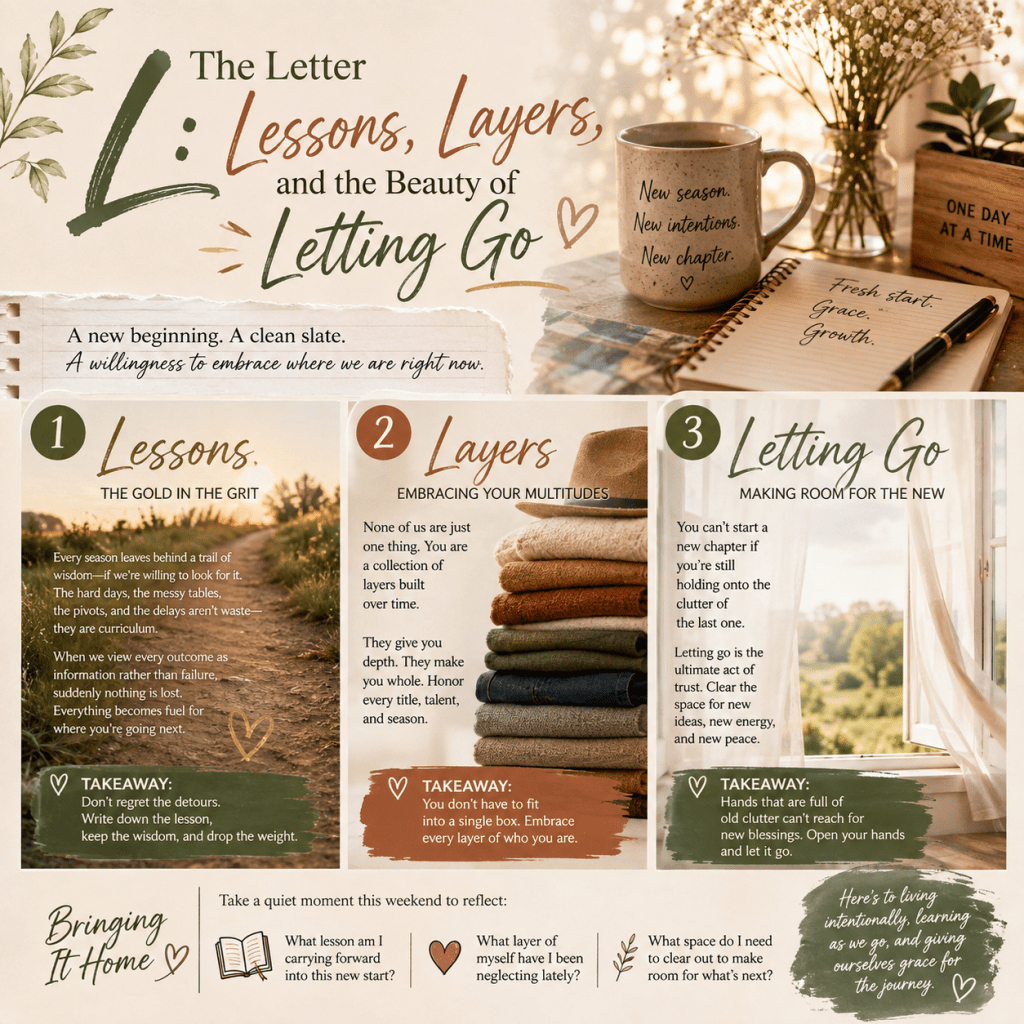
As we keep moving through our alphabetical journey, we’ve arrived at L. And honestly? It couldn’t have come at a better time. Life isn’t linear—it’s full of turns, unexpected shifts, and quiet victories. Today, we’re unpacking three “L” words that help us make sense of the journey and keep us grounded as we build what’s next.
1. Lessons (The Gold in the Grit)
Every season leaves behind a trail of wisdom—if we’re willing to look for it. The hard days, the messy kitchen tables, the pivots in our plans, and the unexpected delays aren’t waste; they are curriculum.
When we look back on where we’ve been, the goal isn’t to linger on what went wrong, but to gather up the lessons. What did that challenging week teach you about your boundaries? What did that creative block teach you about rest? When you view every outcome as information rather than failure, suddenly nothing is lost. Everything becomes fuel for where you’re going next.
Takeaway: Don’t regret the detours. Write down the lesson, keep the wisdom, and drop the weight.
2. Layers (Embracing Your Multitudes)
None of us are just one thing. You aren’t just defined by your day job, your family role, your creative side projects, or your past. You are a collection of layers built over time.
Sometimes we feel pulled in a dozen directions because we carry so many different passions and responsibilities. But here’s the beauty of layers: they give you depth. The patience you practice in one area of your life feeds into your creative work. The organizational systems you build for your home give you the freedom to dream bigger. Embrace all the different titles and talents you carry—they don’t make you scattered; they make you whole.
Takeaway: You don’t have to fit into a single box. Give yourself permission to honor every layer of who you are today.
3. Letting Go (Making Room for the New)
You can’t start a new chapter if you’re still holding onto the clutter of the last one. Whether it’s physical space, old expectations, or the pressure to have everything figured out by Monday morning, letting go is the ultimate act of trust.
As we launch into this new season, take a look around your desk, your calendar, and your mind. What are you holding onto simply out of habit? What mental tabs can you close today? When you clear out what isn’t serving your current season, you create the quiet space needed for new ideas, new energy, and new peace to settle in.
Takeaway: Hands that are full of old clutter can’t reach for new blessings. Open your hands and let it go.
Bringing It Home Today
As you move through this weekend, take a quiet moment over your morning coffee or evening wind-down to ask yourself:
What lesson am I carrying forward into this new start?
What layer of myself have I been neglecting lately?
What space do I need to clear out to make room for what’s next?
Here’s to living intentionally, learning as we go, and giving ourselves grace for the journey.



 Mothersense and Miscellaneous