The GoFundMe Is Not a Life Insurance Policy


I shared it without thinking twice. A GFM for my former father-in- law, and then, a friend of a friend. A family I didn’t know personally but recognized in the way you recognize anyone who looks like people you love. The photo was from a better day — a birthday, maybe, or a holiday. Everyone smiling. No one knowing what was coming.
I hit share. I donated what I could. I scrolled on.
And then I sat with it.
Because here’s the thing nobody says out loud when those posts go around:
A GoFundMe is not a plan. It’s what happens when there wasn’t one.
I’ve been in this industry long enough to know what the aftermath looks like. Not the GoFundMe stage — the stage after that. When the campaign closes. When the casseroles stop coming. When the world moves on and that family is still sitting inside a life that financially collapsed overnight.
The mortgage didn’t pause for grief.
The utility companies didn’t send condolences.
The kids still needed things.
And the person who held it all together was gone.
That’s the part that doesn’t make it into the fundraiser description. The slow, grinding weight of trying to rebuild a life when the foundation was pulled out from under you — with no parachute, no cushion, nothing but the kindness of strangers and a Donate button.
I’m not here to scare you. I’m here because I’ve had the hard conversations — the ones that happen after it’s too late to do anything about it — and I would rather have an uncomfortable conversation with you now than a heartbreaking one later.
This is what I do. Not because it’s a job, but because it matters in a way that is genuinely hard to explain until you’ve watched a family try to survive without it.
There is a solution for where you are right now — whatever your budget, whatever your stage of life:
Mortgage Protection — so your family keeps the roof over their heads, no matter what happens to you.
Final Expense Coverage — so the people grieving you aren’t also drowning in bills they didn’t see coming.
Living Benefits — so a diagnosis doesn’t also become a financial crisis while you’re still here fighting.
You don’t have to have it all figured out. You just have to start.
If you’re in Texas, I’d love to sit down with you and find something that actually fits your life and your budget — no pressure, no jargon, just an honest conversation.
If you’re outside of Texas, I have trusted colleagues across the country and I will personally make sure you’re connected to someone who will take care of you.
Your family deserves more than a Donate button.
Let’s build something that holds.
Drop a comment or send me a message. Let’s talk

Julie.kilcrease.insurance@gmail.com

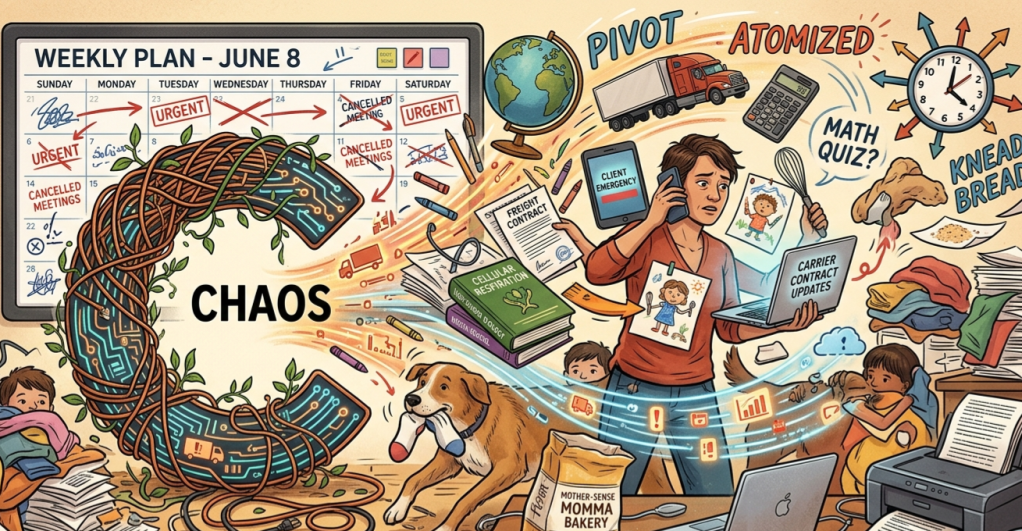
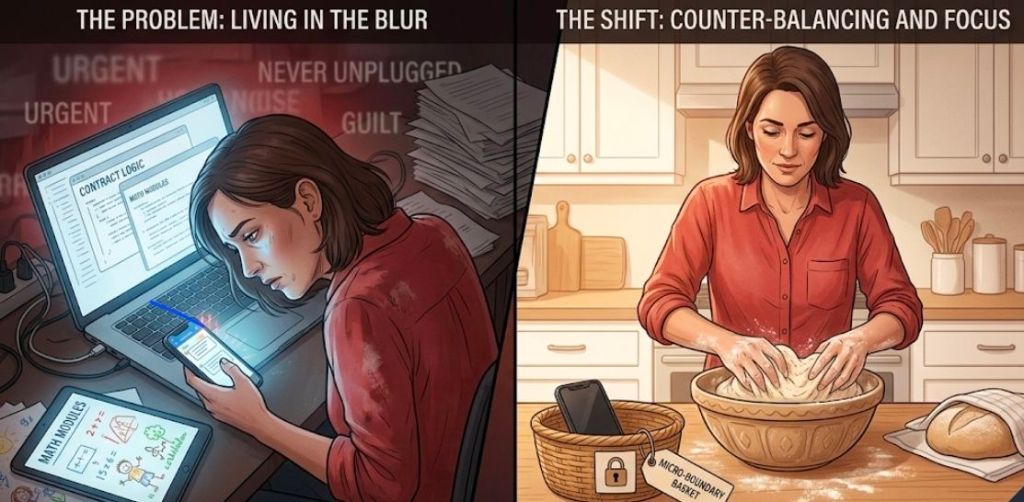
Mom Burnout Doesn’t Always Look Like Breaking Down


When people talk about burnout, they usually picture someone falling apart.

Crying.
Snapping.
Completely overwhelmed and unable to keep going.

And sometimes it does look like that.

But sometimes it doesn’t.

Sometimes burnout is quiet.

It looks like getting up every day and doing exactly what needs to be done, but feeling nothing while you do it.
It looks like checking the boxes, answering the calls, making the meals, showing up for everyone… and still feeling like you are not really there.

Not sad enough to fall apart.
Not okay enough to feel at peace.

Just somewhere in the middle.

Stuck.

I think that version of burnout is harder to recognize, because from the outside, everything looks fine.

You are still functioning.
The house is still running.
The kids are still cared for.
Life is still moving forward.

But inside, something feels off.

You are tired in a way that sleep does not fix.
You are overwhelmed in a way that is hard to explain.
You are needed constantly, and somehow still feel invisible.

And then comes the guilt.

Because how do you admit you are burned out when you are still doing everything you are supposed to do?

How do you say you are struggling when nothing is technically falling apart?

So you don’t.

You push it down.
You tell yourself other people have it harder.
You remind yourself to be grateful.

And you keep going.

That is what a lot of mom burnout actually looks like.

It is not always a breaking point.

Sometimes it is a slow fading.

A quiet losing of yourself in the middle of taking care of everyone else.

A life that starts to feel more like responsibility than something you are living.

And the hardest part is, you can stay there for a long time.

Because nothing forces you to stop.

There is no clear moment where everything crashes and demands your attention.

There is just that quiet voice in the back of your mind that says, something is not right.

If you are in that place, I want you to hear this.

You do not have to fall apart for your burnout to be real.

You do not have to earn rest by reaching a breaking point.

You are allowed to acknowledge that you are tired.
You are allowed to admit that something feels off.
You are allowed to need more than just getting through the day.

Not every season is meant to feel full and meaningful and balanced.

Some seasons are heavy.

But you are still in there somewhere.

Even if you feel a little disconnected.
Even if you are just going through the motions right now.

This is not the end of you.

It is a signal.

A quiet one, maybe.
But an important one.

And maybe the next step is not fixing everything all at once.

Maybe it is just noticing.

Maybe it is just being honest with yourself.

Maybe it is just giving yourself permission to say, this is harder than I thought it would be.

That matters.

More than you think.

Spring Cleaning….House and Mind

Spring Cleaning Your Mind (And Your Stuff)


Spring equinox is here, and yes—it’s that magical time when the world starts fresh, the days get longer, and everything feels like it could use a good tidy. But here’s the thing: spring cleaning isn’t just for closets. It’s for your mind, your energy, your thoughts… and yes, even your memories.
I know, I know. Some of you are already feeling that panic: “Wait, if I let go of that hoodie, that memory disappears!” To my neurospicy friends—you KNOW exactly what I mean. The texture, the smell, the little stitch that makes you remember… it’s sticky. It feels like letting go of the thing is letting go of the story.
But here’s the truth: it’s not real. Memories live in your brain, your heart, and your soul—they don’t live in the item itself. You can absolutely keep the memory without keeping the clutter. That hoodie? The shoes? The ticket stub? They’re props. You’re the star of the story, not the accessory.
Why Letting Go Feels Hard
Objects, habits, even old thoughts—they cling. We hold onto them because they’re familiar, because they make us feel safe, or because our brain just really likes a good story. But here’s the catch: cluttered spaces, whether physical or mental, make it harder to breathe, to think, to be fully present.
Your Step-by-Step Mental Spring Cleaning
Pick a zone – Closet? Phone? Thoughts that keep looping? Start somewhere small.
Ask yourself – Does this serve me? Or am I holding it out of habit, guilt, or fear?
Let it go – Donate, recycle, delete, journal about it, take a picture… whatever makes it safe to release.
Celebrate the space – Notice how your energy shifts when there’s breathing room.
Reclaim & Renew
Letting go isn’t losing—it’s reclaiming. It’s saying, “I honor my memories, and I honor myself by making space for joy, growth, and intention.” That’s reclamation. That’s renewal. That’s you stepping into a season where you aren’t weighed down by what no longer serves you.
So here’s your challenge for the equinox: pick one thing today—a hoodie, a thought, a habit—and let it go. Notice the difference it makes when you reclaim that space for yourself.
Because spring isn’t just about cleaning the house—it’s about cleaning your mind, your heart, and your life. And yes… you can absolutely keep the memories without keeping the clutter.

A is for Addiction

Addiction.


Just sit with that word for a moment.
It carries weight. It sounds heavy. Shame-filled. Final. I can’t think of many positive things we associate with it.
I personally smoke cigarettes (working toward quitting), and I am absolutely a caffeine addict — and probably sugar too. But beyond my own habits, I have loved addicts. Not just romantically. Friends. Family. People I would go to the ends of the earth for.


So let’s ask the question plainly:
Is addiction a disease? A condition to be treated? Something recovery is possible from?
Yeah. Yes. It is.


What Is Addiction?
The American Society of Addiction Medicine defines addiction as:
A treatable, chronic medical disease involving complex interactions among brain circuits, genetics, the environment, and an individual’s life experiences. People with addiction use substances or engage in behaviors that become compulsive and often continue despite harmful consequences.


The National Institute on Drug Abuse explains it similarly — addiction is a chronic, relapsing disorder characterized by compulsive drug seeking and use despite negative consequences.
Chronic.
Medical.
Treatable.


Those words matter.


And here’s something else that matters:


In the United States, about 1 in 6 people struggle with a substance use disorder each year.
Millions more struggle with nicotine dependence.
Caffeine dependence is widely recognized.
Studies show that highly processed foods can trigger brain reward systems in ways similar to addictive substances.
This isn’t rare. This isn’t “those people.” This is us. Our neighbors. Our families.


We Joke About It… But Should We?
People casually say, “I’m a coffee addict.”
Or “I’m addicted to Diet Coke.”
Or “Don’t talk to me before my sugar.”
But do we understand the weight of that word?


Yes — you really can be addicted to sugar, caffeine, nicotine, and highly processed foods. That doesn’t make you weak. It makes you human with a brain wired for reward.
Our brains are designed to remember what feels good and to repeat it. Dopamine — the “feel good” neurotransmitter — reinforces behaviors that provide pleasure or relief. Over time, repetition becomes reliance. Reliance becomes dependence.
And dependence, when disrupted, becomes withdrawal.


The Logan Story
Let me tell you a story.
Logan was 10. His mom wasn’t much of a cook, so meals were mostly pre-packaged, fast food, convenient — and let me say clearly: fed is fed. No judgment. Survival comes first.
But when summer came, Logan went to stay with Dad and stepmom. They cooked fresh food. Fruits. Vegetables. Homemade meals. Grilled burgers and hot dogs.
Within days, Logan had what looked like the flu. Headaches. Fatigue. Irritability. Just not himself.
His big sister picked him up, took him to the movies and — yes — McDonald’s.
Miraculous recovery.
Until a week later, when the “flu” returned.
He wasn’t sick. He was withdrawing.
His body had become accustomed to high levels of sugar, sodium, and processed additives. When they disappeared, his system reacted.
Dad refused to reintroduce the fast food. They let his body recalibrate. It was uncomfortable. It was eye-opening. And it was very real.
Logan didn’t know he was dependent.
But his body did.


It’s All the Same Brain
Opioids.
Nicotine.
Methamphetamine.
Alcohol.
Sugar.
Caffeine.


Different substances. Same reward circuitry.
When we remove what the brain has grown used to, the body protests.


Withdrawal can look like:
Headaches
Fatigue
Anxiety
Irritability
Nausea
Depression
Physical pain


Some withdrawals are uncomfortable. Some are dangerous. Some are life-threatening.
But the mechanism? The brain wanting what it has been trained to expect.


So Where Do We Start?


We start by naming it.


Without shame.


We stop whispering about addiction like it’s a moral failure. We stop labeling people as “weak” or “lacking willpower.”
We start asking:
What pain is this numbing?
What pattern is this reinforcing?
What support is missing?
Addiction thrives in isolation. Recovery thrives in connection.
Somewhere, there has to be a conscious decision to become mindful of what we are putting into our bodies — and why.


Not with judgment.
With curiosity.


My Truth
I am a caffeine addict.
I am nicotine dependent.
I am working on both.
And I have loved addicts.


Deeply.


We need to help one another make better choices instead of judging someone’s struggle. Because it could be you. It could be me. It could be someone you love.
Addiction is not a character flaw.


It is a condition.
It is treatable.
Recovery is possible.


And compassion? That should be non-negotiable

Becoming and Unbecoming

2026 has already been a doozy.
We welcomed January with a whole host of breaks—some expected, some not. Now we’re stepping into February, and the old groundhog has seen his shadow. Six more weeks of winter, and honestly? I’m not mad about it.
I prefer cooler temperatures. Always have. But the darkness—sometimes that gets to me. Not in a seasonal depression kind of way, more like a please give me a little more daylight so I can get things done kind of way. Still, this in-between season matters. Transition always does.
Maybe that’s why this time feels so significant—because I am transitioning too.
I’m becoming a better version of myself. A more complete self. One who is no longer trying to mask big feelings or tuck disappointments neatly out of sight for the comfort of others. I am becoming more. And if I’m too loud, too much, too intense for some people—as Elyse Myers so perfectly put it—“Go find less.”
I will happily apologize for past wrongs, for mistakes I’ve made, for moments where I fell short. But I will not apologize for being myself. If that means some people fall away, I will let them. I’ll grieve a little—because loss is still loss—but I also understand now that not everyone is meant to go where I’m headed.
This season is about becoming and unbecoming.
Letting go of what no longer fits.
Shedding versions of myself that were built for survival, not peace.
I will always fiercely defend my children and my chosen family. That part of me is immovable. But I am no longer clinging to blood ties simply because they exist. Those ties have been complicated—heavy—and loyalty owed solely to blood has caused me deep harm. I’m untangling that now. I’m lowering my expectations of people who have shown me, repeatedly, who they are.
And here’s the quiet power in that:
What I’m building next—what’s coming for me—cannot be touched or taken. It will be mine. And it will become a legacy for the family I created, not the one I was born into.
Winter can linger a little longer.
So can this becoming.
I’m not rushing it.