
Following up on our reflection about the “Three Gs” and the reality of a forced pause, I’ve been thinking a lot about what happens after you hit the brakes. When you’re used to running full steam ahead, a sudden slowdown can make you feel completely untethered. The grand routines and massive project plans you mapped out suddenly feel impossible to touch.
That is exactly where the beautiful intersection of Habits, Home, and Harmony comes in.
When life is running smoothly, we tend to treat habits like productivity hacks to get more done. But when you are dealing with health challenges, unexpected grief, or the heavy weight of a shifting season, habits look entirely different. They cease to be a checklist for achievement and instead become the gentle framework that protects your peace.
True “mother-sense” isn’t about maintaining a rigid, unbreakable schedule when your body or heart is screaming for rest. It’s about creating harmony in the space you inhabit.
When your big plans are paused, try shifting your focus to these three connected pillars:
Habits ⚓️(The Anchors): When you can’t run full steam, let your habits shrink to match your actual capacity. It’s no longer about a massive morning routine; it’s just sitting with a hot mug for five minutes of intentional quiet, or a tiny, five-minute evening sweep to clear off one countertop. These small acts are the quiet evidence that you are still tending to your world.
Home 🏡(The Sanctuary): Your home shouldn’t feel like a demanding boss with a never-ending list of chores—especially when you are trying to heal. Right now, let your home be a soft place to land. Organizing and maintaining order isn’t about perfection; it’s about creating a space that wraps its arms around you and gives your mind a quiet place to rest.
Harmony 🎶(The Flow): Harmony is what happens when your habits and your home align with your current reality, rather than your expectations. It’s the sweet spot where you stop fighting the pause and instead learn to flow with it. It’s knowing when to tighten up the systems and when to simply let things be, trusting that the balance will return.
When you can’t run, these small focus areas ensure you don’t drift away. They keep your spirit in order while your body catches up.
If you are navigating a season of forced rest or shifted expectations, let go of the pressure to conquer the world. Turn inward. Look at your immediate surroundings. What is one tiny, comforting habit you can practice today to bring a little more harmony into your home?
Tag: physical health
The Quiet Discomfort of the Closed Laptop
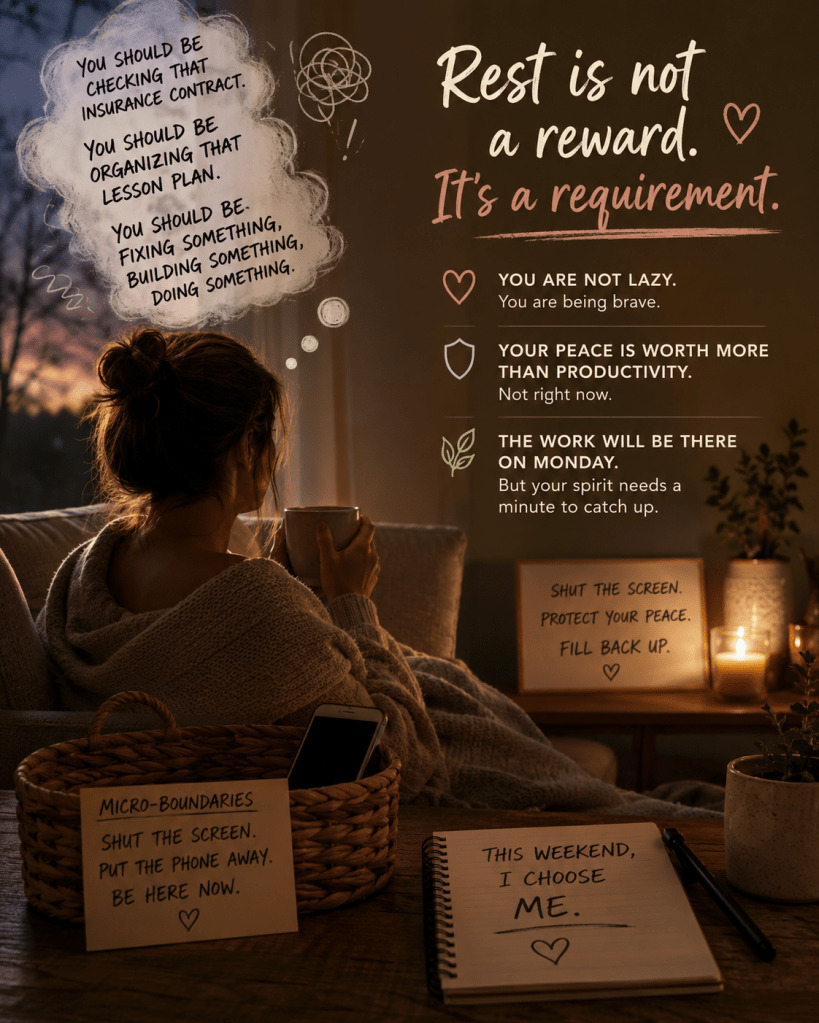
On Monday, we talked about the danger of the blur—that exhausting space where your work life, your home life, and your school day bleed together until you are running on empty. We talked about the antidote: building micro-boundaries, shutting the screen, and putting the phone in a basket.
It sounds so good on paper. It feels like a victory when you actually do it.
But if we are being completely honest, no one talks about what happens right after you shut the laptop or put the phone away.
No one talks about the silence. And no one talks about how incredibly loud that silence can be.
The moment you enforce a boundary and step away from the production line, a weird kind of panic can set in. You sit down on the couch, or you step into the kitchen, and instead of feeling a wave of peace, you feel a wave of guilt. Your brain, which has been conditioned to run at a million miles an hour, starts screaming at you:
You should be checking that insurance contract. You should be organizing that lesson plan. You should be fixing something, building something, doing something.
We live in a culture that treats constant motion as a badge of honor. We are conditioned to believe that if we aren’t producing, we are failing. So when we finally force ourselves to stop, the quiet doesn’t feel like a reward—it feels like an withdrawal.
It is deeply uncomfortable to just sit still.
But here is the truth we have to remind ourselves of as we head into the weekend: Rest is not a reward for a job well done. It is a requirement for a life well lived.
When you choose to step away, you aren’t being lazy. You are being brave. It takes an incredible amount of courage to look at an endless to-do list, look at a world demanding your attention, and say, “Not right now. My peace is worth more than this productivity.”
If you close the screen this weekend and find yourself wrestling with the guilt of doing nothing, take a deep breath. Let the discomfort sit there. It’s just your brain unlearning a bad habit.
The work will be there on Monday. The chaos isn’t going anywhere. But your spirit needs a minute to catch up with your body.
Give yourself permission to sit in the quiet this weekend, even if it feels a little awkward at first. You aren’t falling behind; you are just filling back up.

Understanding the connection
The Link Between Mental Health and Physical Ailments: Understanding the Connection
In today’s fast-paced world, the connection between mental health and physical health is more important than ever. Many people are aware that mental health issues can affect how we feel emotionally and psychologically, but fewer realize that these issues can also manifest as physical ailments. Understanding this link is crucial for addressing both aspects of well-being. This blog post explores various physical ailments related to poor mental health and highlights the importance of self-care and therapy in managing these conditions.
**1. Chronic Pain**
Chronic pain is a condition that affects many people, and research has shown that it is often intertwined with mental health issues. Conditions such as fibromyalgia and chronic back pain can be exacerbated by stress, anxiety, and depression. The brain’s response to emotional pain can intensify the perception of physical pain, creating a cycle that’s difficult to break. Therapy techniques like cognitive-behavioral therapy (CBT) and mindfulness practices can help manage the emotional aspects of chronic pain, while self-care strategies such as regular exercise and stress reduction can provide relief.
**2. Gastrointestinal Problems**
Stress and anxiety are known to impact gastrointestinal health. Disorders such as irritable bowel syndrome (IBS), acid reflux, and chronic constipation can be triggered or worsened by mental health issues. The gut-brain axis, the communication network linking the gut and brain, plays a significant role here. Therapy and self-care, including a balanced diet, adequate hydration, and stress management techniques, are essential in addressing these problems. Mindful eating and relaxation exercises can also improve digestive health.
**3. Sleep Disorders**
Mental health conditions like depression and anxiety often interfere with sleep, leading to disorders such as insomnia and sleep apnea. Poor sleep quality can exacerbate mental health issues, creating a vicious cycle. Self-care strategies such as maintaining a regular sleep schedule, creating a relaxing bedtime routine, and managing stress through relaxation techniques can help improve sleep. Cognitive-behavioral therapy for insomnia (CBT-I) is also a highly effective treatment for sleep disorders.
**4. Headaches and Migraines**
Headaches and migraines are frequently linked to stress and emotional turmoil. Conditions like tension headaches and migraines can be triggered or aggravated by mental health issues. Identifying and managing stressors, practicing relaxation techniques, and maintaining a healthy lifestyle are vital for managing headache frequency and intensity. Therapies like biofeedback and CBT can also be beneficial in reducing the impact of headaches and migraines.
**5. Cardiovascular Issues**
Chronic stress and depression can negatively impact cardiovascular health, leading to conditions such as hypertension, heart disease, and arrhythmias. The body’s stress response can increase blood pressure and heart rate, contributing to cardiovascular problems. Regular physical activity, a balanced diet, and stress management techniques are crucial for maintaining heart health. Therapy can also help address underlying mental health issues that contribute to cardiovascular stress.
**6. Immune System Disorders**
Mental health issues like chronic stress and depression can weaken the immune system, making individuals more susceptible to infections and illnesses. Stress can alter immune function, leading to an increased risk of illnesses. Self-care practices such as proper nutrition, regular exercise, and sufficient sleep support immune health. Therapy can help manage stress and improve overall mental well-being, thereby supporting a stronger immune system.
**7. Skin Conditions**
Conditions like eczema, psoriasis, and acne can be aggravated by stress and emotional distress. Stress can trigger or worsen skin flare-ups, making it essential to address the underlying mental health issues. Incorporating stress-relief practices, such as meditation and mindfulness, alongside proper skincare routines, can help manage these conditions. Therapy can also assist in managing the emotional impact of chronic skin issues.
**8. Weight Fluctuations**
Mental health conditions can lead to significant changes in weight, whether through overeating or loss of appetite. Conditions like depression and anxiety can influence eating habits and metabolic processes, leading to weight gain or loss. Self-care strategies, including a balanced diet, regular physical activity, and mindful eating practices, can help stabilize weight. Therapy can support emotional well-being and address eating behaviors.
** 9. Respiratory Issues
Conditions such as asthma and chronic obstructive pulmonary disease (COPD) can be exacerbated by stress and anxiety. Stress can lead to shallow breathing and increased respiratory symptoms. Managing stress through relaxation techniques, deep breathing exercises, and therapy can help improve respiratory health. Proper self-care and adherence to prescribed treatments are also essential.
**10. Musculoskeletal Problems**
Muscle tension, joint pain, and stiffness can be linked to stress and emotional strain. Conditions like temporomandibular joint disorder (TMJ) and chronic muscle pain can be aggravated by mental health issues. Incorporating regular physical activity, stretching, and relaxation techniques can help alleviate musculoskeletal symptoms. Therapy can also play a role in addressing the emotional factors contributing to physical discomfort.
**Conclusion**
The intricate relationship between mental and physical health underscores the importance of a holistic approach to well-being. Addressing mental health issues through therapy and self-care can lead to significant improvements in physical health. By recognizing and managing the connection between mental health and physical ailments, individuals can achieve a more balanced and healthier life.
If you’re experiencing physical symptoms related to mental health issues, consider seeking professional support. Combining therapy with self-care strategies can help you manage and improve both your mental and physical well-being, leading to a more fulfilling and healthier life.

