D is for Duality & Doubt: The Monday Morning Backlash


Last week, we waded through the thick of the chaos. We stood face-to-face with the friction of the empty space—that deeply uncomfortable territory where we intentionally stop rushing, clear out the noise, and force ourselves to just sit with the quiet.


If you tried to hold that empty space over the weekend, you know exactly how brutal it is. I personally kept my laptop closed and worked on some things around the house, cleaning, rearranging, and spent some time with my husband. I baked a chocolate cake Sunday afternoon that didn’t quite turn out how I had hoped. But it was a learning experience.


And as the laptop lid lifts open this Monday morning, a brand-new monster is waiting for us.
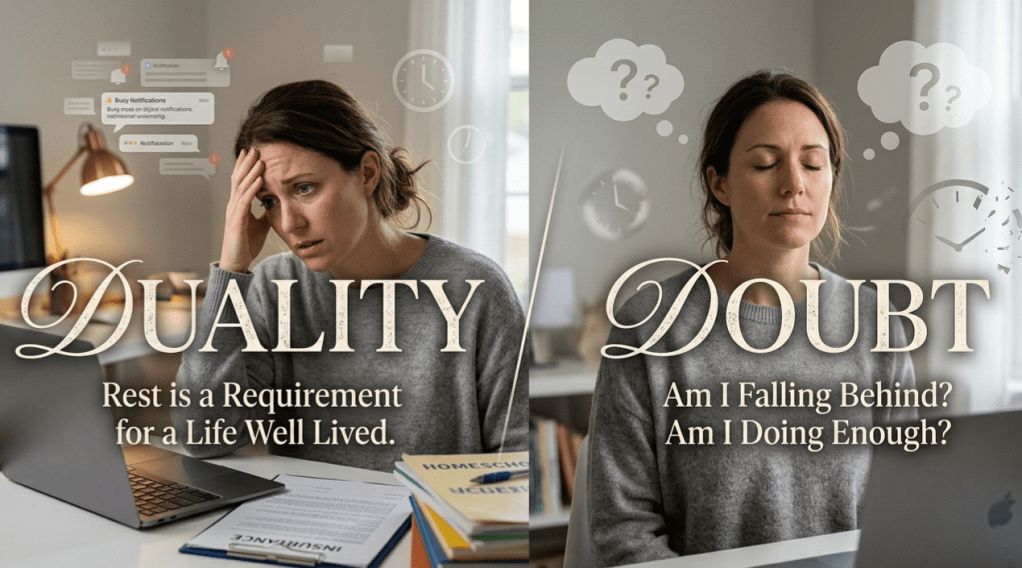
Welcome to Duality and Doubt.


Once you choose to clear out the chaos, your brain doesn’t just automatically hand you a crown of peace. Instead, a massive internal friction sets in. We find ourselves living a double life inside our own heads.
One version of you—the wise, grounded version—knows deep in your bones that protecting your space is a matter of survival. But the other version, the one conditioned by a world that demands a constant production line, stands over you whispering that your stillness is a failure.


The moment the weekly schedule kicks into gear, these two versions collide, bringing a swift, heavy wave of doubt.
You open the inbox, you look at the tasks ahead—the insurance training and compliance updates, the lesson plans to map out, the physical home to maintain—and the second-guessing begins. Did I lose ground by slowing down? Am I already behind? Did I actually earn the right to breathe?


We are so hooked on constant motion that when we finally create an empty space, we treat it like a crime we have to pay for on Monday morning. We feel the urge to sprint out of the gate at a million miles an hour, frantically overcompensating just to prove we are still worthy.


But true reclamation isn’t about clearing the chaos on Friday just to drown in the doubt on Monday.
The duality we have to master this week is learning how to hold onto our internal stillness while we do the work. It is knowing you can be deeply productive without being frantic.


As you step into the demands of this week, don’t let the Monday morning backlash trick you into running a race you weren’t meant to run. The work will always be there, but your peace belongs to you. Pace yourself today.

Did the doubt hit you the second you opened your screen this morning? How is your brain trying to make you pay for the empty space you kept this weekend?

The Quiet Discomfort of the Closed Laptop

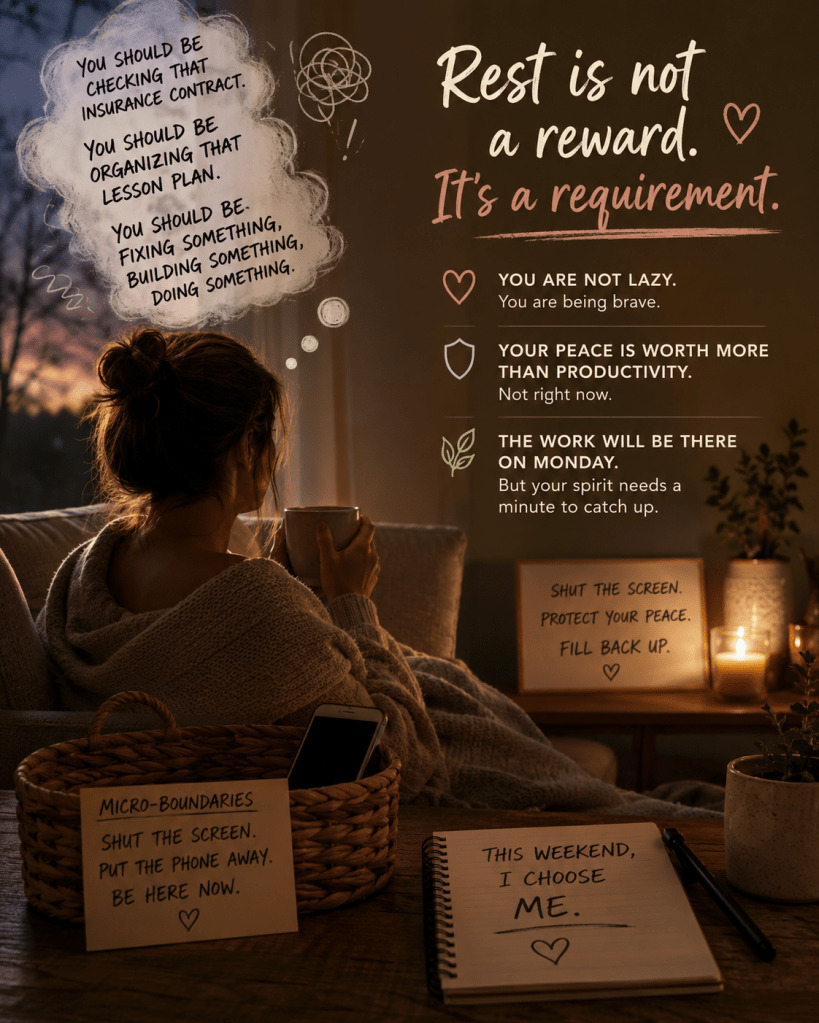
On Monday, we talked about the danger of the blur—that exhausting space where your work life, your home life, and your school day bleed together until you are running on empty. We talked about the antidote: building micro-boundaries, shutting the screen, and putting the phone in a basket.
It sounds so good on paper. It feels like a victory when you actually do it.
But if we are being completely honest, no one talks about what happens right after you shut the laptop or put the phone away.
No one talks about the silence. And no one talks about how incredibly loud that silence can be.
The moment you enforce a boundary and step away from the production line, a weird kind of panic can set in. You sit down on the couch, or you step into the kitchen, and instead of feeling a wave of peace, you feel a wave of guilt. Your brain, which has been conditioned to run at a million miles an hour, starts screaming at you:
You should be checking that insurance contract. You should be organizing that lesson plan. You should be fixing something, building something, doing something.
We live in a culture that treats constant motion as a badge of honor. We are conditioned to believe that if we aren’t producing, we are failing. So when we finally force ourselves to stop, the quiet doesn’t feel like a reward—it feels like an withdrawal.
It is deeply uncomfortable to just sit still.
But here is the truth we have to remind ourselves of as we head into the weekend: Rest is not a reward for a job well done. It is a requirement for a life well lived.
When you choose to step away, you aren’t being lazy. You are being brave. It takes an incredible amount of courage to look at an endless to-do list, look at a world demanding your attention, and say, “Not right now. My peace is worth more than this productivity.”
If you close the screen this weekend and find yourself wrestling with the guilt of doing nothing, take a deep breath. Let the discomfort sit there. It’s just your brain unlearning a bad habit.
The work will be there on Monday. The chaos isn’t going anywhere. But your spirit needs a minute to catch up with your body.
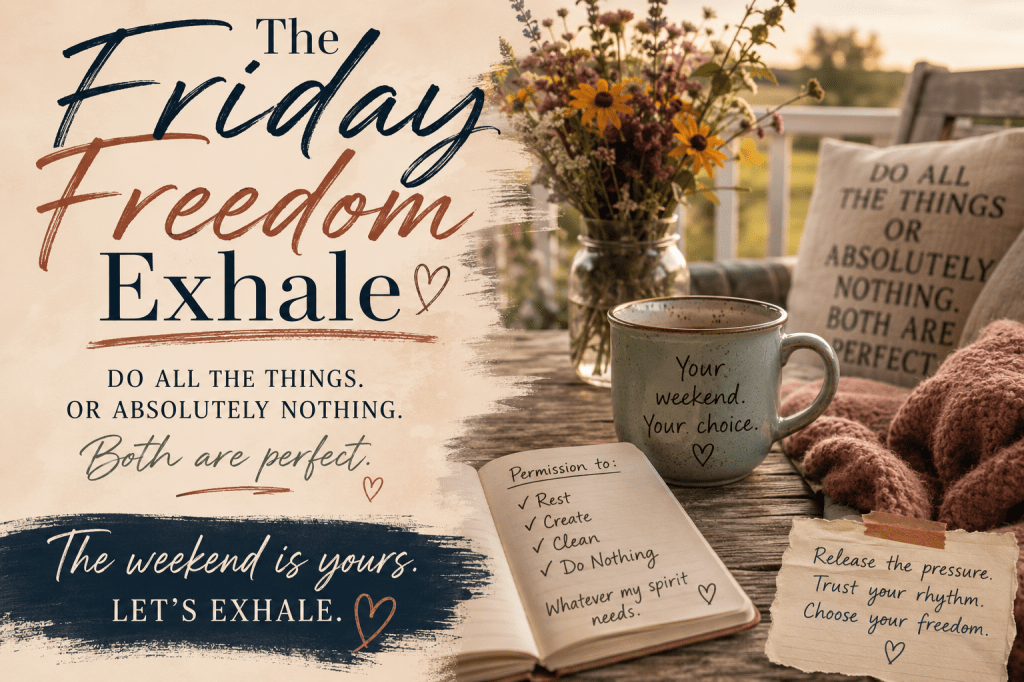
Give yourself permission to sit in the quiet this weekend, even if it feels a little awkward at first. You aren’t falling behind; you are just filling back up.

The Soundtrack of May: Finding the Melody in the Transition


There is a specific frequency to May in this part of Texas. The “blackland” is vibrant, the mornings still hold a lingering coolness, and the world feels like it’s humming a brand-new tune. As a songwriter, I can’t help but listen for the rhythm in it all—the way the wind catches the fence line or the steady, rhythmic chirping of the birds before the afternoon heat settles in.


By May 1st, we aren’t just “planning” for growth anymore; we are living right in the middle of it. If April was about the quiet work of the roots, May is the full-blown chorus.


Listening to the Layers


In a good song, the layers have to work together. You have the steady beat of the drums (the daily chores, the family schedules, the “must-dos”) and the soaring melody (the dreams, the creative sparks, the “could-bes”).


Lately, I’ve been practicing the art of listening to those layers without getting overwhelmed by the noise.
The Steady Beat: The familiar sounds of a full house—the laughter, the front door swinging open, the clatter of life. It’s the anchor that keeps everything else grounded.


The Creative Counterpoint: That sudden lyric that hits you while you’re folding laundry or the melody that starts to form while you’re out walking. It’s the reminder that even in the busiest seasons, there is room for a new song.


Changing the Key


Sometimes, life asks us to change the key. Maybe the pace is picking up, or the “sound” of your season is shifting from a quiet acoustic ballad to something a bit more upbeat and demanding. That shift isn’t a bad thing; it’s just a transition.
I’m learning that you don’t have to fight the change in tempo. You just have to find your footing in the new rhythm.

Whether you are navigating a career shift, a creative milestone, or just the changing needs of your family, there is a melody there if you’re quiet enough to hear it.


What is Your Song Today?


Take a second today to really listen—not just with your ears, but with your heart.


What is the “hook” of your life right now?


Is it a song of peace, a song of hustle, or a song of quiet resilience?


As we step into May, I’m keeping my notebook close and my heart open to the music of the everyday. There is so much beauty in the transition if we just stop to hear it.


I’d love to know: if your life had a soundtrack right now, what would the genre be? Let’s talk about the music of our lives in the comments!

Chronic Pain is a Mother…

Exploring Chronic Pain

Chronic pain is a complex and often debilitating condition affecting millions of people worldwide. It can stem from a variety of causes, including injury, illness, or underlying medical conditions such as arthritis, fibromyalgia, neuropathy, and migraines. While narcotic pain relievers can provide temporary relief, they are not always a sustainable or desirable long-term solution. Many individuals seek alternative treatments to manage their pain more effectively and improve their quality of life. 

If you have read my much older blogs you may know that my ex husband suffered from chronic pain with no known cause. Still to this day I suppose he continues to suffer, but this was my first foray into chronic pain. My second was for myself, last year I suffered a head injury which led to a concussion and post concussion syndrome. Now I live with migraines to which the likes I had never before experienced. Thanks to modern medicine, I can now take a prescription to keep my migraine days down to maybe once a month. The sad part is that it took almost a year of tests and numerous visits with a primary care doctor and neurologist. Many of you may not have the privilege of seeking such medical care and even if you can you may not know what other things might help and what questions to ask the doctors for relief. 

Understanding Chronic Pain Conditions

Chronic pain can manifest in numerous ways, including:

 **Arthritis**: Inflammation in the joints causing stiffness and pain.

 **Fibromyalgia**: Widespread pain, fatigue, and cognitive difficulties.

 **Neuropathic Pain**: Nerve damage leading to shooting or burning pain.

 **Migraines**: Severe headaches often accompanied by nausea and sensitivity to light.

Recognizing the specific type of pain is crucial for effective management, as each condition may respond differently to treatment approaches. Healthcare providers try to stay away from prescribing narcotic medications not only because of addiction but because without realizing it, your body can become dependent. I use the words addiction and dependency to describe different conditions. For me addiction is more of  psychological need accompanied with a physical need to take the medication and dependency is when your body will absolutely go haywire if you choose to stop taking it. Withdrawal in either case is really far more unpleasant and can be harmful for the chronic pain sufferer. This is why I encourage talking to your doctor about medications, supplements and other treatments to come up with a unique treatment plan for your particular pain.

Alternative Treatments for Chronic Pain

1. **Nutritional Supplements**: Certain supplements can help alleviate pain and reduce inflammation:

   – **Omega-3 Fatty Acids**: Found in fish oil, these can help decrease inflammation and improve joint health. You can use supplements or add more fish in your diet, but be sure to read the labels. 

   – **Turmeric**: Contains curcumin, which has anti-inflammatory properties. My nephew uses this for his aches and pains as an installation technician. He is 39 now and his body isn’t moving along so well with all of the repetitive use. 

   – **Magnesium**: May reduce muscle tension and help with nerve pain. I use a magnesium spray that I bought locally. You can also find it on Amazon. 

   – **Glucosamine and Chondroitin**: Often used for joint pain and osteoarthritis. My Dad swore by this combo in helping with his knee pain. 

2. **Mind-Body Techniques**: Practices such as meditation, yoga, and tai chi can promote relaxation and help manage pain through mindfulness and gentle movement. Movement as I have said in previous posts is lubrication, do what you can. Some days will be better than others as always and don’t over-do it, but always try to get a few minutes in daily. 

3. **Physical Therapy**: Tailored exercises can strengthen muscles, improve flexibility, and reduce pain over time. A physical therapist can design a program that aligns with an individual’s specific needs. 

4. **Acupuncture**: This traditional Chinese medicine practice involves inserting needles into specific points to relieve pain and promote healing.

5. **Massage Therapy**: Therapeutic massage can alleviate muscle tension and improve circulation, providing relief for many chronic pain sufferers.

6. **Cognitive Behavioral Therapy (CBT)**: This psychological approach helps individuals change their perception of pain and develop coping strategies to manage it effectively.

Activities to Consider

Engaging in gentle physical activities can be beneficial. While it may seem counterintuitive to move when in pain, low-impact exercises like swimming, walking, or cycling can boost endorphin levels, which are natural pain relievers. Additionally, hobbies that promote relaxation, such as painting or gardening, can provide a mental escape and reduce stress.

The Role of Sleep in Pain Management

For many chronic pain sufferers, sleep is often the only respite from their discomfort. However, pain can significantly disrupt sleep patterns, leading to a vicious cycle of fatigue and heightened pain sensitivity. Establishing a calming bedtime routine, creating a comfortable sleep environment, and considering sleep aids—whether natural (like melatonin) or through behavioral adjustments—can help improve sleep quality.

Coping Without Narcotics

While narcotics can be effective for some, they come with risks of dependency and side effects that can be just as debilitating as the pain. Here are strategies to cope without relying solely on narcotics:

 **Stay Informed**: Understand your condition and treatment options. Knowledge empowers you to make informed choices about your care. If you think something might help, bring it up with your healthcare provider. 

 **Support Networks**: Connect with others who understand chronic pain. Support groups, whether in-person or online, can offer encouragement and shared experiences. Facebook, Discord, and What’s app, Reddit do have group options where you can find others who are facing your struggles. 

 **Integrate Therapies**: Many alternative treatments can work in conjunction with prescribed medications. Always consult your healthcare provider before adding new therapies to your routine. When you are transparent with your provider about your pain and that you are willing to explore options besides prescription medication you may get better results from them. I know my neurologist placed a sign in his lobby that he does not prescribe narcotics at all. I suppose that keeps any pill seekers from his office, but he is clear about it up front. The medical community is beginning to embrace holistic medicine and hopefully more providers will look to treat a whole person and not just a set of symptoms . 

Wrapping it up for you: 

Living with chronic pain can be challenging, but exploring alternative treatments and making lifestyle adjustments can lead to significant improvements in quality of life. A comprehensive approach that includes nutritional supplements, physical activities, and mind-body techniques can help alleviate pain and enhance overall well-being. Remember, it’s essential to consult with a healthcare professional before making any changes to your treatment plan. Each person’s experience with pain is unique, and finding the right combination of strategies can lead to a more manageable and fulfilling life. I hope this information gives you a starting point in finding more pain free days.