Friday Exhale: Unraveling the Map and Adapting as I Go

If you’ve been following along, you know this past week has required a lot of listening to my body—stepping back, treading water, and letting go of the need to do it all at once.

For a long time, when my body threw out warning lights—fatigue, brain fog, shortness of breath—it was easy to assume it was just one thing. We tell ourselves, “I’m just tired,” or “My iron must be low again,” and we keep pushing.

But real health transitions happen when you stop guessing and start digging.

What the Map Is Showing Me

Over the last few months, I’ve been working closely with my care team—specialists across different areas who are helping me piece together a puzzle that’s been building for a while.

Instead of a single isolated issue, the tests and conversations are showing a web of connected signals: heart health, blood sugar, oxygen levels, and metabolic balance. Receiving clear news—like where my A1C stands or how my body is handling stress and nutrition—can feel heavy at first.

It’s scary to realize your body is raising its hand and saying, “We can’t keep doing things the old way.”

At the same time, clarity is a gift. You can’t fix what you refuse to name. Having actual data from my doctors means I no longer have to wander in the dark guessing why I feel drained.

How I Am Adapting

Finding out what’s going on under the hood isn’t a dead end—it’s the start of a redesign. Here is how I’m turning those clinical answers into daily action:

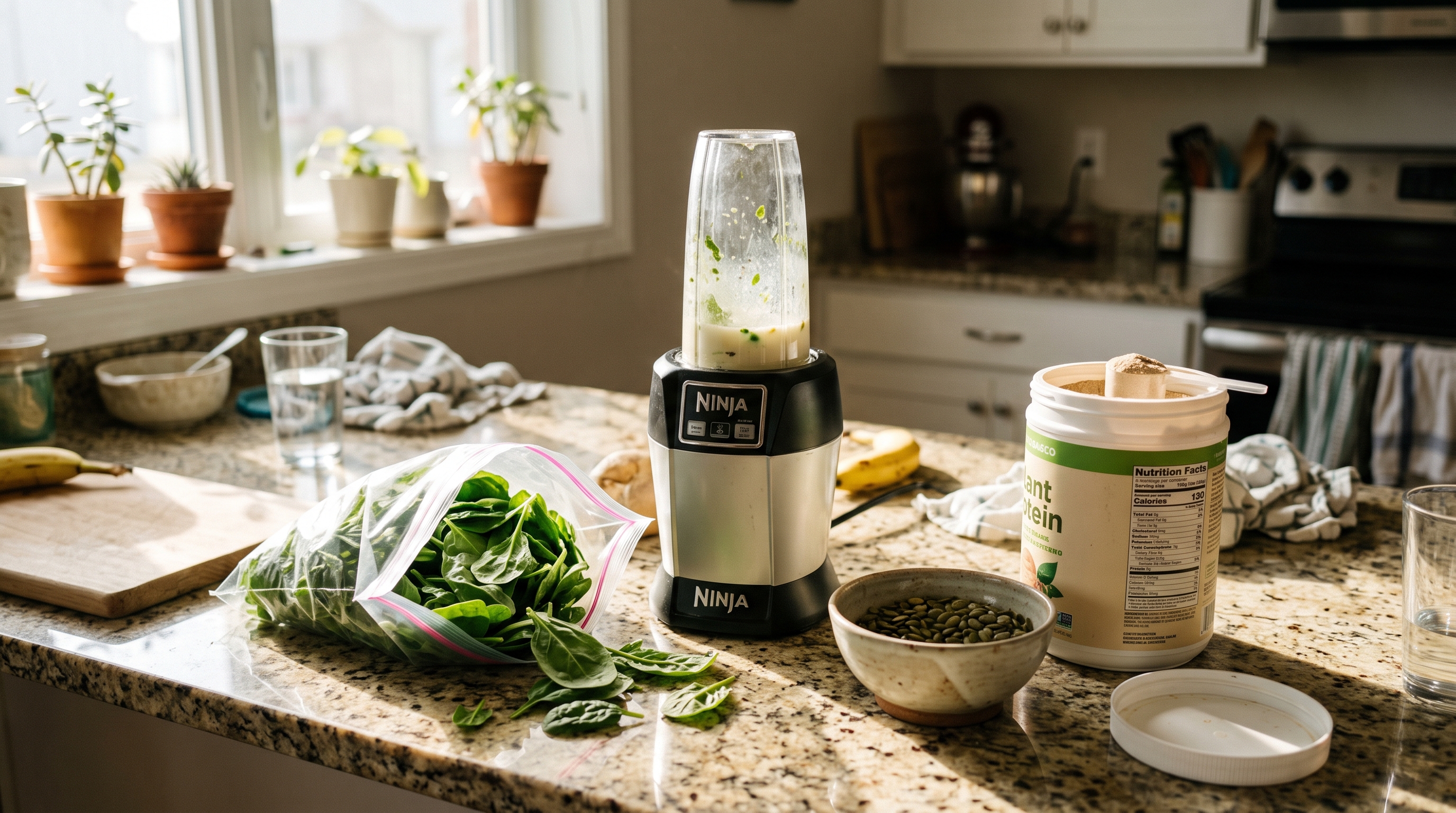
  1. Fueling for Function, Not Just Convenience: My kitchen is transforming. I am pivoting toward a heart-healthy, low-sodium, and blood-sugar-mindful way of eating. It means trading quick, processed fixes for whole foods, lean proteins, and meals that protect my heart while keeping my iron and energy steady.
  2. Protecting My Lungs: Part of this adaptation means ending my reliance on nicotine for good. Moving away from cigarettes was step one; letting go of the vape to give my lungs the clean air they need to heal is the necessary final step.
  3. Pacing Over Pushing: I am learning to treat rest as a non-negotiable medical instruction, not a luxury I earn after I’m exhausted.
  4. Building the Support Network: Leaning on my family, my doctors, and clear accountability so I don’t try to navigate this massive shift alone.

The Exhale

If you are fighting your own quiet health battles or trying to make sense of a new diagnosis, know that it’s okay if the answers take time to sort out. You don’t have to have the entire journey mapped on day one.

You just need to listen to what your body is asking for today, trust the professionals in your corner, and make the next right choice for your health.

As we roll into the weekend, take a deep breath, give yourself some grace, and let your body rest.


T is for Transitions, Truth, and Treading Water

If you noticed the quiet here on Friday, thank you for your grace. My body called a hard timeout, and honoring that pause wasn’t optional—it was necessary.

When you’re running a series like this, missing a beat can make you feel like you’ve fallen behind. But as we step into T, it feels right on time. Today, T stands for three things that are currently intertwined in my life: Transitions, Truth-Telling, and Treading Water.

The Reality of Treading Water

When we talk about life changes, the world loves to highlight the “before” and “after.” We talk about making strides, taking big leaps, and celebrating clean breaks.

What people rarely talk about is the awkward, exhausting space in between—the season where you are simply treading water.

Treading water gets a bad rap because it looks like standing still from the surface. But underneath? Your legs are moving constantly just to keep your head up. It takes real energy to hold your ground while your body and mind adapt to change. If all you did today was keep your head above water while navigate a hard shift, that wasn’t a wasted day. That was survival.

Facing the Hard Truths

You can’t navigate a transition successfully on half-truths or wishful thinking. Real growth requires a serious period of Truth-Seeking and Truth-Telling—starting with the person in the mirror.

That means looking squarely at what we are putting into our bodies, our minds, and our daily routines, and asking: Is this actually serving me, or is it just a crutch?

For me, that truth-telling hits close to home right now:

  • The Habit Swap: Back in January, I made the big decision to quit smoking. That was a huge win, but to keep the edge off, I picked up vaping. It cut down the harm, but the truth caught up with me: my lungs are letting me know in no uncertain terms that vaping has to go, too. Moving from one crutch to another isn’t the final destination; it was just a stepping stone on the way to full clarity.
  • Fuel vs. Filling Space: I’m in a season where I have to be intensely mindful of every single thing I eat. It can no longer be about convenience or quick fixes. I am actively learning to seek high nutritional value and genuine flavor, shifting how I view food entirely.
  • Adding & Subtracting: Transitions aren’t just about cutting things out—they’re about replacing old, harmful patterns with nourishing ones. It’s an ongoing audit of habits, routines, and inputs.

Bringing Your Circle Into the Fold

The hardest part of truth-telling is doing it out loud with the people who love you.

It is terrifying to admit to the people close to us that we are struggling, or that a habit we thought we had under control is actually holding us back. But hiding our struggles only isolates us.

When we tell the truth to our family, friends, and support system:

  1. We drop the mask: Pretending “everything is fine” takes twice as much energy as actually dealing with the problem.
  2. We invite accountability: The people who love us can’t help us keep our balance if they don’t know we’re tipping over.
  3. We build a safer bridge: Letting others see our raw transitions allows them to support us in practical, meaningful ways.

Finding the New Normal

Learning a whole new set of life skills—whether it’s stepping away from nicotine entirely, restructuring your diet, or managing physical boundaries—feels heavy when you’re doing it all at once.

If you are currently in a transition of your own, give yourself permission to tread water for a minute. Be honest about where it hurts, stop pretending you have it all figured out, and let the people who care about you help hold you steady while you build your new normal.

We don’t have to swim laps today. We just have to keep reaching for the truth, one breath at a time.

The Exhale Is a Scream (And a Glass of Cold Tea)

Friday, September 4

I sat down to write a normal Friday post, but I can’t pretend things are normal. I can’t write a neat little wrap-up about finding peace when everything around us feels like it’s fraying at the edges.

Look at the news on any given day. People tearing each other apart online for sport. Road rage taking lives over a momentary inconvenience. Healthcare systems treating human suffering like an expense sheet. Three children lose their lives and the system runs with the easiest, fastest theory instead of asking the terrifying, necessary questions.

And then, as if the daily weight of the world wasn’t heavy enough, we lose the light-keepers. In a single week, voices like Dolly Parton, Tim Curry, Peter Cullen, and Samuel Monroe Jr. are gone. The anchors feel like they’re snapping.

What the hell are we supposed to do with all this grief?

Because here’s the absurd part: the world keeps spinning. The bills still come. The laundry still sits in the basket. We still have to show up, do the work, and figure out how to live a beautiful life without letting the weight of everything else crush us to dust.

So how do we do it?

Do we lay it at the cross? Do we dance, dream, and persevere anyway? Do we hold tight to our daily rituals and thank God for every quiet moment of mercy?

Maybe it’s all of the above. And maybe today, it’s stepping away from the screens, stepping outside—even if it is air-fryer hot—touching the grass, and taking a sip of ice-cold tea.

Maybe it’s letting yourself have a good, ugly cry. As Steel Magnolias reminded us, laughter through tears is the best emotion. You’re allowed to scream into a pillow, feel the rage, mourn the losses, and still choose to bake, build, love, and keep going.

The exhale isn’t always neat. Today, it’s a scream, a prayer, a cry, and a deep breath. You aren’t crazy for feeling the weight of it all. Just don’t forget to take your step back.

Mother-Sense: The Legacy We Carry, The Wisdom We Give


As we approach Mother’s Day, my house feels a little fuller, the air a little thicker with memory, and my “Mother-Sense” is on high alert.


In the songwriting world, we talk about a “bridge”—that part of a song that connects where you’ve been to where you’re going. To me, that is exactly what motherhood is. It’s the bridge between the generations. It’s the radical hospitality of opening your heart to biological, bonus, and chosen children and saying, “There is a place for you here.”


More Than an Inheritance


I’ve been thinking a lot about legacy lately. In my “second half” of life, I’ve realized that the most valuable thing I can give my seven children and my three grandbabies isn’t something that can be kept in a bank or a box.


It’s Mother-Sense.


It’s that internal compass—the resilience to stand back up when life knocks your fence down, the intuition to know when a friend needs a quiet cup of coffee, and the bone-deep knowledge that they are loved, exactly as they are. It’s a functional, living tool kit for life.


The Reciprocal Song


People often say that mothers are the teachers, but if I’m honest, the song goes both ways.


My children have taught me more about courage than any lyric I’ve ever written.


They’ve shown me how to see the world through fresh eyes when mine were tired.


They’ve been the “steady anchors” in my own stormy seasons, reminding me that even when the melody changes, the foundation holds.


An Invitation to the Table


Whether you are a mother by birth, by marriage, or by choice, your “sense” is a superpower. It’s the wisdom that tells you when to hold on tight and when to let go so they can find their own rhythm. It’s the quiet strength that keeps the home fires burning, even when you’re busy building your own dreams and writing your own “second half.”


This Sunday, I won’t just be celebrating the title of “Mother.” I’ll be celebrating the resilience of every woman who has ever stepped into the gap, offered a hand, and shared her wisdom to light someone else’s path.


To my fellow mothers: What is one piece of ‘Mother-Sense’—that bit of hard-won wisdom—that you hope stays with your children forever? Let’s fill the comments with our collective legacy today

The Social Media Sinkhole: How to Post Without Getting Stuck


If you’ve ever picked up your phone to share a quick business update at 9:00 PM and suddenly realized it’s 10:15 PM and you’re watching endless reels of things you didn’t even know existed… you aren’t alone.
As a small business owner, social media is a vital tool. It’s how I connect with my community, share my songwriting journey, and help families navigate their insurance needs. But there is a very thin line between using the tool and being used by it. I call it the “Social Media Trap,” and it’s especially easy to fall into when you can’t sleep and find yourself doomscrolling into the early morning hours.
We only have so many productive hours in a day. Every thirty minutes lost to the “scroll” is thirty minutes taken away from our families, our creative projects, or the rest we desperately need.
1. The “Post and Ghost” Strategy
This is my top rule for staying productive. Before you even open an app, have your content ready—photo selected, caption written. Open the app, hit “Post,” and immediately close it. Do not look at the feed. Do not “just check one notification.” Get in, do the work, and get out.
2. Put the Phone to Work for You
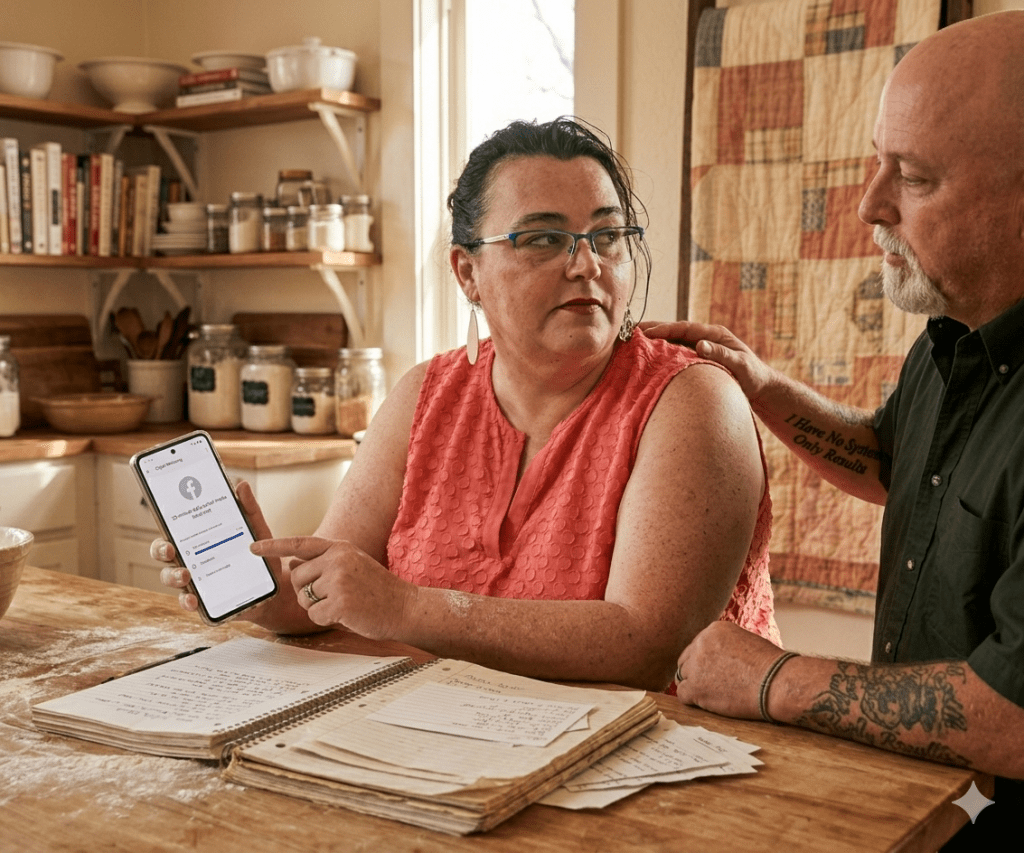
Since I’m a fan of using the right tech for the job, I’ve started leaning on my phone’s internal settings to act as a “bouncer.” Most smartphones now have Digital Wellbeing or App Timer settings.
I’ve set a strict 30-minute daily limit for the apps that tend to suck me in. Once that time is up, the app grays out and locks me out for the day. It’s a great way to let the phone be the “bad guy” so I can stay focused on my actual goals.
3. The “No Phones in the Refuge” Rule
I’ve written before about the difference between a house and a HOME—a home is a refuge from the storm. That refuge shouldn’t be invaded by the noise of the entire world at 2:00 AM. If you struggle with doomscrolling at night, try leaving the phone in another room. Keep a physical notebook or an old student spiral by the bed instead. If an idea hits, write it down by hand.
4. Be Intentional, Not Accidental
Ask yourself: Is this scroll helping me grow, or is it just filling a gap? We are creative entrepreneurs. We have apps to build, songs to write, and legacies to protect. Our time is the most valuable asset we own.
Let’s Reclaim Our Time
If you’ve been feeling frustrated by the hours lost to the “pool” of social media, let’s make a pact to be more intentional this week. Use that reclaimed hour to write a verse, study for a new goal, or just get some actual, restorative rest.
How do you set boundaries with your screen time? Let’s talk about it (and then, let’s get back to the real work!).