
The GoFundMe Is Not a Life Insurance Policy


I shared it without thinking twice. A GFM for my former father-in- law, and then, a friend of a friend. A family I didn’t know personally but recognized in the way you recognize anyone who looks like people you love. The photo was from a better day — a birthday, maybe, or a holiday. Everyone smiling. No one knowing what was coming.
I hit share. I donated what I could. I scrolled on.
And then I sat with it.
Because here’s the thing nobody says out loud when those posts go around:
A GoFundMe is not a plan. It’s what happens when there wasn’t one.
I’ve been in this industry long enough to know what the aftermath looks like. Not the GoFundMe stage — the stage after that. When the campaign closes. When the casseroles stop coming. When the world moves on and that family is still sitting inside a life that financially collapsed overnight.
The mortgage didn’t pause for grief.
The utility companies didn’t send condolences.
The kids still needed things.
And the person who held it all together was gone.
That’s the part that doesn’t make it into the fundraiser description. The slow, grinding weight of trying to rebuild a life when the foundation was pulled out from under you — with no parachute, no cushion, nothing but the kindness of strangers and a Donate button.
I’m not here to scare you. I’m here because I’ve had the hard conversations — the ones that happen after it’s too late to do anything about it — and I would rather have an uncomfortable conversation with you now than a heartbreaking one later.
This is what I do. Not because it’s a job, but because it matters in a way that is genuinely hard to explain until you’ve watched a family try to survive without it.
There is a solution for where you are right now — whatever your budget, whatever your stage of life:
Mortgage Protection — so your family keeps the roof over their heads, no matter what happens to you.
Final Expense Coverage — so the people grieving you aren’t also drowning in bills they didn’t see coming.
Living Benefits — so a diagnosis doesn’t also become a financial crisis while you’re still here fighting.
You don’t have to have it all figured out. You just have to start.
If you’re in Texas, I’d love to sit down with you and find something that actually fits your life and your budget — no pressure, no jargon, just an honest conversation.
If you’re outside of Texas, I have trusted colleagues across the country and I will personally make sure you’re connected to someone who will take care of you.
Your family deserves more than a Donate button.
Let’s build something that holds.
Drop a comment or send me a message. Let’s talk

Julie.kilcrease.insurance@gmail.com

Holiday Blues: Finding Light in Dark Times

The Perfect Storm

As we wind down the year and the days grow shorter, the holiday season settles in like a familiar rhythm—lights, music, gatherings, the scent of good food, and memories tucked into every corner. For many, it’s a time of joy. But for just as many, it’s the beginning of a perfect storm.

Longer nights. Dreary weather. A calendar full of holidays that once held laughter, tradition, and warmth—but now may carry the heavy weight of grief. This might be your first holiday season without a loved one. Or maybe it’s another year of feeling lonesome, out of place, or disconnected while the world around you insists that this is the season of togetherness. Everywhere you look—commercials, store displays, conversations—there’s a reminder of what this time of year is supposed to be. And if your heart isn’t in it, that reminder can sting.

Seasonal depression is real. Grief is real. Loneliness is real. And the darkness of winter has a way of amplifying what’s already there.

But here’s what’s also real: you are not the only one feeling this way.
Not even close.

Millions of people across the country and around the globe quietly carry similar feelings—sadness, heaviness, grief, fatigue, numbness. Many worry that something is “wrong” with them, that they’re somehow broken because they can’t summon holiday cheer on demand. But you aren’t broken. You aren’t failing. You aren’t even unusual. You are human, navigating a season that can be as complicated as it is beautiful.

And we all cope in different ways. Some people power through. Some find therapy or medication. Some dive into work or scroll endlessly on their phones. Some turn to hobbies, routines, or rituals that keep them grounded. I’m not advocating for one particular method—just acknowledging that we’re all doing the best we can with what we have.

But if the weight becomes more than temporary—if it presses hard, especially as this season closes in—please talk to someone. A friend. A pastor, priest, rabbi, or imam. A counselor or therapist. Someone who can listen, reflect, and help you feel less alone.

Because you aren’t alone.
People see you. People remember you. People count on you.
Your presence matters more than you know.

Please don’t let the perfect storm pull you under. Make it to the new year. Celebrate the tiniest victories along the way. If you did ten lunges today—high five. If you made your bed—HIGH FIVE. Those little things matter. They add up. They are proof that you’re still here, still showing up for yourself, even in the hardest season.

And that is no small thing.

The Impact of Loss: Lessons in Love and Resilience

“It’s Just Going to Keep Happening” — Thoughts from a Hard Day

Had the displeasure of making one of the worst phone calls recently — calling an old friend to let him know that someone we both knew had passed away. At the funeral he mentioned: “It’s just going to keep happening.” Raw and honest, those words hit me like a brick.

He’s right. And in that moment, I don’t think I fully appreciated how true those words were. People are going to keep dying. And we’re going to keep seeing each other in these moments of loss — in funeral homes, church pews, or standing around telling old stories while blinking back tears. I hate it. I did not like it, Sam I Am.

I don’t like thinking about them — or myself — continuing to experience more loss.
It sucks. Plain and simple.

Losing someone cracks you open. Then, as if that isn’t enough, it rips open the memories of everyone you’ve already lost. Wowsers, indeed.

At this particular funeral, my heart hurt the most for the younger folks.
Boys left without a father at such pivotal ages.
That kind of loss leaves a scar that never quite fades. You can only hope they’re surrounded by love and support, and yes — that there’s at least some life insurance to help carry the burden financially. I didn’t sales pitch anyone (ew, that would be gross), but as someone who works in that world, I can’t help but think about it. Even just enough coverage to help with the cost of the funeral can make a world of difference when grief already feels like too much.

But I digress…

Life just keeps going, doesn’t it?
We pause, we grieve, we say goodbye — and then, somehow, we go right back to the hamster wheel. Back into the day-to-day of it all.
Loss is hard. Devastating. But we, the ones left behind, can’t let it drag us too far down. That’s the real danger of grief — it can pull old habits back to the surface. It can make you want to numb everything out, to self-medicate, to escape.

So, here’s a reminder to myself and to you:
That doesn’t work.

Shoving the feelings down, pretending they aren’t there — that won’t help.
The only way is through it.

Both of my parents were the last of their siblings. I can’t imagine how lonely that must’ve been. But they didn’t wallow. They were a special kind of tough, and they taught us that you never truly get over a loss. You just learn to carry it. Some days you’ll do great. Some days you won’t. That’s the truth.

So let’s remember something today:
People are out here doing the best they can.
Maybe today, you can give someone a little extra grace, a little more patience, a touch more compassion. We need more of that. Because, like it or not, none of us are getting out of here alive.

And that dash on the tombstone — you know the one.
The dash between your birth and your death?
That’s what counts.

Let’s go out there and make that dash matter.

Peace. Love. And Pickle Juice.
– Julie

The Art of Compassion: Helping Loved Ones Heal

When You Can’t Fix It: Being There for Loved Ones in Their Pain

There are moments in life when someone we love is hurting, and there is nothing we can do to take their pain away. Grief, loss, heartache—these are deeply personal experiences, and while we may wish to absorb their suffering, to shoulder it for them, we simply cannot. It is their journey, and our role is not to fix it but to walk beside them. So how can we show up in meaningful, supportive ways without offering empty words or repeating well-worn advice?

Hold Space Without Filling It

Silence can be one of the most powerful ways to show love. So often, we feel compelled to say something, anything, to ease the discomfort of pain. But instead of searching for the perfect words, try simply being present. Sit with them in their grief. Let them talk, cry, or say nothing at all. Being a steady presence can speak volumes more than any well-intentioned words ever could.

Acknowledge Without Trying to Solve

One of the most painful things for someone in distress is feeling unheard. When they express their pain, resist the urge to offer solutions or compare their experience to something you’ve been through. Instead, acknowledge what they’re feeling: “I hear you. That sounds incredibly hard.” Sometimes, knowing they are seen and validated is all they need.

Offer Tangible Help

Rather than saying, “Let me know if you need anything,” offer specific assistance. Bring them a meal, run an errand, pick up their kids from school, or handle a small task that might be overwhelming in their current state. Practical support can be a lifeline when grief or hardship makes even basic tasks feel impossible.

Respect Their Process

Healing is not linear, and everyone moves through pain at their own pace. Some days they may want to talk, other days they may withdraw. Some moments will be filled with tears, others with unexpected laughter. Let them lead the way, and don’t impose expectations on what their grief should look like.

Lean on Faith, If That Feels Right

For many, faith provides comfort, but in moments of deep pain, even the most devout can struggle. If faith is a part of their life, remind them gently of their beliefs without forcing platitudes. Instead of saying, “Everything happens for a reason,” try, “I am holding you in my prayers” or “I am here to sit with you in this, however long it takes.” Sometimes, embodying faith through love and patience is more powerful than words.

Encourage Without Pushing

There may come a time when they need professional help, whether it’s therapy, a support group, or other resources. If you sense they’re struggling beyond what they can bear, gently encourage them without making them feel broken or weak for needing help. You can say, “You don’t have to go through this alone,” and offer to help them take that step when they’re ready.

Find Your Own Support

Loving someone in pain can be exhausting. You cannot pour from an empty cup, so lean on your own faith, family, or friends when you need to process your emotions. Supporting them doesn’t mean ignoring your own needs; it means showing up from a place of strength rather than depletion.

Love Them Through It

At the heart of it all, the best thing you can do is love them. Love them when they cry, when they push you away, when they don’t have the words, when they feel stuck. Love them not by trying to remove their pain, but by being someone who remains, steady and unwavering, no matter how long the journey takes.

Because sometimes, the greatest gift we can give is simply showing up, again and again, with love.

Navigating Grief: Lessons from a Year Without Audra

Coping with Grief: A Year Without Audra

It’s been nearly a year now—a year since Audra passed. It was a Wednesday. We had already spoken twice that morning, talking about life, laughing about how much she hated Walmart and self-checkouts. Then my phone rang again. This time, it was different. “I don’t feel right,” she said. “Bring the blood pressure cuff.”

It was Spring Break, and I was home, not teaching. I ran next door, frantic, to find her slurring her words, sweet little Hayden trying to help Moomoo. Her blood pressure was too high. I called 911. She started throwing up. By the time the paramedics arrived, she was somewhat coherent. I had gotten Hunter and Nick there. Thomas was on the phone. It was bad.

By the time they loaded her into the ambulance, I saw it—Hunter saw it. The drooping side of her face. We knew. But we held onto hope. Strokes can be survived. Audra was tough and ornery. She could pull through. But it all happened so fast. Some days, the scene replays in my head. Some nights, it haunts my dreams.

I visited her in the hospital. Thomas said the prognosis was grim. We knew. She knew. She had made it clear she never wanted machines to keep her alive if there was no real quality of life. And so, we waited. We grieved even before she was gone. And then, she slipped away.

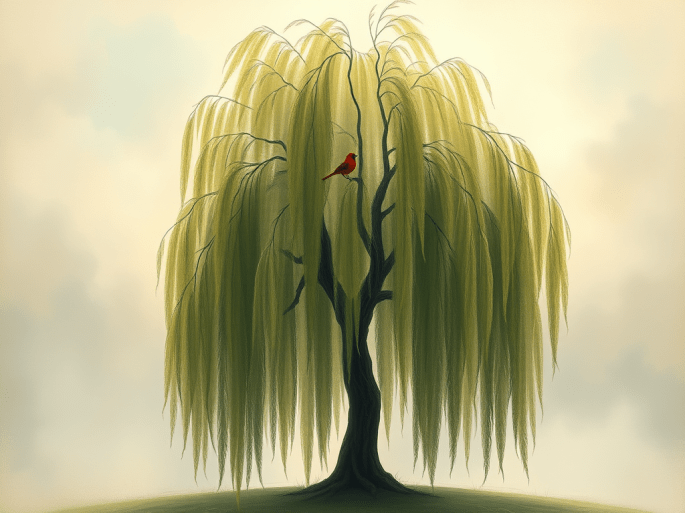
Now, nearly a year later, everything has changed, and yet, nothing has. I haven’t stepped foot next door since her memorial service. I see her willow tree—the one thing her black thumb didn’t kill. Some days, it makes me smile. Other days, it makes me cry. She should still be here. She should be helping Nick with his schoolwork, swapping recipes with me, planning our gardens together. But she isn’t. And as March 18th approaches, the weight of her absence grows heavier.

She was more than a friend. She was my sister in every way except blood. My confidante, my reality check, my protector. And now, she’s gone. There’s no one to fill her shoes. The grief is raw. The reality of outliving those we love is a harsh lesson, one I’ve always known but never fully embraced: No one is promised another day.

Finding Ways to Cope

Grief is a journey, not a destination. It changes shape but never fully disappears. If you’re walking this path, too, here are some ways to navigate the pain:

1. Allow Yourself to Feel There is no timeline for grief. Some days, you’ll laugh at a memory. Other days, the pain will take your breath away. Let it. Don’t rush healing. There’s no right or wrong way to grieve.

2. Honor Their Memory Find ways to keep their spirit alive. Cook their favorite meal. Plant something in their honor. Share their stories. Audra’s willow tree reminds me that she was here, that she mattered.

3. Lean on Your People Grief can feel isolating, but you don’t have to carry it alone. Talk to someone who understands. Share your pain, your memories, your love. Let others support you.

4. Find Purpose in the Pain Loss has a way of reshaping our priorities. I choose to love more fiercely, forgive more freely, and live more intentionally. Life is too short to do more damage.

5. Give Yourself Grace There’s no “moving on,” only moving forward. Some days will be harder than others. That’s okay. Be patient with yourself.

Grief is love with nowhere to go. And in that love, Audra remains. She may not be here to call me and tell me to snap out of it, but I hear her voice in my heart. I honor her by living, by loving, by carrying her with me in all the ways that matter.

And if there was a phone line to heaven, I know she’d be on my butt about it.