
Friday Exhale: The Harmony of the Slow DownCategory: Exhale, Recipes, Creative Space


We did some heavy lifting this week. We talked about taking out the red pen, editing the narrative, and filing an endorsement to rewrite the policy on our lives. We forced ourselves to look at the impossible trap of hyper-efficiency and say, “Not today.”


But if you are anything like me, executing those boundaries leaves behind a weird, buzzy kind of adrenaline. Your hands are empty, but your brain is still trying to figure out what it’s supposed to be fixing.


So tonight, we aren’t fixing anything. We are just finding the harmony.


To me, summer harmony is a very specific sensory experience. It’s the late-afternoon sun stretching across the kitchen counter. It’s a gritty, soulful country-alternative groove playing softly in the background. And it’s the tactile, grounded comfort of getting your hands into some dough.


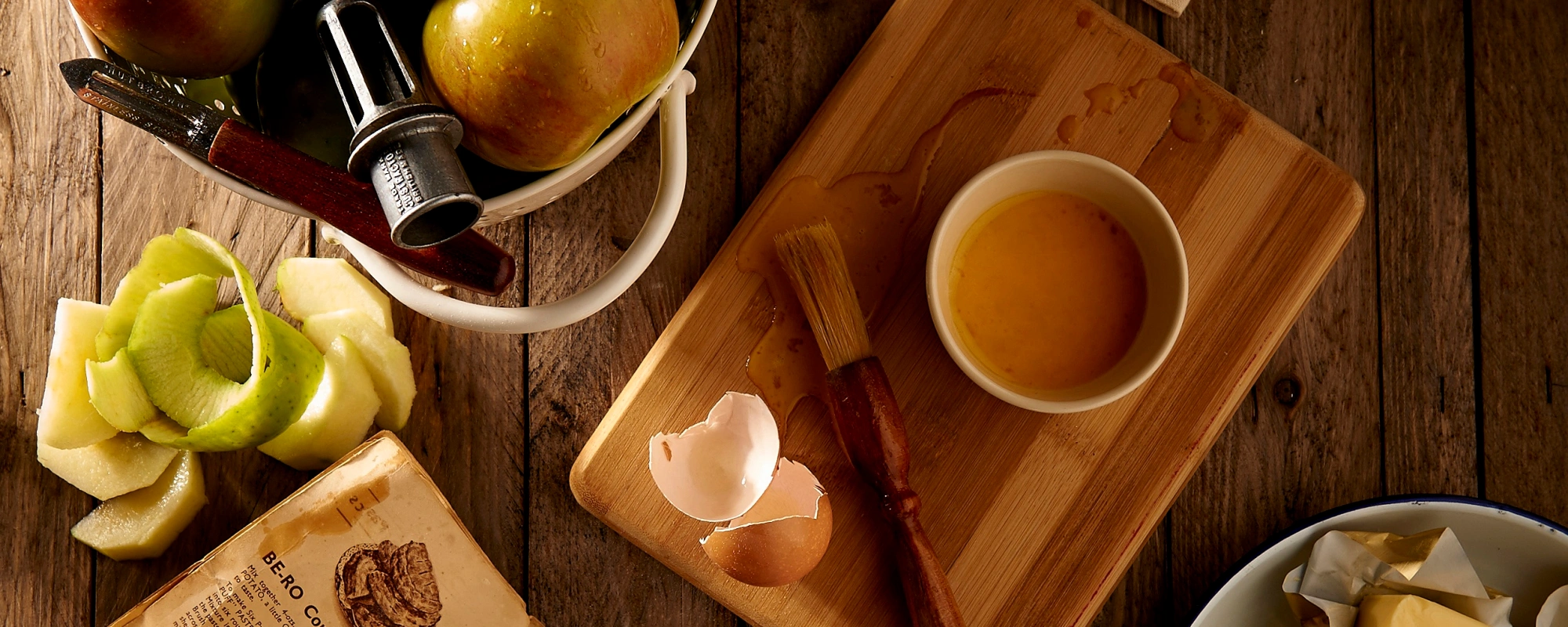
When the world gets too loud, I head to the kitchen. Baking isn’t an efficiency goal; it’s therapy. It forces you to slow down, measure by measure, and just watch something rise in its own time. You can’t rush it, and you can’t optimize it.


Here is a simple, rustic summer treat to help you find your own pocket of quiet this weekend. No fancy tools required—just a physical bowl, a wooden spoon, and a little bit of time.


🍑 Summer Kitchen Therapy: Rustic Blackberry & Peach Galette🍑
A galette is the ultimate “imperfect” dessert. There is no crimping, no perfect pie dishes, and no stress. The rougher the edges look, the more beautiful it turns out. It is a visual reminder that things don’t have to be perfect to be incredibly good.
The Crust:
1 ½ cups all-purpose flour
1 tablespoon sugar
½ teaspoon salt
1 stick (½ cup) unsalted butter, cold and cubed
4 to 5 tablespoons ice water
The Filling:
2 cups fresh peaches, sliced
1 cup fresh blackberries
2 tablespoons honey or sugar
1 tablespoon cornstarch (to catch the summer juices)
1 teaspoon vanilla extract
How to Slow Down and Make It:
Mix the dough: Whisk the flour, sugar, and salt together. Toss in the cold butter cubes. Use your fingers to smash the butter into the flour until it looks like coarse crumbs. Drizzle in the ice water one tablespoon at a time, mixing until the dough just holds together. Shape it into a disk, wrap it up, and let it chill in the fridge for an hour while you step away from the kitchen entirely.
Prep the fruit: Toss your summer peaches and blackberries with the honey, cornstarch, and vanilla. Let them sit and get glossy.
Roll and fold: Roll the dough out into a rough circle on a piece of parchment paper. Pile the fruit right into the center, leaving a 2-inch border all around the edge. Now, just fold those empty edges up and over the fruit, letting the dough pleat naturally.
Bake: Brush the crust with a little milk or egg wash, sprinkle a bit of extra sugar on top, and bake at 400°F (approx. 200°C) for 35 to 40 minutes until the crust is deep golden brown and the fruit is bubbling.


Tonight, let the laptop stay closed. Put on a playlist with a gritty, alternative groove that matches the summer heat. Pour a cold glass of sweet tea or wine, slice into something warm, and let your spirit finally catch up with your body.


The policy has been rewritten. You’ve done enough. Now, just exhale.


🎵 Weekend Soundtrack:
What’s on your kitchen stereo tonight? Pop your favorite summer evening track or playlist recommendation in the comments below—let’s build a shared weekend soundtrack.

E is for Endorsements: Rewriting the Policy on Your Life


We are living our lives under an outdated policy.


When you first started building your world—whether you were launching a business, stepping into a creative project, mapping out a homeschool curriculum, or just figuring out how to manage a household—you wrote a mental contract. You set the terms and conditions for what you owed the world, what you were capable of producing, and how much of yourself you were willing to give away.
You signed it on the dotted line.
But life changes. The assets grow. The liabilities increase. The chaos of everyday life gets heavier, and yet, we find ourselves trying to fulfill a contract written for an entirely different season.


This is where the trap of efficiency kicks in. When we realize we can’t keep up with the terms of our own life policy, we don’t change the contract. Instead, we try to optimize the production line. We buy the color-coded binders. We look for the ultimate life hacks. We schedule our days down to the micro-second, trying to force a tired human soul to run with the efficiency of a corporate spreadsheet.
We treat ourselves like a machine that just needs better tuning. But you cannot efficiency-model your way out of a life that is simply carrying too much weight.


When efficiency fails, we have to turn to the writer’s desk and learn the brutal art of the creative edit. In songwriting and prose, editing is where the magic actually happens. It’s the willingness to take out the red pen, look at a line you love, and cut it because it’s crowding the melody. In life, editing means looking at a crowded calendar of good ideas—the projects, the to-do lists, the expectations—and realizing you have to cross things out so the main story can breathe.


But how do we actually authorize those cuts legally and emotionally within ourselves?
We use an endorsement.


In the insurance world, an endorsement is a specific amendment attached to an existing policy. It changes the terms. It updates the coverage. It acknowledges that the original agreement no longer fits the current risk or reality. It allows the policy to shift without tearing down the entire house.


As mothers, creators, and business owners, we forget that we are the sole underwriters of our own lives. We have the authority to file an endorsement at any given moment.
You are allowed to look at your current season and say, “The old policy required me to be everything to everyone at all times. This new amendment states that my peace is now a non-negotiable excluded risk. I am no longer insuring other people’s comfort at the expense of my own sanity.”


Stop trying to become more efficient at carrying a load that was never meant for one person. Take out the red pen and edit the narrative. File the endorsement, change the terms of what you owe the world, and rewrite the policy so you can actually live a life well-covered.

The Weight and the Warmth of June 19th


The calendar tells us that Friday, June 19th is Juneteenth—a day designated for collective reflection, freedom, and celebration. But for me, the date always pulls me backward into a deeply personal history. It forces a quiet pause in the middle of summer. It rewinds the clock to 2019, to a road trip to Louisiana, and to a room filled with a heavy, holy kind of love.
June 19th was my precious Uncle John’s birthday. For probably twenty years or more, if you asked him his age, he’d grin and tell you he was “39 and holding.” But on that specific Wednesday in 2019, time was finally catching up. My sisters and I traveled down to see him, knowing we were stepping into a celebration that was also a final, fragile goodbye. He was about to be transitioned to comfort care.
The air in the room was heavy. We each took a turn to have a moment alone with him. When my turn came, I leaned in close. I leaned into the space between this world and whatever comes next, and I whispered into his ear that it was okay to go. I told him that Jeff would take care of me now. I’m not entirely sure how aware he was in that moment, but whispering those words into the quiet of the room was a balm for my own aching heart.
Then, the priest arrived to perform the anointing of the sick. Because Uncle John was a deacon, he shared a long, deeply rooted history with the priest—a brotherhood of faith and service. Yet, in the middle of all that sorrow, a strange and beautiful thing happened. The priest looked at me, knew exactly who I was, and called me by my name. “Emeline’s daughter,” he recognized. Uncle John had woven stories of me into his life and friendships long before those final days. He had carried me in his conversations for years, just as he carried me in his heart.
I still sit with that moment. I think about it every June 19th, right before the anniversary of his passing on June 20th. I look up at the sky and whisper back to him, hoping with everything I have that I am making him proud.
The Magic of a Louisiana Kitchen
When the grief settles into something softer, it usually leads me straight to the stove.
Truthfully, I was blessed with a family of cooks. Uncle John and Aunt Mertie weren’t the only ones who let me sit and pepper them with a million questions while they worked. But being in those Louisiana kitchens? That was a different kind of magic entirely.
Growing up, learning from Mom or Granny had its own rhythm, rooted in the familiar comfort of daily life. But stepping into Uncle John and Aunt Mertie’s kitchen felt like entering a sacred, vibrant sanctuary of flavor and storytelling. The humidity, the slow simmer of a roux, the effortless dance between them as they threw together dishes that tasted like pure love—it was an education in hospitality. They didn’t do it through formal lessons; they taught me simply by letting me exist in their space, answering every curious question a young girl could dream up.
To pass down a legacy is to answer the questions of the curious girl standing by the counter, watching you create.
God, I miss them. I miss the laughter, the Louisiana warmth, and the safe harbor of their home. But every time I replicate a flavor, test the seasoning, or cook with that patient, soul-filled instinct they modeled for me, they are right there.
So this Friday, while the world celebrates, I’ll be holding a quiet space for the deacon who was forever 39, for the mother who came before me, and for the beautiful, heartbreaking privilege of having people in our lives who are this terribly hard to lose.
Happy Birthday, Uncle Johnny. I hope the kitchen in heaven is everything you ever wanted.

D is for Duality & Doubt: The Monday Morning Backlash


Last week, we waded through the thick of the chaos. We stood face-to-face with the friction of the empty space—that deeply uncomfortable territory where we intentionally stop rushing, clear out the noise, and force ourselves to just sit with the quiet.


If you tried to hold that empty space over the weekend, you know exactly how brutal it is. I personally kept my laptop closed and worked on some things around the house, cleaning, rearranging, and spent some time with my husband. I baked a chocolate cake Sunday afternoon that didn’t quite turn out how I had hoped. But it was a learning experience.


And as the laptop lid lifts open this Monday morning, a brand-new monster is waiting for us.
Welcome to Duality and Doubt.


Once you choose to clear out the chaos, your brain doesn’t just automatically hand you a crown of peace. Instead, a massive internal friction sets in. We find ourselves living a double life inside our own heads.
One version of you—the wise, grounded version—knows deep in your bones that protecting your space is a matter of survival. But the other version, the one conditioned by a world that demands a constant production line, stands over you whispering that your stillness is a failure.


The moment the weekly schedule kicks into gear, these two versions collide, bringing a swift, heavy wave of doubt.
You open the inbox, you look at the tasks ahead—the insurance training and compliance updates, the lesson plans to map out, the physical home to maintain—and the second-guessing begins. Did I lose ground by slowing down? Am I already behind? Did I actually earn the right to breathe?


We are so hooked on constant motion that when we finally create an empty space, we treat it like a crime we have to pay for on Monday morning. We feel the urge to sprint out of the gate at a million miles an hour, frantically overcompensating just to prove we are still worthy.


But true reclamation isn’t about clearing the chaos on Friday just to drown in the doubt on Monday.
The duality we have to master this week is learning how to hold onto our internal stillness while we do the work. It is knowing you can be deeply productive without being frantic.


As you step into the demands of this week, don’t let the Monday morning backlash trick you into running a race you weren’t meant to run. The work will always be there, but your peace belongs to you. Pace yourself today.

Did the doubt hit you the second you opened your screen this morning? How is your brain trying to make you pay for the empty space you kept this weekend?

The Friction of the Empty Space


We talk a lot about building margin. We map out the curriculum, we lock down the client boundaries, and we declare that we are finally carving out “room to move.” It sounds beautiful on paper. It looks incredibly efficient in a planner.
But nobody warns you about the immediate, jarring friction that happens the second you actually succeed in creating that empty space.
When the chaos clears—even for an hour—the silence isn’t instantly peaceful. It’s loud. It’s uncomfortable.
Your brain, completely addicted to the high-voltage hum of constant multitasking, immediately starts to panic. It interprets the quiet as a crisis. The internal narrative kicks in like clockwork: You’re forgetting something. You should be checking the inbox. You should be prepping the next module. You are falling behind.
That is the friction of the empty space. It is the exact moment the myth of “balance” tries to pull you back into the blur.
True counter-balancing means sitting right in the middle of that discomfort without rushing to fill it. It means recognizing that the urge to frantically check a screen or pick up another task isn’t a sign of productivity—it’s just the muscle memory of burnout trying to take over again.
The empty space feels heavy because we aren’t used to carrying our own presence without a digital buffer. But margin isn’t a vacuum to be filled; it is the oxygen your creativity and your household actually need to survive.
This weekend, when the space opens up and the panic whispers that you should be doing more, let it whisper. Sit through the friction. The quiet is where the real recovery begins.