Making Lemons to Lemonade: Pausing to Heal

When Life Gives You Lemons

Life has really been topsy-turvy over the last few years. Every single time I feel like I’ve got things together and they’re finally smoothing out—BAM! Something happens. Something shifts. The rug gets pulled out from under me and I’m left to figure out how to adapt all over again.

Sometimes it’s something small, like needing to start blood pressure medicine. Other times, it’s devastating, like the loss of a parent. Either way, it changes the way we move through life. I say “we,” but really, I mean me. These experiences shape how I think, how I react, and how I heal.

Over the past few years, I’ve gained and lost a lot—people, routines, habits, hopes. But right now, I want to focus on what I’ve gained. I need to. Because if I dwell too long on the losses, I risk sinking into a deep ocean of grief. So instead, I choose to lean into growth. I’m learning to be still. To listen. Not just to the noise around me, but to the quiet wisdom inside my body and my instincts.


When You Slip (And You Will), Here’s How to Get Back on Track

Let’s be honest—knowing what’s good for you doesn’t always mean you’ll do it. I have the knowledge. I know how to eat well, sleep better, stretch, breathe, reflect, reset. But in those moments when the world feels heavy and nothing makes sense, the old habits come back like they never left.

Maybe I skip meals or reach for all the wrong ones. I forget to drink water. I stay up too late scrolling. I miss my yoga. My meditation mat gathers dust. And then come the consequences: brain fog, body aches, mood swings, a constant feeling of being off.

Here’s what I’ve learned, though:

  • Start small. Don’t try to overhaul your life overnight. Pick one thing. Just one. Maybe it’s drinking a glass of water first thing in the morning. Maybe it’s five minutes of quiet breathing before bed. Just start.
  • Don’t punish yourself. Guilt is not a motivator; it’s an anchor. Instead of beating yourself up, offer yourself some grace. Say, “Okay, I missed today. Tomorrow is a fresh start.”
  • Set visual cues. Put your yoga mat where you can see it. Leave sticky notes with affirmations on your mirror. Set reminders in your phone to pause and breathe.
  • Talk about it. Whether with a friend, a therapist, or a journal—say it out loud. When you name the struggle, it loses some of its power.

How to Make Lemonade When Life Gives You Lemons

The truth is, life will give you lemons. Sometimes by the bucketload. But those lemons? They don’t have to rot. They can be squeezed into something meaningful, something new. Here’s how I’m learning to turn sour moments into sweet progress:

  • Shift the perspective. Instead of asking, “Why is this happening to me?” try, “What is this trying to teach me?” Every challenge is an invitation to evolve.
  • Create something. Pain and frustration are powerful fuel for creativity. Write, paint, build, sing, garden—channel that energy somewhere healing.
  • Help someone else. When you’re struggling, reach out to someone else who is too. Kindness multiplies, and it gives your pain purpose.
  • Celebrate the smallest wins. Got out of bed today? Win. Drank water instead of soda? Win. Laughed, even once? That’s a huge win.

Final Thoughts

Life’s chaos won’t stop. There will always be something unexpected around the corner. But the way I meet those moments? That’s up to me. I’m learning—slowly, imperfectly—to meet them with softness, with self-awareness, and with hope. Even when I slip, even when it’s hard, I keep reminding myself:

I can begin again.

And again.

And again.

Because when life gives me lemons, I won’t just make lemonade.

I’ll build the whole stand.
It’s Okay to Be Selfish with Your Time—In Fact, You *Should* Be

Time is the one resource we can never get back. We can earn more money. We can rebuild relationships. But once a moment passes, it’s gone forever. That’s why being *intentional*—and sometimes unapologetically selfish—with your time is not just okay, it’s essential.We live in a world that glorifies being busy. We’re constantly asked to do more, give more, be more. But constantly pouring into others without refilling yourself is a recipe for burnout, resentment, and even health issues. Here’s the truth: you can’t pour from an empty cup.

It’s okay to say no to that fundraiser. It’s okay to skip the party, even if everyone else is going. It’s okay to let a friend know, “Hey, I love you, but my social battery is low right now. I need to rest.” This isn’t being selfish in the negative sense—it’s *self-preservation*. Protecting your peace, your energy, and your time is an act of self-respect. Every commitment you make—every “yes”—costs you something. Time, energy, money, mental bandwidth. And those things are finite.When you protect your time, you’re actually being honest about your priorities. And sometimes, those priorities need to be **you**: your health, your mental wellbeing, your finances, your peace. That’s not only acceptable—it’s *wise*.Because when you’re well-rested, grounded, and financially stable, you’re *better* for everyone around you. You’re a better friend, parent, partner, coworker, neighbor. Boundaries aren’t walls; they’re filters. They help you protect what matters most.

So let this be your permission slip:

Say no.

Stay home.

Log off.

Take the nap.

Prioritize the workout.

Decline the call.

Your time is precious. Treat it like it is. You deserve to be the main character in your own life—not just a supporting role in everyone else’s.–love and light y’all

Shift Your Perspective: Transform Your Life Today


Ever been in a room where everything felt a little off—too loud, too dark, too uncomfortable—only to realize later that it wasn’t the room, it was just where you were sitting?

Life is often like that.

Sometimes, we find ourselves stuck in frustration, fear, disappointment, or burnout. We look around and think, This situation is hopeless. This is never going to work. Nothing is changing. But maybe, just maybe, the problem isn’t the room—it’s our seat. Our perspective.

When we’re in the thick of a struggle, it’s easy to forget that what we see isn’t all there is. We mistake our limited view for the full picture, and we let that shape our choices, our emotions, even our identity. But a shift in perspective—like walking to the other side of the room—can transform not only how we see things but what we believe is possible.

As the writer Anaïs Nin once said, “We don’t see things as they are, we see them as we are.”

A Better Seat, A Better View

You’ve probably heard the phrase, “Change your mindset, change your life.” That’s not just a motivational quote—it’s a practical truth. When we step back, pause, and actively choose to look at our situation differently, new options begin to emerge. Where once we saw dead ends, we start to see doors. What felt like defeat now feels like a detour toward something better.

One of my favorite lesser-known reminders comes from author Mary Schmich:
“Don’t be reckless with other people’s hearts. Don’t put up with people who are reckless with yours.”
It’s a quote about boundaries—but it’s also about clarity. Sometimes, perspective is recognizing that the discomfort we’re feeling is a signal, not a sentence.

Perspective Doesn’t Deny Pain—It Reframes It

Let’s be clear: changing your perspective doesn’t mean ignoring reality or pretending things are okay when they’re not. It means being honest about your circumstances while also being open to seeing them through a different, more empowering lens.

Poet Mark Nepo captures this beautifully when he writes:
“To listen is to lean in, softly, with a willingness to be changed by what we hear.”
And that includes listening to ourselves—our stories, our patterns, our pain. Because sometimes, the shift in perspective comes not from looking out but from looking in.

How to Shift Your Perspective

Here are a few simple ways to change where you’re “sitting” in the moment:

  1. Zoom out. Imagine advising a friend who’s in your exact situation. What would you tell them?
  2. Seek contrast. Talk to someone with a totally different experience. Their viewpoint can shed light on angles you hadn’t considered.
  3. Ask better questions. Instead of “Why is this happening to me?” try “What is this trying to teach me?”
  4. Get physically moving. A walk, a drive, or just stepping outside can break the mental loop and bring clarity.

As the philosopher Epictetus said,
“It’s not what happens to you, but how you react to it that matters.”
Not flashy. Not romantic. But deeply true.

In the End…

Perspective won’t magically solve every problem, but it will change how you carry it. It will determine whether the weight breaks you down—or builds you up.

So the next time life feels impossible, unfair, or too heavy, ask yourself: Is it time to change seats?

Because sometimes, a new view is all it takes to do better—and be better.


Simple Steps to Cope When Life Becomes a Disaster

When Your Life Is a Shitstorm: How to Pull Yourself Back from the Edge

You’re doomscrolling again. Your thumb moves, the screen refreshes, and more bad news floods in. It’s easier than thinking about your own life because, let’s face it, your life is a mess right now. Maybe it’s a slow, painful unraveling, or maybe everything collapsed at once. Either way, you’re here, trying to escape into the abyss of the internet, trying to feel something or nothing or anything other than what you are feeling right now.

First things first: Stop.

Not everything. Not forever. Just pause for a moment. Put the phone down, even if it’s just for a few seconds. You don’t have to fix everything right now. You don’t even have to do anything right now. But you do have to breathe. Not the automatic, shallow breathing that keeps you technically alive, but the kind where you take control of your own body again.

Breathe Like You Mean It

Breathe in deeply, slowly, deliberately. Feel the air fill your lungs. Hold it for a moment, then let it out. Do it again. And again. Because when everything feels out of control, this is the one thing you can control. You can’t change the past, you can’t predict the future, and you can’t force other people to act the way you want them to. But you can breathe, right now, in this moment.

Eat Something. No, Really.

Have you eaten today? No, coffee doesn’t count. Neither does the handful of crackers you barely noticed shoving into your mouth. Eat something real. It doesn’t have to be healthy. It just has to be food. A sandwich, a bowl of cereal, some fruit, even a damn granola bar—just something with actual calories and nutrients. When life is a wreck, basic self-care falls by the wayside, and eating is one of the first things to go. But you need fuel. You wouldn’t expect a car to run on an empty tank, so why are you expecting your body and mind to function when you haven’t given them anything to work with?

Drink Some Water. Yes, Right Now.

Dehydration sneaks up on you. It makes you foggy, sluggish, and more irritable. It messes with your mood and your ability to think clearly. And when you’re in crisis mode, drinking enough water is often the last thing on your mind. Grab a glass, a bottle, anything. It doesn’t have to be perfect. It doesn’t have to be lemon-infused or electrolyte-enhanced. Just drink.

Be Still.

This one is hard. We live in a world that screams at us to always be doing something, fixing something, achieving something. But when everything is a disaster, sometimes the best thing you can do is nothing. Be still. Let your body settle, let your mind settle. Give yourself permission to not have the answers, to not have a plan, to not know what comes next. Sometimes, the storm has to pass before you can even see the ground beneath your feet again.

Being still doesn’t mean you’re giving up. It means you’re letting your nervous system catch up, allowing your emotions to level out so that when you do move forward, you’re doing so with a clearer head and steadier hands.

You Are Still Here.

Life is not always fair. It is not always kind. Sometimes, it throws things at you that you never asked for and don’t deserve. But you are still here. And as long as you are here, you have choices. Maybe not the ones you wish you had, maybe not the ones that make everything magically better, but some choices.

Start with the small ones. The ones that remind you that you are, in fact, still in control of something. Breathe. Eat. Drink. Be still. And when you’re ready, take the next step. One moment, one breath, one tiny act of care at a time.

You’ve survived 100% of your worst days so far. You can survive this one too.

Navigating Grief: Lessons from a Year Without Audra

Coping with Grief: A Year Without Audra

It’s been nearly a year now—a year since Audra passed. It was a Wednesday. We had already spoken twice that morning, talking about life, laughing about how much she hated Walmart and self-checkouts. Then my phone rang again. This time, it was different. “I don’t feel right,” she said. “Bring the blood pressure cuff.”

It was Spring Break, and I was home, not teaching. I ran next door, frantic, to find her slurring her words, sweet little Hayden trying to help Moomoo. Her blood pressure was too high. I called 911. She started throwing up. By the time the paramedics arrived, she was somewhat coherent. I had gotten Hunter and Nick there. Thomas was on the phone. It was bad.

By the time they loaded her into the ambulance, I saw it—Hunter saw it. The drooping side of her face. We knew. But we held onto hope. Strokes can be survived. Audra was tough and ornery. She could pull through. But it all happened so fast. Some days, the scene replays in my head. Some nights, it haunts my dreams.

I visited her in the hospital. Thomas said the prognosis was grim. We knew. She knew. She had made it clear she never wanted machines to keep her alive if there was no real quality of life. And so, we waited. We grieved even before she was gone. And then, she slipped away.

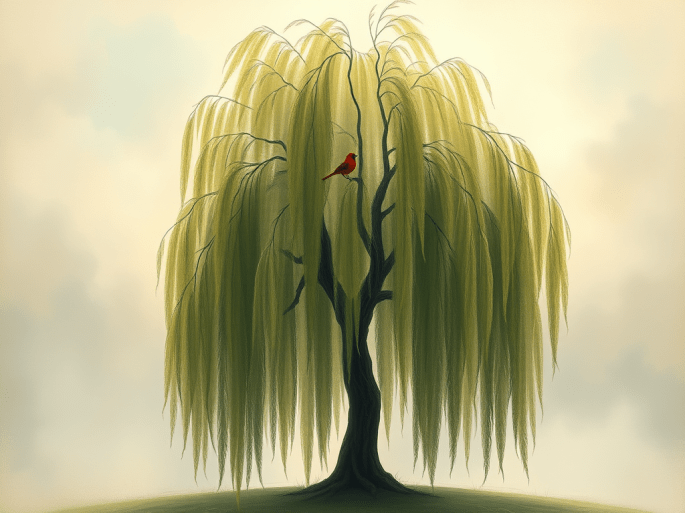
Now, nearly a year later, everything has changed, and yet, nothing has. I haven’t stepped foot next door since her memorial service. I see her willow tree—the one thing her black thumb didn’t kill. Some days, it makes me smile. Other days, it makes me cry. She should still be here. She should be helping Nick with his schoolwork, swapping recipes with me, planning our gardens together. But she isn’t. And as March 18th approaches, the weight of her absence grows heavier.

She was more than a friend. She was my sister in every way except blood. My confidante, my reality check, my protector. And now, she’s gone. There’s no one to fill her shoes. The grief is raw. The reality of outliving those we love is a harsh lesson, one I’ve always known but never fully embraced: No one is promised another day.

Finding Ways to Cope

Grief is a journey, not a destination. It changes shape but never fully disappears. If you’re walking this path, too, here are some ways to navigate the pain:

1. Allow Yourself to Feel There is no timeline for grief. Some days, you’ll laugh at a memory. Other days, the pain will take your breath away. Let it. Don’t rush healing. There’s no right or wrong way to grieve.

2. Honor Their Memory Find ways to keep their spirit alive. Cook their favorite meal. Plant something in their honor. Share their stories. Audra’s willow tree reminds me that she was here, that she mattered.

3. Lean on Your People Grief can feel isolating, but you don’t have to carry it alone. Talk to someone who understands. Share your pain, your memories, your love. Let others support you.

4. Find Purpose in the Pain Loss has a way of reshaping our priorities. I choose to love more fiercely, forgive more freely, and live more intentionally. Life is too short to do more damage.

5. Give Yourself Grace There’s no “moving on,” only moving forward. Some days will be harder than others. That’s okay. Be patient with yourself.

Grief is love with nowhere to go. And in that love, Audra remains. She may not be here to call me and tell me to snap out of it, but I hear her voice in my heart. I honor her by living, by loving, by carrying her with me in all the ways that matter.

And if there was a phone line to heaven, I know she’d be on my butt about it.