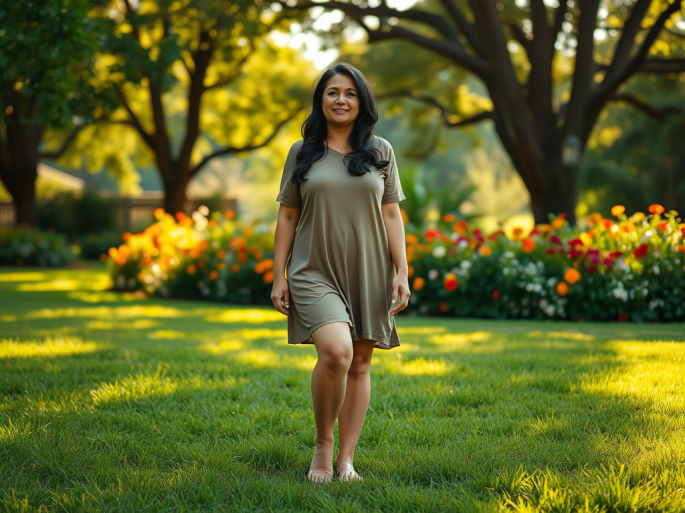
Breaking Free from Your Comfort Zone

Where Growth Begins
We all love our comfort zones. They’re warm, familiar, and safe — a space where
routines rule, risks are low, and uncertainty is kept at bay. It’s where we feel in control.
But while this space might feel cozy, it can also become a quiet trap, keeping us stuck in
sameness and stalling our potential.
Growth, learning, and transformation don’t happen in the comfort zone. They begin the
moment we stretch beyond it — when we test our limits, explore the unfamiliar, and
challenge our own self-imposed boundaries.

The Power of the Stretch
Stretching beyond the comfort zone doesn’t mean making reckless decisions or chasing
extremes. It means trying something new, stepping into the unknown even if your voice
shakes, and accepting that discomfort is part of the journey.
Maybe it’s launching that business idea you’ve been sitting on. Or finally signing up for
that fitness class. Maybe it’s starting a creative project, speaking in public, or even just
introducing yourself to someone new. Each step outside the comfort zone is a vote of
confidence in yourself.
The truth is, you can’t grow without a little stretch. That’s how muscles develop, skills
sharpen, and people evolve.

Rethinking Failure: A Learning Opportunity
One of the biggest reasons we cling to the comfort zone is fear — especially the fear of
failure. But what if we started seeing failure for what it really is: a First Attempt In
Learning?

Failure is not a dead-end. It’s feedback. It teaches resilience, refines strategies, and
builds wisdom. Every successful person has failed — not once, but often. The
difference is, they didn’t stop there. They saw failure not as a reflection of their worth,
but as a stepping stone to growth.
Let’s drop the perfectionism. We are often our own harshest critics, expecting ourselves
to get everything right the first time. But perfection is a myth — progress is real. Give
yourself permission to be a beginner. To stumble. To grow messy and real, instead of
polished and safe.

Investing in Yourself Is the Boldest Move You Can Make
Whether you’re dreaming of building a business, learning a new hobby, improving your
health, or expanding your social circle — the first step is the scariest. But it’s also the
most empowering.
Taking a leap of faith isn’t about having zero fear — it’s about moving forward despite
the fear. It’s telling yourself, “I may not have all the answers yet, but I believe I’m worth
the effort.”

A Challenge for You
Today, take one small step outside your comfort zone. It doesn’t have to be dramatic.
Maybe it’s sharing your work online, reaching out to someone you admire, or signing up
for a class. Whatever it is, let it be a declaration: I am willing to grow.
You don’t need to be fearless. You just need to be brave enough to begin.

Remember: Your comfort zone may feel safe, but your potential lives outside of it. Take
the leap. Stretch. Fail. Learn. And most importantly, believe in yourself enough to try.

Making Lemons to Lemonade: Pausing to Heal

When Life Gives You Lemons

Life has really been topsy-turvy over the last few years. Every single time I feel like I’ve got things together and they’re finally smoothing out—BAM! Something happens. Something shifts. The rug gets pulled out from under me and I’m left to figure out how to adapt all over again.

Sometimes it’s something small, like needing to start blood pressure medicine. Other times, it’s devastating, like the loss of a parent. Either way, it changes the way we move through life. I say “we,” but really, I mean me. These experiences shape how I think, how I react, and how I heal.

Over the past few years, I’ve gained and lost a lot—people, routines, habits, hopes. But right now, I want to focus on what I’ve gained. I need to. Because if I dwell too long on the losses, I risk sinking into a deep ocean of grief. So instead, I choose to lean into growth. I’m learning to be still. To listen. Not just to the noise around me, but to the quiet wisdom inside my body and my instincts.


When You Slip (And You Will), Here’s How to Get Back on Track

Let’s be honest—knowing what’s good for you doesn’t always mean you’ll do it. I have the knowledge. I know how to eat well, sleep better, stretch, breathe, reflect, reset. But in those moments when the world feels heavy and nothing makes sense, the old habits come back like they never left.

Maybe I skip meals or reach for all the wrong ones. I forget to drink water. I stay up too late scrolling. I miss my yoga. My meditation mat gathers dust. And then come the consequences: brain fog, body aches, mood swings, a constant feeling of being off.

Here’s what I’ve learned, though:

  • Start small. Don’t try to overhaul your life overnight. Pick one thing. Just one. Maybe it’s drinking a glass of water first thing in the morning. Maybe it’s five minutes of quiet breathing before bed. Just start.
  • Don’t punish yourself. Guilt is not a motivator; it’s an anchor. Instead of beating yourself up, offer yourself some grace. Say, “Okay, I missed today. Tomorrow is a fresh start.”
  • Set visual cues. Put your yoga mat where you can see it. Leave sticky notes with affirmations on your mirror. Set reminders in your phone to pause and breathe.
  • Talk about it. Whether with a friend, a therapist, or a journal—say it out loud. When you name the struggle, it loses some of its power.

How to Make Lemonade When Life Gives You Lemons

The truth is, life will give you lemons. Sometimes by the bucketload. But those lemons? They don’t have to rot. They can be squeezed into something meaningful, something new. Here’s how I’m learning to turn sour moments into sweet progress:

  • Shift the perspective. Instead of asking, “Why is this happening to me?” try, “What is this trying to teach me?” Every challenge is an invitation to evolve.
  • Create something. Pain and frustration are powerful fuel for creativity. Write, paint, build, sing, garden—channel that energy somewhere healing.
  • Help someone else. When you’re struggling, reach out to someone else who is too. Kindness multiplies, and it gives your pain purpose.
  • Celebrate the smallest wins. Got out of bed today? Win. Drank water instead of soda? Win. Laughed, even once? That’s a huge win.

Final Thoughts

Life’s chaos won’t stop. There will always be something unexpected around the corner. But the way I meet those moments? That’s up to me. I’m learning—slowly, imperfectly—to meet them with softness, with self-awareness, and with hope. Even when I slip, even when it’s hard, I keep reminding myself:

I can begin again.

And again.

And again.

Because when life gives me lemons, I won’t just make lemonade.

I’ll build the whole stand.

It’s Okay to Be Selfish with Your Time—In Fact, You *Should* Be

Time is the one resource we can never get back. We can earn more money. We can rebuild relationships. But once a moment passes, it’s gone forever. That’s why being *intentional*—and sometimes unapologetically selfish—with your time is not just okay, it’s essential.We live in a world that glorifies being busy. We’re constantly asked to do more, give more, be more. But constantly pouring into others without refilling yourself is a recipe for burnout, resentment, and even health issues. Here’s the truth: you can’t pour from an empty cup.

It’s okay to say no to that fundraiser. It’s okay to skip the party, even if everyone else is going. It’s okay to let a friend know, “Hey, I love you, but my social battery is low right now. I need to rest.” This isn’t being selfish in the negative sense—it’s *self-preservation*. Protecting your peace, your energy, and your time is an act of self-respect. Every commitment you make—every “yes”—costs you something. Time, energy, money, mental bandwidth. And those things are finite.When you protect your time, you’re actually being honest about your priorities. And sometimes, those priorities need to be **you**: your health, your mental wellbeing, your finances, your peace. That’s not only acceptable—it’s *wise*.Because when you’re well-rested, grounded, and financially stable, you’re *better* for everyone around you. You’re a better friend, parent, partner, coworker, neighbor. Boundaries aren’t walls; they’re filters. They help you protect what matters most.

So let this be your permission slip:

Say no.

Stay home.

Log off.

Take the nap.

Prioritize the workout.

Decline the call.

Your time is precious. Treat it like it is. You deserve to be the main character in your own life—not just a supporting role in everyone else’s.–love and light y’all

Shift Your Perspective: Transform Your Life Today


Ever been in a room where everything felt a little off—too loud, too dark, too uncomfortable—only to realize later that it wasn’t the room, it was just where you were sitting?

Life is often like that.

Sometimes, we find ourselves stuck in frustration, fear, disappointment, or burnout. We look around and think, This situation is hopeless. This is never going to work. Nothing is changing. But maybe, just maybe, the problem isn’t the room—it’s our seat. Our perspective.

When we’re in the thick of a struggle, it’s easy to forget that what we see isn’t all there is. We mistake our limited view for the full picture, and we let that shape our choices, our emotions, even our identity. But a shift in perspective—like walking to the other side of the room—can transform not only how we see things but what we believe is possible.

As the writer Anaïs Nin once said, “We don’t see things as they are, we see them as we are.”

A Better Seat, A Better View

You’ve probably heard the phrase, “Change your mindset, change your life.” That’s not just a motivational quote—it’s a practical truth. When we step back, pause, and actively choose to look at our situation differently, new options begin to emerge. Where once we saw dead ends, we start to see doors. What felt like defeat now feels like a detour toward something better.

One of my favorite lesser-known reminders comes from author Mary Schmich:
“Don’t be reckless with other people’s hearts. Don’t put up with people who are reckless with yours.”
It’s a quote about boundaries—but it’s also about clarity. Sometimes, perspective is recognizing that the discomfort we’re feeling is a signal, not a sentence.

Perspective Doesn’t Deny Pain—It Reframes It

Let’s be clear: changing your perspective doesn’t mean ignoring reality or pretending things are okay when they’re not. It means being honest about your circumstances while also being open to seeing them through a different, more empowering lens.

Poet Mark Nepo captures this beautifully when he writes:
“To listen is to lean in, softly, with a willingness to be changed by what we hear.”
And that includes listening to ourselves—our stories, our patterns, our pain. Because sometimes, the shift in perspective comes not from looking out but from looking in.

How to Shift Your Perspective

Here are a few simple ways to change where you’re “sitting” in the moment:

  1. Zoom out. Imagine advising a friend who’s in your exact situation. What would you tell them?
  2. Seek contrast. Talk to someone with a totally different experience. Their viewpoint can shed light on angles you hadn’t considered.
  3. Ask better questions. Instead of “Why is this happening to me?” try “What is this trying to teach me?”
  4. Get physically moving. A walk, a drive, or just stepping outside can break the mental loop and bring clarity.

As the philosopher Epictetus said,
“It’s not what happens to you, but how you react to it that matters.”
Not flashy. Not romantic. But deeply true.

In the End…

Perspective won’t magically solve every problem, but it will change how you carry it. It will determine whether the weight breaks you down—or builds you up.

So the next time life feels impossible, unfair, or too heavy, ask yourself: Is it time to change seats?

Because sometimes, a new view is all it takes to do better—and be better.


Redefining Success: Finding Peace in Life’s Surprises

Facing Life’s Uncertainties: Embracing the Next Chapter

At some point in our lives, we all find ourselves in that moment of reflection—the one where we look around and say, “This isn’t what I expected my life to be.” It doesn’t matter what age you are; this feeling can creep up on anyone. Whether you’re 25, 35, 45, or even nearing 60 or 65, you might find yourself questioning the trajectory of your life. Perhaps you’re not where you thought you would be. Maybe your dreams didn’t quite unfold the way you envisioned, or unexpected changes like a career shift, a loss, or a new phase of life are making you ask, “What’s next?”

Life is a journey full of unexpected twists and turns, and as we grow older, we often find ourselves facing moments of doubt and uncertainty. These feelings of questioning and reflection are commonly referred to as an “existential crisis,” and they can come at any age. Whether it’s a mid-life crisis, a career change, the loss of a loved one, or just an overwhelming sense that things aren’t where they should be, this feeling is universal. However, that doesn’t mean it has to be a negative or immobilizing experience. In fact, it can be a powerful opportunity for growth and reinvention.

So, what can you do when you feel like life hasn’t gone as expected? How can you navigate these moments of doubt and find peace and purpose moving forward?

1. Acknowledge Your Feelings

First and foremost, it’s essential to acknowledge that feeling uncertain or disillusioned is normal. There’s no shame in having moments of doubt. If anything, it shows that you are human. These moments are often accompanied by frustration, regret, or even sadness—but these emotions are valid, and you don’t need to suppress them. Allowing yourself to feel them without judgment is the first step to moving forward.

Take time to process these emotions, whether it’s through journaling, talking with a trusted friend, or simply sitting with your thoughts. Reflect on what led you to this point and recognize that it’s okay to have expectations that evolve as life changes.

2. Reframe Your Perspective

One of the most important things you can do when facing an existential crisis is to reframe your perspective. Instead of seeing this period of uncertainty as a failure or missed opportunity, consider it as an invitation to reevaluate your goals, dreams, and values.

The truth is, life rarely unfolds in a straight line. It’s often full of detours, challenges, and moments where we stray from the original path. But these detours can offer new perspectives and experiences that are equally as valuable—if not more so—than the original plan. Look at your life as a work in progress, not a finished product. Each stage and each change has brought you to where you are, and this is part of the adventure.

3. Redefine Success

We often define success based on societal standards: a certain career, financial security, family life, or status. But as you get older, you begin to realize that success is a deeply personal experience. What once seemed like the perfect blueprint for happiness may no longer hold the same allure. This is your opportunity to redefine what success means for you.

Ask yourself: What truly matters to me? Is it happiness? Freedom? Creativity? Fulfillment? Health? Relationships? Redefining success based on your own values rather than external expectations will bring you greater satisfaction and peace of mind as you move forward.

4. Embrace Change and Let Go of the Past

The fear of change often holds us back from taking the necessary steps to move forward. We can get so attached to our past choices, relationships, and circumstances that we resist change, even when it’s for the better. However, change is inevitable, and sometimes it’s necessary for growth.

If you’re stuck in a place of regret or resentment, it’s important to work through these feelings and find a way to let go. Holding on to the past only keeps you anchored in a time that no longer serves you. Forgive yourself for the things you didn’t know or the decisions you wish you could take back. Life is about learning and evolving, and each decision, whether good or bad, has contributed to who you are today.

5. Take Small Steps Toward a New Beginning

When facing an existential crisis, it can feel overwhelming to think about making big changes all at once. Instead of focusing on the end goal, take small steps toward what’s next. Start with something simple, whether it’s taking up a new hobby, learning a new skill, or revisiting an old passion that brought you joy.

You don’t have to make dramatic life-altering decisions overnight. Change is often most sustainable when it’s gradual and intentional. These small steps will help you rediscover what excites and motivates you. Over time, they’ll lead to a greater sense of fulfillment and confidence.

6. Seek Support

You don’t have to go through this alone. Seek out support from friends, family, or a therapist who can help you navigate these difficult emotions. Sometimes, just talking about what you’re feeling can provide clarity and a fresh perspective. If you’re facing significant life changes, such as retirement or loss, talking with others who are going through similar experiences can be incredibly comforting and reassuring.

Remember that no matter how isolated you may feel, you are not alone. Many people have faced moments of uncertainty and emerged stronger, wiser, and more at peace with who they are. Having a support system is key to maintaining your mental and emotional well-being.

7. Embrace the Unknown

One of the most liberating things you can do when faced with an existential crisis is to embrace the unknown. Life is unpredictable, and while we may want to have everything mapped out, the beauty of life often lies in its uncertainty. It’s okay not to have all the answers.

By embracing uncertainty, you open yourself up to new possibilities and opportunities. You might not know exactly what the future holds, but that’s where the adventure lies. By remaining open to change, you allow space for creativity, growth, and the unexpected joys that life can bring.

8. Focus on What You Can Control

During times of uncertainty, it’s easy to become overwhelmed by the things outside of your control. However, focusing on what you can control—your mindset, your actions, and your attitude—can empower you to take charge of your future. When life feels chaotic, focusing on small, actionable steps can provide a sense of stability and purpose.

Take care of your mental and physical health, nurture your relationships, and pursue goals that are meaningful to you. The more you focus on the areas where you have agency, the more empowered you’ll feel to navigate whatever life throws your way.

Conclusion: Live and Light

Life will never unfold exactly as we expect it, and that’s okay. What matters most is how we respond to the curveballs life throws at us. If you find yourself feeling stuck or questioning where you are in life, remember that it’s not the end of the road—it’s the beginning of something new.

Take a deep breath, acknowledge your feelings, and know that the next chapter is yours to write. Embrace change, redefine your success, seek support, and take small steps toward the future you desire. Life is about growth, reinvention, and embracing whatever comes next.

Sign off with a sense of lightness. You are not alone in this journey, and every step forward—no matter how small—is progress. Keep living, keep evolving, and keep finding the joy in the unexpected.