Addiction.


Just sit with that word for a moment.
It carries weight. It sounds heavy. Shame-filled. Final. I can’t think of many positive things we associate with it.
I personally smoke cigarettes (working toward quitting), and I am absolutely a caffeine addict — and probably sugar too. But beyond my own habits, I have loved addicts. Not just romantically. Friends. Family. People I would go to the ends of the earth for.


So let’s ask the question plainly:
Is addiction a disease? A condition to be treated? Something recovery is possible from?
Yeah. Yes. It is.


What Is Addiction?
The American Society of Addiction Medicine defines addiction as:
A treatable, chronic medical disease involving complex interactions among brain circuits, genetics, the environment, and an individual’s life experiences. People with addiction use substances or engage in behaviors that become compulsive and often continue despite harmful consequences.


The National Institute on Drug Abuse explains it similarly — addiction is a chronic, relapsing disorder characterized by compulsive drug seeking and use despite negative consequences.
Chronic.
Medical.
Treatable.


Those words matter.


And here’s something else that matters:


In the United States, about 1 in 6 people struggle with a substance use disorder each year.
Millions more struggle with nicotine dependence.
Caffeine dependence is widely recognized.
Studies show that highly processed foods can trigger brain reward systems in ways similar to addictive substances.
This isn’t rare. This isn’t “those people.” This is us. Our neighbors. Our families.


We Joke About It… But Should We?
People casually say, “I’m a coffee addict.”
Or “I’m addicted to Diet Coke.”
Or “Don’t talk to me before my sugar.”
But do we understand the weight of that word?


Yes — you really can be addicted to sugar, caffeine, nicotine, and highly processed foods. That doesn’t make you weak. It makes you human with a brain wired for reward.
Our brains are designed to remember what feels good and to repeat it. Dopamine — the “feel good” neurotransmitter — reinforces behaviors that provide pleasure or relief. Over time, repetition becomes reliance. Reliance becomes dependence.
And dependence, when disrupted, becomes withdrawal.


The Logan Story
Let me tell you a story.
Logan was 10. His mom wasn’t much of a cook, so meals were mostly pre-packaged, fast food, convenient — and let me say clearly: fed is fed. No judgment. Survival comes first.
But when summer came, Logan went to stay with Dad and stepmom. They cooked fresh food. Fruits. Vegetables. Homemade meals. Grilled burgers and hot dogs.
Within days, Logan had what looked like the flu. Headaches. Fatigue. Irritability. Just not himself.
His big sister picked him up, took him to the movies and — yes — McDonald’s.
Miraculous recovery.
Until a week later, when the “flu” returned.
He wasn’t sick. He was withdrawing.
His body had become accustomed to high levels of sugar, sodium, and processed additives. When they disappeared, his system reacted.
Dad refused to reintroduce the fast food. They let his body recalibrate. It was uncomfortable. It was eye-opening. And it was very real.
Logan didn’t know he was dependent.
But his body did.


It’s All the Same Brain
Opioids.
Nicotine.
Methamphetamine.
Alcohol.
Sugar.
Caffeine.


Different substances. Same reward circuitry.
When we remove what the brain has grown used to, the body protests.


Withdrawal can look like:
Headaches
Fatigue
Anxiety
Irritability
Nausea
Depression
Physical pain


Some withdrawals are uncomfortable. Some are dangerous. Some are life-threatening.
But the mechanism? The brain wanting what it has been trained to expect.


So Where Do We Start?


We start by naming it.


Without shame.


We stop whispering about addiction like it’s a moral failure. We stop labeling people as “weak” or “lacking willpower.”
We start asking:
What pain is this numbing?
What pattern is this reinforcing?
What support is missing?
Addiction thrives in isolation. Recovery thrives in connection.
Somewhere, there has to be a conscious decision to become mindful of what we are putting into our bodies — and why.


Not with judgment.
With curiosity.


My Truth
I am a caffeine addict.
I am nicotine dependent.
I am working on both.
And I have loved addicts.


Deeply.


We need to help one another make better choices instead of judging someone’s struggle. Because it could be you. It could be me. It could be someone you love.
Addiction is not a character flaw.


It is a condition.
It is treatable.
Recovery is possible.


And compassion? That should be non-negotiable
The Becoming : Pride in the midst of chaos

Both Things Can Be True

This past week felt like a culmination of so many moments for my niece.

She is my older sister’s only child, and she is truly a gem of a human—kind, smart, hardworking, and quick with a perfectly timed sassy comeback when the moment calls for it. It’s her senior year, and with that comes all the lasts of high school, not just for her, but for her mom too. Anyone who has parented a senior knows those endings hit in unexpected ways.

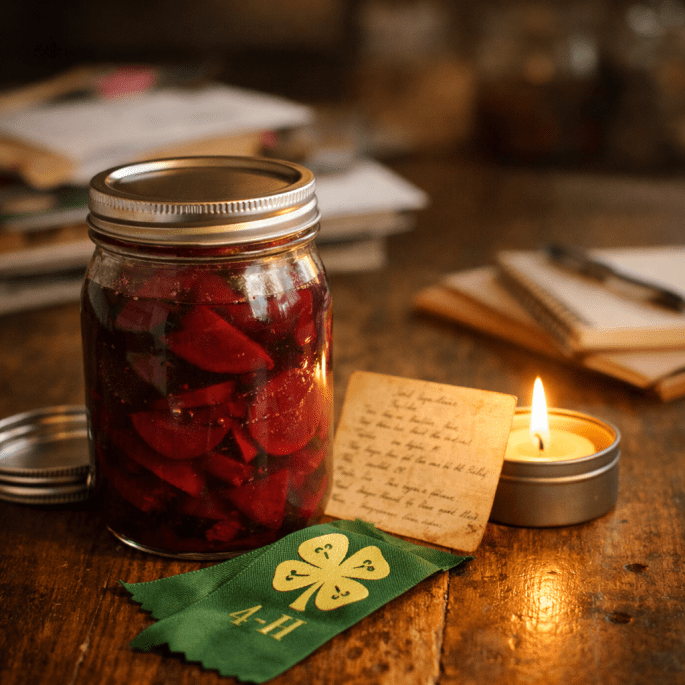
My niece is a 4-H and FFA gal, a band kid, and a Girl Scout. Through these programs she has learned responsibility, leadership, grit, creativity, and how to show up even when things are hard. I am so incredibly proud of her accomplishments. At her last county show, she earned Reserve Champion with pickled beets (yes—pickled beets!), and her market broilers made the sale. Those are not small wins. They are the result of years of early mornings, late nights, dirty boots, careful planning, and persistence.

Another “last” arrived quietly when I had the chance to talk with my sister about what comes next for her baby—her everything. And make no mistake, this kid has options. Several schools have already accepted her, and some came with scholarship packages. That is huge. That is exciting. That is the payoff for all those years of busyness and commitment.

It sent me straight back in time to my own years as a mom with kids who showed. The careful choosing of recipes. The guarding of certain ones like state secrets (banana butter, I’m looking at you). The pride of watching your kids take ownership of their work. Even my two older daughters—without any guidance from me—entered items and won prizes. There is something deeply satisfying about watching your children surprise you with who they are becoming.

All of that nostalgia, love, and pride has been swirling around me this week… while my own life looks a bit like a shit show.

Our water heater quit and is limping along on a temporary fix after days without hot water. I’m dealing with a kidney infection and a pharmacy run that couldn’t come soon enough. Our car is broken down and has a flat tire. My husband had a job lined up, attended orientation, only to be told days later that the position had already been filled. And just to round things out, I sliced my fingers open trying to pry a tin can (yes, I absolutely should know better), which earned me an ER visit, a tetanus shot, glued fingers, a wrapped thumb, and the loss of a good portion of my thumb pad. Goodbye thumbprint.

And yet—both things can be true.

I can feel immense love and pride for my niece and her accomplishments while my own world feels messy, loud, painful, and frustrating. I won’t fall into woe is me. This is my life. It is complicated and exhausting and sometimes downright ridiculous. There are days I want to strangle someone (figuratively… mostly). But then there are days when I glance in the rearview mirror and realize how far I’ve come.

I’ve survived every single thing I thought would break me.
That survival rate? 100%.

Am I the same person I once was? Absolutely not. But isn’t that the point? Life is about the becoming. About collecting skills, wisdom, scars, and stories. About learning how to stand back up. About making the world a little better where we can—just like my lovely niece is already doing.

And yes, you’d better believe I can still recite the 4-H pledge, parts of the FFA Creed, and the Girl Scout Promise.

Here’s to the becoming in 2026.
Love and light, y’all 🕯️

Christmas Togetherness: Embracing Love and Laughter

Christmas This Year

This Christmas season started off a bit heavy for me. I’ll be honest — I was sad for quite a bit, pretty much right up until our family’s Christmas Eve celebration.

That night, I sat at the end of the kitchen table and turned my head toward the living room as the littles opened their gifts. The sound that filled the house — the giggles, the pure laughter of children — there truly isn’t a better sound in the world. I teared up for a moment because that right there is exactly why I came.

I thought to myself, Mom and Daddy would be proud. They must be smiling down on us, because this—this togetherness, this joy—is all they ever wanted for us: to be together, to be present in each other’s lives, and to genuinely enjoy it.

Once the kids finished opening their gifts, it was the adults’ turn to shine as we mingled and prepared for our “Chinese Christmas” gift exchange. It was a blast — there were surprises, steals, laughter, and that wonderful mix of chaos and cheer that only family can create.

Then my sisters introduced a new game — one where you pass a gift left or right as a silly story is told, customized with everyone’s names. Each player put in a dollar, and a “Golden Ticket” prize would go to the winner, collecting the cash from everyone’s entry. It was silly and fun and full of laughter, just the way it should be.

My youngest got a few really thoughtful gifts this year, and at one point, he realized he only has two more years left of being “one of the kids.” That hit me — it made me pause and reflect. I have seven kids I call my own: five I gave birth to and two girls I’ve loved like my own for years. Four of them now have incredible partners — kind, caring, compassionate individuals who truly see who my children are and love them, flaws and all.

Even with a few behind-the-scenes hiccups (let’s just say there was a grocery order debacle, a brief moment of running out of gas, and yes, my husband losing his job), it was still a blessed Christmas.

Because at the end of the day, being surrounded by love, laughter, and the people who matter most — that’s what Christmas is all about.

Why Emotional Labor Deserves Recognition


The Cost of Being Unpaid

I often feel invisible. Not unseen in a dramatic way—but quietly, persistently taken for granted.

My empathy, my sympathy, my knowledge, and the countless things I offer other human beings move through the world without acknowledgment. I do not get paid to cook nourishing meals. I do not earn a wage for listening while someone vents, or for offering advice, or for helping untangle problems that aren’t mine. There is no paycheck for being available, for showing up emotionally, for holding space.

And yet, these things take time. They take energy. They take experience.

I have knowledge. I have lived enough life to understand nuance, to adapt, to learn quickly, to respond with compassion and clarity. I share all of it freely—especially with family. I give because I care, because connection matters to me, because helping feels natural. But because there is no monetary value attached to my time, no salary or hourly rate, it often feels as though my worth is somehow less.

Less than my sisters.
Less than anyone who earns money doing things.

I know—logically—that my skills have value. I know that emotional intelligence, adaptability, and lived experience are not insignificant. But where do they fit on a wage scale? What number do you assign to being the person others rely on? Why does value seem to exist only when it can be measured in dollars?

If I stopped doing all the things I normally do—if I were no longer available, no longer the listener, the helper, the cook, the steady presence—what then? Would the absence finally make the value visible? Or would it simply be filled by someone else, still unpaid, still unacknowledged?

Americans are relentlessly committed to monetizing every moment. A hobby can’t just be enjoyable—it has to become a side hustle. Creativity must be productive. Passion must be profitable. But a hobby stops being fun the moment it becomes a have to instead of a want to. When joy is turned into obligation, something essential is lost.

So I keep circling back to the same painful question:
If I am not valuable because I do not earn money… then what does that say about all the work that keeps people going but never appears on a balance sheet?

Maybe the problem isn’t my worth.
Maybe the problem is a system that only recognizes value when it can be billed, sold, or taxed.

And maybe being unpaid does not mean being unworthy—no matter how often the world makes it feel that way.

Therapeutic Cooking: Finding Peace in Recipes

Finding Peace in the Kitchen: Cooking My Way Through the Chaos

Lately, I’ve been spending a lot of time in the kitchen — testing recipes, adjusting ingredients, and finding creative ways to use what I already have on hand. It’s not just about food; it’s about coping. It’s how I manage the discombobulation of my feelings, the uncertainty of the world, and the heaviness that sometimes tries to creep in. Cooking keeps my hands busy, my mind focused, and my heart grounded.

My kids are loving this little culinary journey — they’ve become my official taste testers. Not every recipe is a winner, but that’s part of the fun. My cinnamon rolls, for example, turned out tough and not fluffy at all. Instead of tossing them, I chopped them up, added a custard base, and turned them into a cinnamon roll French toast bake. It was a hit! Proof that even “failed” recipes can have delicious second lives.

I’ve been challenging myself to waste less and create more. Leftover taco meat, beans, Spanish rice, and corn turned into a comforting fall soup — some went straight into the freezer for another day. A close-dated can of fruit cocktail became the unexpected star of my “sweet heat salsa” when I mixed it with some red pepper flakes. I poured it over a pork roast, served it with mashed potatoes, and let me tell you — it was so good. Simple, cozy, belly-filling goodness.

Cooking every day — baking bread, making tortillas, mixing my own seasonings — has become more than a necessity. It’s a form of therapy. It helps me stay present and productive while I navigate this time of year, which has been difficult for me for a number of years. Recently, I restocked my pantry: flour, sugar, baking powder, cocoa, beans, potatoes, meats… all the staples that keep a kitchen humming. It gave me a strange sense of comfort and accomplishment — a reminder that even when life feels uncertain, there’s something deeply grounding about being able to nourish my family.

Sometimes, I think about my mom, Granny, Aunt Mertie, my former mother-in-law, and my Daddy. They all enjoyed my cooking, especially when my experiments turned out well. I think they’d be proud of me now — keeping their traditions alive while adding my own twist.

This — the mixing, the kneading, the simmering — this is how I cope. It’s how I manage the overwhelm, the grief, the unknown. It’s creative, it’s practical, and it fills both the stomach and the soul.

So if you’re feeling weighed down by the world or by your own thoughts, maybe try stirring something up in your kitchen. You might just find a bit of peace in the process, too.

Love and light, y’all.
And remember — you matter.