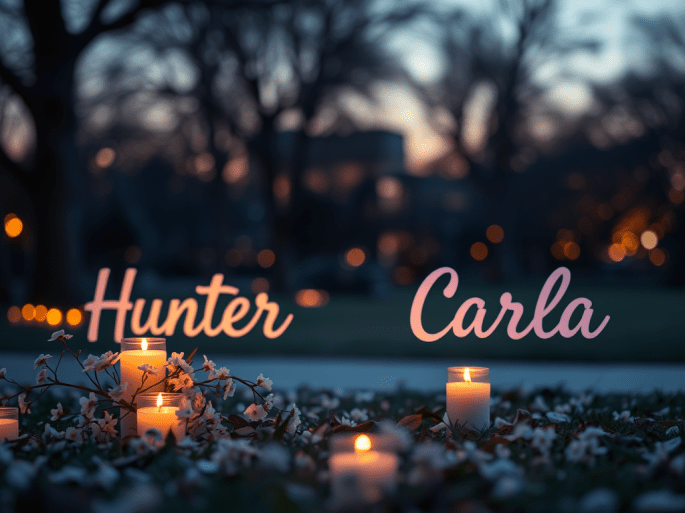
The Unforeseen Losses That Make Us Pause:

Honoring Hunter and Carla

Life has a way of jolting us awake when we least expect it. Today as I took my lunch out and opened Facebook, I received heartbreaking news: my dear friend Carla took her own life on Monday, May 12, 2025—the day after Mother’s Day, and only a few months into becoming a grandmother. Just a couple of months ago, my cousin Hunter also died by suicide. Both losses have left me reeling, grappling with sorrow and a profound sense of helplessness.

I cried for Carla, for Hunter, and for the immense pain they must have carried—pain that felt insurmountable, perhaps invisible to those around them. I cried for their families, their friends, and everyone who loved them. Suicide is complex, layered with emotions and circumstances that are often difficult to untangle.

Hunter had struggled, and I imagine he was in immense pain that he felt no one could understand nor help him with. I’m not sure. Suicide is complicated, and I have come to understand that as I have gotten older.

Carla, an incredible friend and beautiful soul, took her life on Monday the 12th, the day after Mother’s Day and only a few months into being a grandma. In both cases, I cried. I cried for the ones closest to them, and I cried knowing how much they both must have hurt to feel as though the only relief they could garner was to make a permanent decision to leave this Earth.

Hunter, Carla, I hope you have peace now that you did not find while you were here with us. You are missed, you will forever be loved, and I hope in talking about your death, all of us can help someone else—make it less of a strain to talk about the hard stuff, make it easier for someone to ask for help.


The Silent Epidemic: Understanding the Scope

Suicide remains a pressing public health issue in the United States. In 2023, over 49,000 people died by suicide—that’s one death every 11 minutes. Additionally, 12.8 million adults seriously thought about suicide, 3.7 million made a plan, and 1.5 million attempted suicide. CDC+1USAFacts+1

These numbers are not just statistics; they represent individuals—friends, family members, colleagues—whose lives were cut short by overwhelming despair.


Breaking the Silence: The Importance of Open Conversations

Mental health struggles often go unnoticed, hidden behind smiles and daily routines. The stigma surrounding mental illness can prevent individuals from seeking help, fearing judgment or misunderstanding. It’s crucial to foster environments where open, honest conversations about mental health are encouraged and supported.

Organizations like the National Alliance on Mental Illness (NAMI) provide resources and support for those affected by mental health conditions. By promoting education and understanding, we can create a society where seeking help is seen as a strength, not a weakness.


Resources: You’re Not Alone

If you or someone you know is struggling, please know that help is available:

Remember, reaching out for help is a sign of strength. You are not alone, and there are people who care and want to support you.


Honoring Their Memories

In remembering Hunter and Carla, let us commit to being more compassionate, more attentive, and more open. Let’s check in on our loved ones, listen without judgment, and encourage conversations about mental health.

Their lives, though tragically shortened, can inspire us to create a world where mental health is prioritized, and no one feels they have to suffer in silence.

Hunter, Carla, your stories matter. May your memories be a catalyst for change, a reminder of the importance of connection, and a beacon of hope for those still fighting their battles.


If you or someone you know is in crisis, please reach out. Help is available, and you are not alone.
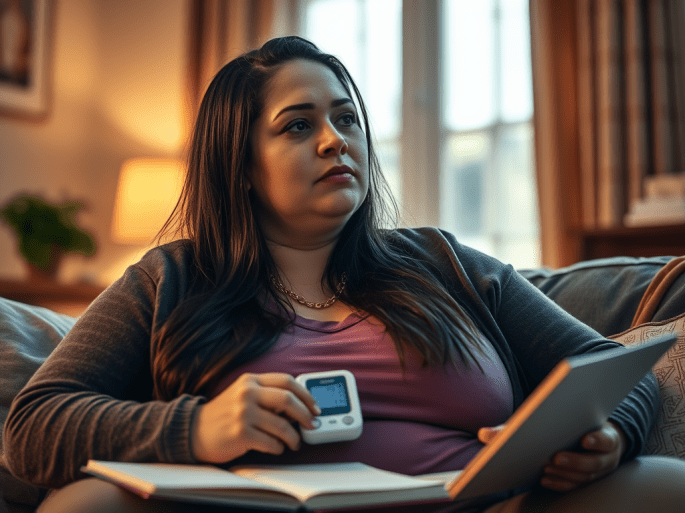

Embracing the Wake-Up Call:

My Heart, My Health, My Future

Just recently, I faced a terrifying moment that shook me to my core. Hearing the words “heart failure” was like a punch to the gut. Thankfully, after further testing, I was told there were no blockages and I wasn’t in heart failure. The relief was overwhelming—but I know I’m not out of the woods yet.

I’ll be wearing a portable telemetry monitor for a week to track my heart’s activity, keeping a blood pressure log, and likely starting a food diary for my upcoming GI appointment. New medications are now part of my daily routine, and I’m adjusting to a new normal. My heart acted up, and now it’s on the mend.

But here’s the truth: I know about diet. I know about exercise and stress management. I know I have to do better. This scare brought all my past posts and promises flooding back—reminders of what I’ve said I’d do and haven’t followed through on.

Listening to the Body’s Whispers Before They Become Screams

Our bodies are constantly communicating with us. Minor aches, fatigue, shortness of breath—these are often early warning signs. Ignoring them can lead to serious consequences. As highlighted by Southwest General Health Center, understanding and responding to these signals is vital for maintaining optimal health .medhelpclinics.com+1MindMate+1Southwest General

Even individuals who appear healthy can face unexpected heart issues. A 28-year-old techie from Bengaluru suffered a heart attack despite daily workouts, revealing an 80% heart blockage . Similarly, Gigi Campos experienced a heart attack at 34, despite being active and receiving reassurances from doctors about her health .@EconomicTimesSELF

A New Normal: Monitoring, Medication, and Mindfulness

Adjusting to this new phase means embracing tools and practices that support heart health. Wearing a telemetry monitor, logging blood pressure, and maintaining a food diary are proactive steps. These measures not only provide valuable data for healthcare providers but also foster a deeper connection with one’s own health journey.

Medication adherence is crucial. Understanding the purpose and potential side effects of each medication empowers patients to manage their health effectively. Regular consultations with healthcare providers ensure that treatment plans remain aligned with evolving health needs.

The Emotional Toll and the Power of Support

Facing a health scare is not just a physical challenge—it’s an emotional one. Feelings of fear, anxiety, and uncertainty are common. Seeking support from mental health professionals, support groups, or loved ones can provide comfort and guidance.

Sharing experiences, like those found in the American Heart Association’s “Stories From the Heart,” can be therapeutic and inspiring . These narratives highlight resilience and the human capacity to overcome adversity.www.heart.org

Looking Ahead: Celebrating Life’s Milestones

Life is fragile, and moments of crisis often bring clarity about what truly matters. For me, the upcoming wedding of my baby girl in September is a beacon of hope and motivation. I plan on being there, celebrating this momentous occasion with her.

This journey has reinforced the importance of self-care, vigilance, and the support of a caring community. Embracing a proactive approach to health, staying informed, and cherishing life’s precious moments are now at the forefront of my priorities

Embracing the New Normal: A Wake-Up Call and a Way Forward

 No stents. No blockages. Just a second chance I’m not wasting.

I never expected to find myself in a hospital bed, surrounded by machines and uncertainty. One day I was powering through headaches, stress, and fatigue like I always had—and the next, I was in an ambulance, symptoms screaming louder than I could ignore.

The initial tests pointed toward heart failure. Blood pressure was erratic, there was tingling in my arm, nausea, and pain that wouldn’t quit. It was overwhelming and frightening. The doctors moved quickly—every test, every scan—and for a while, it looked serious. Really serious.

But then something happened.

During the heart catheterization, they found no blockages. No need for stents. No angioplasty. Despite the initial fears, my heart was not in failure—it was simply tired, maybe inflamed, but very much intact. Miraculous? Absolutely. But then again, I am my mother’s child.

Now I’m home, and this is my new normal. And I’ve decided I’m not going to waste this wake-up call.


What I’m Doing Differently:

1. Saying Goodbye to Smoking—for Good.
No more half-hearted tries. My heart deserves better. My lungs, my body, my future deserve better. It’s hard, but healing is harder. So I choose prevention now.

2. Moving More, Stressing Less.
I’m not training for a marathon. I’m training for life. Gentle exercise, stretching, walking with purpose—it all counts. I’m also learning to sit still, breathe, and not wear stress like a badge of honor.

3. Eating with Purpose.
I used to eat “pretty well,” but now I’m focused on heart-friendly foods: lower sodium, fewer processed items, more whole foods. It’s not about restriction. It’s about respect—for what my body truly needs.

4. Listening to My Body—Really Listening.
Our bodies talk to us constantly. Mine was whispering, then it screamed. I’m tuning in now. No more pushing through warning signs or normalizing discomfort.


This experience reminded me that life doesn’t always give you loud warnings. Sometimes the signs are subtle until they’re not. So here’s what I want to tell anyone reading this:

Be mindful. Be present. You’re not invincible—but you are capable of changing course before it’s too late. I got a second chance. I’m choosing to take it seriously.

Because life is too precious to sleepwalk through.


It’s Okay to Be Selfish with Your Time—In Fact, You *Should* Be

Time is the one resource we can never get back. We can earn more money. We can rebuild relationships. But once a moment passes, it’s gone forever. That’s why being *intentional*—and sometimes unapologetically selfish—with your time is not just okay, it’s essential.We live in a world that glorifies being busy. We’re constantly asked to do more, give more, be more. But constantly pouring into others without refilling yourself is a recipe for burnout, resentment, and even health issues. Here’s the truth: you can’t pour from an empty cup.

It’s okay to say no to that fundraiser. It’s okay to skip the party, even if everyone else is going. It’s okay to let a friend know, “Hey, I love you, but my social battery is low right now. I need to rest.” This isn’t being selfish in the negative sense—it’s *self-preservation*. Protecting your peace, your energy, and your time is an act of self-respect. Every commitment you make—every “yes”—costs you something. Time, energy, money, mental bandwidth. And those things are finite.When you protect your time, you’re actually being honest about your priorities. And sometimes, those priorities need to be **you**: your health, your mental wellbeing, your finances, your peace. That’s not only acceptable—it’s *wise*.Because when you’re well-rested, grounded, and financially stable, you’re *better* for everyone around you. You’re a better friend, parent, partner, coworker, neighbor. Boundaries aren’t walls; they’re filters. They help you protect what matters most.

So let this be your permission slip:

Say no.

Stay home.

Log off.

Take the nap.

Prioritize the workout.

Decline the call.

Your time is precious. Treat it like it is. You deserve to be the main character in your own life—not just a supporting role in everyone else’s.–love and light y’all

Shift Your Perspective: Transform Your Life Today


Ever been in a room where everything felt a little off—too loud, too dark, too uncomfortable—only to realize later that it wasn’t the room, it was just where you were sitting?

Life is often like that.

Sometimes, we find ourselves stuck in frustration, fear, disappointment, or burnout. We look around and think, This situation is hopeless. This is never going to work. Nothing is changing. But maybe, just maybe, the problem isn’t the room—it’s our seat. Our perspective.

When we’re in the thick of a struggle, it’s easy to forget that what we see isn’t all there is. We mistake our limited view for the full picture, and we let that shape our choices, our emotions, even our identity. But a shift in perspective—like walking to the other side of the room—can transform not only how we see things but what we believe is possible.

As the writer Anaïs Nin once said, “We don’t see things as they are, we see them as we are.”

A Better Seat, A Better View

You’ve probably heard the phrase, “Change your mindset, change your life.” That’s not just a motivational quote—it’s a practical truth. When we step back, pause, and actively choose to look at our situation differently, new options begin to emerge. Where once we saw dead ends, we start to see doors. What felt like defeat now feels like a detour toward something better.

One of my favorite lesser-known reminders comes from author Mary Schmich:
“Don’t be reckless with other people’s hearts. Don’t put up with people who are reckless with yours.”
It’s a quote about boundaries—but it’s also about clarity. Sometimes, perspective is recognizing that the discomfort we’re feeling is a signal, not a sentence.

Perspective Doesn’t Deny Pain—It Reframes It

Let’s be clear: changing your perspective doesn’t mean ignoring reality or pretending things are okay when they’re not. It means being honest about your circumstances while also being open to seeing them through a different, more empowering lens.

Poet Mark Nepo captures this beautifully when he writes:
“To listen is to lean in, softly, with a willingness to be changed by what we hear.”
And that includes listening to ourselves—our stories, our patterns, our pain. Because sometimes, the shift in perspective comes not from looking out but from looking in.

How to Shift Your Perspective

Here are a few simple ways to change where you’re “sitting” in the moment:

  1. Zoom out. Imagine advising a friend who’s in your exact situation. What would you tell them?
  2. Seek contrast. Talk to someone with a totally different experience. Their viewpoint can shed light on angles you hadn’t considered.
  3. Ask better questions. Instead of “Why is this happening to me?” try “What is this trying to teach me?”
  4. Get physically moving. A walk, a drive, or just stepping outside can break the mental loop and bring clarity.

As the philosopher Epictetus said,
“It’s not what happens to you, but how you react to it that matters.”
Not flashy. Not romantic. But deeply true.

In the End…

Perspective won’t magically solve every problem, but it will change how you carry it. It will determine whether the weight breaks you down—or builds you up.

So the next time life feels impossible, unfair, or too heavy, ask yourself: Is it time to change seats?

Because sometimes, a new view is all it takes to do better—and be better.