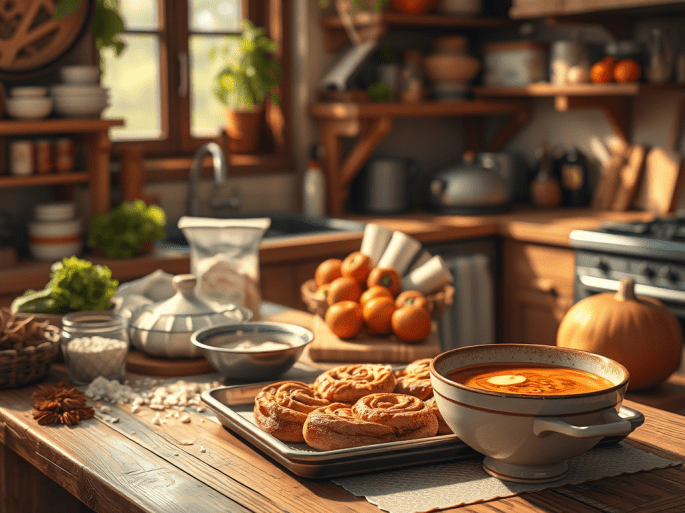
Therapeutic Cooking: Finding Peace in Recipes

Finding Peace in the Kitchen: Cooking My Way Through the Chaos

Lately, I’ve been spending a lot of time in the kitchen — testing recipes, adjusting ingredients, and finding creative ways to use what I already have on hand. It’s not just about food; it’s about coping. It’s how I manage the discombobulation of my feelings, the uncertainty of the world, and the heaviness that sometimes tries to creep in. Cooking keeps my hands busy, my mind focused, and my heart grounded.

My kids are loving this little culinary journey — they’ve become my official taste testers. Not every recipe is a winner, but that’s part of the fun. My cinnamon rolls, for example, turned out tough and not fluffy at all. Instead of tossing them, I chopped them up, added a custard base, and turned them into a cinnamon roll French toast bake. It was a hit! Proof that even “failed” recipes can have delicious second lives.

I’ve been challenging myself to waste less and create more. Leftover taco meat, beans, Spanish rice, and corn turned into a comforting fall soup — some went straight into the freezer for another day. A close-dated can of fruit cocktail became the unexpected star of my “sweet heat salsa” when I mixed it with some red pepper flakes. I poured it over a pork roast, served it with mashed potatoes, and let me tell you — it was so good. Simple, cozy, belly-filling goodness.

Cooking every day — baking bread, making tortillas, mixing my own seasonings — has become more than a necessity. It’s a form of therapy. It helps me stay present and productive while I navigate this time of year, which has been difficult for me for a number of years. Recently, I restocked my pantry: flour, sugar, baking powder, cocoa, beans, potatoes, meats… all the staples that keep a kitchen humming. It gave me a strange sense of comfort and accomplishment — a reminder that even when life feels uncertain, there’s something deeply grounding about being able to nourish my family.

Sometimes, I think about my mom, Granny, Aunt Mertie, my former mother-in-law, and my Daddy. They all enjoyed my cooking, especially when my experiments turned out well. I think they’d be proud of me now — keeping their traditions alive while adding my own twist.

This — the mixing, the kneading, the simmering — this is how I cope. It’s how I manage the overwhelm, the grief, the unknown. It’s creative, it’s practical, and it fills both the stomach and the soul.

So if you’re feeling weighed down by the world or by your own thoughts, maybe try stirring something up in your kitchen. You might just find a bit of peace in the process, too.

Love and light, y’all.
And remember — you matter.

Embracing Imperfection: Finding Grace in Struggle

I’m Letting You in on a Little Secret…

I’m going to let you guys in on a little secret: I do not have all of my ducks in a row!

Shocking, right? I know a little bit (or maybe a whole lot) about a great deal of things — cooking, baking, sautéing, homemaking, making money stretch — you name it. I’ve built real skills over the years, and I take pride in them. But even with all that knowledge, I still have those days. The ones that make me want to crawl back into bed and pull the covers over my head. The days that drag on so long and hard that I catch myself wishing the time away.

Yes, I know how to make money work for me, but I’ll be honest — once the needs are covered, I still struggle. Do I treat myself to something nice? Save it for later? Spend it on my kids? The internal debate is real.

I live with PTSD and anxiety. I get “blue” days — not what I’d call depression, but heavy enough that I feel it in my bones. I’ve seen true depression up close — in my children, in my ex-husband, in others I love — and it has taught me a lot about compassion, patience, and grace.

Some days, I’m full of energy and optimism, ready to take on the world. And other days… I’m lucky if I can get supper cooked. And that’s okay. I’ve learned that even with all my knowledge — about money, about mental health, about coping — some days just aren’t it.

On those days, I have to remind myself: give yourself grace. Say, “Enough. Be still. Rest.” You don’t have to do it all — especially today.

But here’s the tricky part: rest can easily turn into avoidance if we’re not careful. It’s important to recognize what’s going on and act accordingly. Listen to your instincts. Listen to your body. Rest when you need to — but also, when it’s time, get up and move.

Take the shower. Bake the bread. Step outside and touch grass.

We’re all learning in this life — every second, every day. We just have to keep showing up.

And if you ever feel like you fell short or owe someone an apology — do it, mean it, and move on. Know better, do better. Every. Single. Day.

Love and light,
💛 Julie

Surviving Overwhelm: Mental Health Tips for Today

Coping With Mental Health in Trying Times: Surviving the Storm When Everything Feels Overwhelming

There are moments in life when it feels like the weight of the world is pressing down on you. The kind of moments where everything seems to be stacking up—the bills are piling high, school is back in session, and the news feels like a relentless wave of tragedy. The pressure builds, leaving you running on fumes, emotionally drained, and unsure of how much more you can take.

Right now, many of us are living through a perfect storm of challenges. The reality of rising costs, personal responsibilities, and the heavy weight of constant bad news can leave you feeling overwhelmed, anxious, and even numb. If you feel like you’re just taking it day by day, doing your best to survive, you’re not alone. And while these times are undeniably difficult, there are ways to cope, find balance, and regain a sense of peace. Here are some strategies to help you navigate the mental strain of living through these trying times in America.

1. Acknowledge the Reality of What You’re Feeling

One of the hardest parts of mental strain is the guilt that often comes with it. We’ve been conditioned to push through, to “keep going” no matter what. But it’s okay to not be okay. When life is overwhelming, acknowledging your feelings is the first step toward healing. Whether you’re angry, scared, numb, or sad, allow yourself the space to sit with those emotions without judgment. You don’t have to be “better” or “stronger” every single moment.

When you name your emotions, you take the first step toward regaining control. Feeling overwhelmed is a natural response to these challenging times, but it doesn’t define you. By validating your emotions, you allow yourself permission to cope, heal, and move forward.

2. Practice Radical Self-Care (Yes, It’s Important!)

Self-care has become a buzzword in recent years, but it’s not just about face masks and bubble baths—it’s about setting boundaries and prioritizing your mental and physical health. In times of stress, it’s easy to forget to take care of yourself, but the reality is that without a solid foundation, it’s harder to weather the storms of life.

Start with small, achievable acts of self-care that nourish your body and mind. This could mean:

  • Sleep: Rest is non-negotiable. When you’re running on empty, a solid night’s sleep is essential for emotional and mental recovery.
  • Nutrition: Eat nourishing foods that give your body the energy it needs to tackle the day, even if it’s just a balanced snack.
  • Movement: Whether it’s a walk, yoga, or a dance party in your living room, moving your body can release stress and elevate your mood.
  • Mindfulness: Practice mindfulness or meditation, even if it’s just five minutes of deep breathing. The present moment is all we have, and grounding yourself can offer some much-needed relief.

3. Limit Your Media Consumption

It can feel like the world is burning down when you’re constantly glued to the news. From national tragedies to political chaos, the media can feel overwhelming and relentless. While staying informed is important, there’s a fine line between being aware and being consumed by it.

Consider setting boundaries on how much news you consume daily, and make time for things that uplift you. Try a digital detox—take a day off from social media, limit your news intake, and focus on things that bring you joy, whether that’s reading a book, spending time with loved ones, or enjoying nature.

4. Reevaluate Your Priorities

When life feels like it’s in constant crisis mode, it’s easy to get caught up in the demands of work, school, finances, and responsibilities. But sometimes, it’s important to step back and ask yourself: What’s really important right now?

  • Can you delegate some tasks to make life a little less overwhelming?
  • Are there things you can let go of, even temporarily, to give yourself space to breathe?
  • Do you have the energy to take on everything on your plate right now, or is it okay to ask for help?

Setting boundaries around your time and energy is not only okay—it’s necessary. Whether it’s saying “no” to an extra project at work or asking a friend or family member for help with errands, reclaiming your personal time is essential for mental health.

5. Find Support in Your Community

You don’t have to go through tough times alone. Whether it’s a trusted friend, a support group, or a therapist, talking about your feelings can help you feel seen, heard, and less isolated. Sharing the burden with others, even if it’s just a text or a phone call, can make a world of difference.

If you’re not already, consider reaching out to a mental health professional. Therapists and counselors are trained to help you navigate difficult emotions and offer tools for coping. Therapy isn’t a sign of weakness—it’s a way to strengthen your resilience and build healthy coping mechanisms for the future.

6. Focus on What You Can Control

In times of chaos, focusing on the things you can control helps to ground you. You may not be able to change the headlines or the world’s circumstances, but you can take control of how you respond.

Maybe that means focusing on your daily routine, budgeting your finances, or creating small, achievable goals. When things feel out of control, taking one step at a time toward something you can manage brings back a sense of agency.

7. Find Purpose in the Chaos

It’s easy to feel lost and overwhelmed when things are falling apart around you. But sometimes, finding a sense of purpose can bring clarity. This might mean reconnecting with your passions, getting involved in your community, or finding new ways to help others.

When we’re able to focus on something larger than ourselves, it can put the stresses of life into perspective. Helping others or contributing to a cause can also bring a sense of fulfillment and connection that’s hard to find in times of isolation.

8. Remember, You’re Not Alone

Living in America right now can feel uniquely stressful—whether it’s economic struggles, political tensions, or social upheaval, the strain can feel heavy. But in these moments, remember: You are not alone. Millions of people are navigating these same challenges, even if it doesn’t always feel like it. It’s okay to lean on others, to ask for help, and to give yourself the grace you need to heal.

In these tough times, survival might look different for each of us. It might mean focusing on day-to-day coping strategies, seeking therapy, or simply taking a break from the news. Whatever your journey looks like, remember that it’s okay to not have all the answers, and it’s okay to take things one step at a time.

Conclusion: Keep Going, One Day at a Time

The light at the end of the tunnel may seem dim right now, but it is there, even if it’s hard to see. Each day you keep going is a victory. You’re doing your best, and that’s all you can do. Be kind to yourself. Take small steps to care for your mental health, and remember that it’s okay to seek support. In trying times, surviving isn’t just about enduring—it’s about finding ways to thrive, no matter how small those steps may seem.

If you’re struggling, know that there is help, and there is hope. Keep pushing forward, and know that brighter days are ahead.

love and light y’all!!!

Why You Shouldn’t Wait to Secure Your Family’s Future

💪 Building My Business, Building My Purpose

When I left teaching, I knew I wasn’t walking away from helping people—I was just searching for a new way to do it. For me, that path revealed itself after experiencing several painful losses in my own life. Each time, I watched how unprepared families were—emotionally, financially, and practically—for the death of their loved ones.

It left me asking one question over and over:

How could something so inevitable catch so many of us off guard?


Enter Financial Services 💰

That’s when financial services came into my life. Life insurance, securities, and even PLPP (Pre-Paid Legal Plans)—things I never really thought about before—suddenly became more than “policies” or “products.”

They became tools to protect families. They became the way I could help others in some of their hardest moments.

And I’ll be honest—at first, I thought:

“Well, even if this business doesn’t take off, at least the education is free, and my family will be protected.”

But the deeper I went, the more I realized this wasn’t just about me. This was about helping families sleep better at night, knowing they wouldn’t be left scrambling, arguing, or making impossible decisions in the middle of grief.


I’ve Been There

I know what it’s like when you lose a parent or a loved one and suddenly you’re left making decisions you never thought you’d have to make.

  • Who gets Grandma’s cookbooks?
  • What about Mom’s jewelry?
  • How do you cover the bills when your whole world has just been turned upside down?

Everyone means well, but emotions run high, and without a plan in place, chaos often takes over.

That’s why I believe so strongly in what I do. This business is about more than money—though yes, it helps to earn an income while building a career.

What matters even more is the peace of mind that comes from knowing I can help someone else avoid that pain and confusion.


Don’t Wait ⏰

If there’s one message I want to get across, it’s this: don’t wait.

  • Don’t wait to have a power of attorney drawn up.
  • Don’t wait to write your will.
  • Don’t wait to protect your family with life insurance or build your future with smart investments.

These conversations are tough, but they are necessary.


Where to Start

Start with a financial needs analysis. Sit down with a financial planner or coach—someone who will listen, guide, and help you see where your money is actually going.

From there, create a budget that doesn’t just cover today but also secures tomorrow. Whether it’s:

  • Saving for retirement
  • Planning for travel
  • Ensuring your paycheck lasts beyond a few days

…you can make your money serve you—instead of you always serving it.


My Mission

This is more than a business to me. It’s my mission.

If even one family is spared the heartache of being unprepared because of the work I do, then I know I’m exactly where I’m supposed to be.


👉 Ready to take the first step? Let’s sit down for a financial needs analysis and create a plan that protects your family and builds your future.

📩 Reach out today and let’s get started. 254-677-7510 text or voicemail

How to Cope with Anxiety While Waiting for Change

The Agony of Waiting (and How to Survive It Without Losing Your Mind)

We’ve all been there.
The email is sent. The interview went great. The scale is so close to that magic number.
You’re halfway through a project, a life change, or a dream, and now you’re…
just…
waiting.

Waiting for the phone to ring.
Waiting for the green light.
Waiting for the thing you know is coming (probably) but still feels like it’s stuck in a cosmic traffic jam.

It’s maddening.


Why Waiting Feels So Hard

Waiting is a limbo space. You’re not where you were, but you’re not yet where you want to be. Our brains hate that. They crave certainty, closure, and momentum. Without it, anxiety loves to step in and narrate a running “what if” list like an over-caffeinated sports commentator.

We’ve been taught that if we’re not actively doing something, we’re failing, lazy, or wasting time. So we start filling the space with noise—tasks, projects, errands—sometimes not because they matter, but because the silence of waiting feels unbearable.


Here’s the Truth: You Don’t Have to Fill Every Second

Waiting doesn’t have to be passive, but it also doesn’t have to be crammed full of “productivity” for the sake of appearances.
There’s a radical thing we can do instead:
Be still.

Being still doesn’t mean being frozen. It means giving yourself permission to exist without constantly proving your worth through output. Stillness can be taking a slow walk without a podcast in your ears. Sitting outside with a cup of coffee, just watching the way sunlight hits the leaves. Allowing yourself to breathe without thinking, “I should be doing something right now.”


What You Can Do While You Wait (Without Driving Yourself Crazy)

  1. Hold space for yourself
    Give your emotions somewhere to go. Journal them. Talk them out. Cry if you need to. Sometimes the waiting is the work, because you’re learning to sit with uncertainty.
  2. Set “check-in” times
    Instead of obsessively refreshing your inbox, decide you’ll check it at certain times of the day. Boundaries keep you from spiraling into constant vigilance.
  3. Practice micro-pleasures
    Do tiny, nourishing things that don’t have to lead anywhere—a short walk, a chapter of a book, baking something, or even rearranging your desk for your own comfort.
  4. Reconnect with the non-outcome parts of life
    The people, hobbies, and routines that aren’t tied to the thing you’re waiting for can ground you in the present.
  5. Let it be awkward
    Not every season has to be full of dazzling growth. Some seasons are about holding the ground while the seed sprouts underground, invisible to you.

The Gentle Reminder

You don’t have to earn the right to rest.
You don’t have to distract yourself into exhaustion.
And you don’t have to let waiting steal all the joy out of right now.

The thing you’re waiting for will come—or something else will arrive in its place—and you’ll move forward when it’s time. In the meantime, give yourself grace. Stay curious. Be still when you can. Move when it feels good.

Because life isn’t just about the big moments when the call finally comes, the scale tips, or the email lands. It’s also about the quiet minutes in between—the waiting room of life—where we learn who we are without the outcome.