The Weight of Empathy: Finding Balance in a Painful World

I oopsidentally published this on the wrong site Thursday. Check back Monday for more insight into the path I am on….Love and light ❤

Cautiously Optimistic: Navigating the Weight of Others’ Pain

I’ve often described myself as a cautiously optimistic person. It’s a way of being that helps me face the challenges of life with hope but without completely abandoning my awareness of how fragile things can be. I try to hold on to the belief that things will get better, that there is light at the end of every dark tunnel. Yet, beneath this cautious optimism is something much deeper—an empathy that can feel all-consuming. I feel everything, and when I say everything, I mean everything.

It’s as if my heart is finely attuned to the pain of the world. When I see someone struggling, whether it’s a close friend or a stranger, I feel their burden. I feel their sadness, their frustration, their fear. It’s hard to explain to those who don’t share this experience, but it’s almost as if I can physically feel their emotions in my own body. And with this heightened sense of empathy comes a natural desire to help. If I’m in, I’m all in. When someone I care about is hurting, I will do everything within my power to ease their pain. But here’s where the challenge lies: No matter how much I want to help, no matter how deeply I feel their suffering, I can’t fix everything.

And that’s the part that has become so difficult. Everywhere I go, I see people struggling. Whether it’s a friend facing a personal crisis, a family member dealing with loss, or a stranger encountering hardships I’ll never fully understand, it feels like there is a constant presence of pain in the world. It’s overwhelming at times. And as much as I want to be there for everyone, as much as I want to ease their suffering and show them that they are not alone, I feel a sense of helplessness that gnaws at me.

I think the hardest part is that the more I care, the more I absorb. I can’t turn off my empathy. When someone is hurting, I can’t just ignore it or pretend it doesn’t affect me. So, I carry these burdens with me. I hold space for others’ pain even when I have nothing left to give. This emotional weight becomes part of my daily existence, and sometimes, it feels like it’s a battle to simply get through the day without being overwhelmed.

Coping has become a process—a continuous, daily, and sometimes hourly, practice. I’ve learned to breathe through moments of heaviness, to step back and remind myself that it’s okay not to have all the answers. I’ve had to accept that my capacity to help is limited, that sometimes, the best thing I can offer is simply my presence, my listening ear, and my unwavering support. But that doesn’t always feel like enough. I want to do more—to take away the pain, to find a solution, to make it all better. The frustration of knowing that I can’t is, at times, unbearable.

But as I reflect on these feelings, I realize that my cautious optimism isn’t about ignoring the pain or pretending that everything is fine. It’s about holding space for hope, even in the face of suffering. It’s about recognizing that while I may not have the power to fix everything, I do have the ability to show up, to care, and to be a source of light in the lives of others.

The truth is, I may never be able to ease all of the burdens that I see around me, and that’s something I have to come to terms with. But I also believe that even the smallest acts of kindness, empathy, and support can make a difference. They may not erase the pain, but they can help carry it for a little while. And maybe, just maybe, that’s enough.

So, I’ll continue to navigate the world with this cautious optimism—holding space for the pain I encounter, but also holding space for the hope that one day, things will get better. I’ll keep doing what I can, even when it feels like it’s not enough, because I know that the journey of healing is a shared one. We may not always have the power to solve each other’s problems, but we can always choose to walk alongside each other, offering empathy, understanding, and love. And in the end, maybe that’s the most important thing we can do.

Out of my head: Cooking

Getting it out of my head: Connecting while cooking

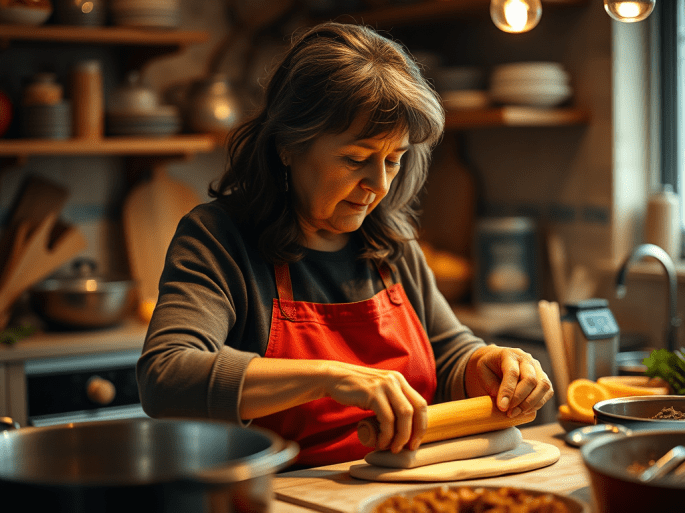
I have been working on getting my recipes out of my head and onto paper. This requires a type of skill that is somewhat foreign to me. I know what to do and how much to add by habit, by reflex even, not by measurement. How do I get the crust of my Lemon Delight just thin enough? I just do. No really, it takes patience and practice to get that little ball of dough flattened out just right to serve as the crust at the bottom of a family favorite dessert. I have to examine whether or not to use the grated frozen butter in my biscuits or if they are good enough just as drop biscuits or pat them out and cut them… Should I share that sometimes I use tarragon in my chicken broth and sometimes I don’t? Do I include it in the recipe if I don’t always use it? It is a labor of love to get my cooking and baking knowledge out of my head and onto paper. I then wondered why I enjoy cooking for people so much. Because I do love to cook and bake. I also had a student ask me once why I didn’t open a restaurant. I think I couldn’t open a restaurant because then the cooking and baking would be an obligation and maybe I wouldn’t love it so much. I don’t ever want to stop loving the cooking and baking that I do for my loved ones. I think that is the secret ingredient in all of my recipes, LOVE. I learned that too, from my Granny and my Mom, and even my Dad the few times he made friend eggs, sausage, gravy and biscuits for breakfast. I’ll get the measurements down eventually. Until then, the following are some thoughts about cooking and why we can use it to connect, especially with the weather getting colder and the holiday season upon us.

Why We Enjoy and Connect with Cooking So Much

Cooking is more than just a means to feed ourselves; it’s a rich tapestry of culture, emotion, and creativity. Whether we’re flipping pancakes on a Sunday morning, crafting a complex dinner for friends, or baking cookies on a rainy afternoon, the act of cooking resonates deeply within us. But what is it about cooking that captivates so many? Let’s explore the reasons behind our love for this age-old practice.

1. Creativity and Self-Expression

At its core, cooking is an art form. It invites us to express ourselves through the colors, flavors, and textures we combine. Each dish we create tells a story, reflecting our preferences, experiences, and even our moods. From experimenting with spices to plating a dish beautifully, cooking allows us to unleash our creativity and try something new. The kitchen becomes our canvas, and the ingredients are our paints.

2. Connection to Culture and Tradition

Food is deeply intertwined with culture and history. Recipes are often passed down through generations, carrying with them the memories and traditions of our families. Cooking traditional dishes can be a way to connect with our heritage, celebrate our roots, and share these experiences with others. This sense of connection can be profoundly comforting, reminding us of home, family gatherings, and shared celebrations.

3. Mindfulness and Presence

In a fast-paced world filled with distractions, cooking offers a chance to slow down and be present. The process of chopping vegetables, stirring a pot, or kneading dough engages our senses and demands our attention. This mindfulness can be therapeutic, providing a break from daily stresses and allowing us to focus on the moment. The rhythmic motions of cooking can create a sense of calm, turning a mundane task into a meditative practice.

4. Nourishment and Care

Cooking is an act of nourishment—not just for ourselves but for others as well. Preparing a meal can be a way to show love and care for those around us. Whether it’s a family dinner, a potluck with friends, or a meal for someone in need, cooking allows us to nurture relationships and foster connections. Sharing food is a universal gesture of hospitality and community, creating bonds that go beyond mere sustenance.

5. The Joy of Discovery

Each culinary endeavor is an opportunity for discovery. Trying out new ingredients, techniques, or cuisines can be an exciting adventure. Cooking teaches us about the world, as we explore different cultures through their food. It challenges our palates and expands our culinary horizons, encouraging us to be adventurous and embrace change. This joy of discovery keeps cooking fresh and exciting, always inviting us to learn more.

6. Sense of Accomplishment

There’s a unique satisfaction that comes from creating something from scratch. The aroma of a dish as it cooks, the beautiful presentation of a plated meal, and the smiles of those who enjoy it all contribute to a sense of accomplishment. Cooking can boost our confidence and reinforce our skills, reminding us that we have the power to create something delicious and meaningful.

7. Community and Togetherness

Cooking often brings people together. Whether we’re cooking with family, hosting a dinner party, or participating in a cooking class, the kitchen can be a gathering place. Sharing the experience of preparing a meal fosters communication, teamwork, and collaboration. These moments create lasting memories and strengthen our bonds with others.

Wrapping it up.

Cooking is a multifaceted experience that goes beyond just preparing food. It allows us to connect with ourselves, our culture, and our loved ones. Whether we’re seeking creativity, mindfulness, or a sense of accomplishment, cooking fulfills a deep human need for connection and expression. So, the next time you find yourself in the kitchen, take a moment to appreciate the joy and richness that cooking brings to your life. Embrace the process, savor the flavors, and celebrate the connections you create along the way. Happy cooking!
G is for GRIEF

Navigating the Personal Journey of Loss

Grief is a profound, often overwhelming experience that touches all of our lives at some point. It’s a deeply personal journey that can emerge from various types of loss—whether the death of a loved one, the end of a relationship, or even the loss of a dream or opportunity. Understanding grief as a lifelong process rather than a linear event can help us navigate its complexities with compassion for ourselves and others.

The Nature of Grief

Grief is not just an emotion; it encompasses a range of feelings, thoughts, and reactions. It can manifest as sadness, anger, confusion, guilt, and even relief. Each person experiences grief differently, influenced by their personality, life experiences, and the nature of the loss.

A Personal Journey

One of the most critical aspects of grief is its deeply personal nature. While there are common stages of grief—denial, anger, bargaining, depression, and acceptance—each individual traverses these stages in their own way and at their own pace. There’s no right or wrong way to grieve; there’s only your way.

  • Cultural Influences: Cultural backgrounds can shape how we express grief. Some cultures openly mourn, while others may emphasize stoicism. Understanding these differences is vital in supporting those around us.
  • Support Systems: The presence or absence of a supportive network can significantly impact the grieving process. Friends, family, and even professionals can provide comfort, yet the way we choose to engage with that support is uniquely ours.

Grief as a Lifelong Process

Many people may expect grief to resolve after a certain period, but it often lingers, evolving over time. This understanding can be liberating; it acknowledges that grief doesn’t have a strict timeline and allows for ongoing healing.

  • Anniversaries and Milestones: Significant dates, like birthdays or anniversaries, can reignite feelings of grief. This resurgence is a natural part of the process and can remind us of the love we still hold for those we’ve lost.
  • Finding New Meanings: As time passes, the way we relate to our grief may change. We may find ways to honor our loved ones, celebrate their lives, and integrate their memory into our own.

The Greater the Grief, the Greater the Love

One of the most profound truths about grief is that it reflects the depth of our love. The pain we feel is a testament to the bonds we shared. This connection is what makes the journey of grief so significant and transformative.

  • Embracing Love: Rather than shying away from grief, embracing it can be a way to honor our relationships. Acknowledge the love that underlies the sorrow; it’s this love that shapes our memories and influences who we are.
  • Creating Legacy: Finding ways to celebrate the life of the person we’ve lost can help channel our grief into something meaningful. This could be through storytelling, creating art, or participating in activities they loved.

Coping with Grief

As we navigate the personal journey of grief, it’s essential to equip ourselves with tools for coping. Here are some strategies that may help:

  1. Allow Yourself to Feel: Give yourself permission to experience all emotions that arise without judgment. Grief is not something to “get over” but something to honor.
  2. Seek Support: Don’t hesitate to reach out for help. Whether through friends, family, or support groups, connecting with others who understand can be immensely comforting.
  3. Express Yourself: Writing, art, and other forms of expression can provide an outlet for your feelings. Journaling about your experience can help you process your emotions.
  4. Practice Self-Care: Grieving can be exhausting. Prioritize self-care through rest, nutrition, and activities that bring you joy or solace.
  5. Consider Professional Help: If grief feels overwhelming, seeking the guidance of a therapist can provide valuable support and coping strategies.

That’s not all folks:

Grief is a complex and deeply personal journey that requires patience and compassion. It is a lifelong process, interwoven with love and memory. Acknowledging that the greater the grief, the greater the love can help us embrace our experiences, honor those we’ve lost, and ultimately find a way to carry their legacy forward in our lives. Remember, you are not alone in this journey; your path is uniquely yours, and it’s okay to take the time you need to heal.

The personal part:

Keeping all of the above in mind, I have become very familiar with grief. It is a personal companion and has been with me since I was 11 years old. My only living grandparent died, my Granny, she was just the best towards me. And she impacted my life in so many ways, from “not sweeping through the middle” to “I love you a bushel and a peck,” helping me count to 100, taking rides through the countryside and everything in between. This is not to discount the losses that followed. It just compounds the grief; I still miss them and all of my other loved ones who are no longer here with me. The grief can be heavy some days. In the beginning, the initial shock, it is kind of easy. Easy, in that no one expects much from you in the beginning. You have the sympathy of everyone around you for your loss, but then it fades. You have to continue to go to work, do laundry, grocery shop, and with each of these tasks you are still very aware that the world you knew has changed forever. But the world keeps spinning even while you are in the throes of grief, life goes on, work still has to be done, bills paid. The routine soothes you a little bit, trying to keep things “normal” while you process what it is that has this grip on you. 

The holidays are always the hardest after a loss. Whether it be a birthday, anniversary or the holiday season following Halloween, they can all be hard. You can honor your loved ones and keep the same traditions, it may feel hollow at first, but there will be new meaning in them. This year I am not only facing the holidays without my parents but without 2 members of my village that always helped to pull me back from the brink when things got rough. I didn’t expect to have to traverse life and grief in losing friends that had become family. Losing the sister from another mister, my daily check in text or call, Audra could make me absolutely crazy with some of her theories but at our hearts we both enjoyed food and flavors and cultures and we raised our babies together. We made last minute poodle skirts together. She helped me expand my horizons. We valued critical thinking and doing what’s best for ourselves even if others didn’t understand. She helped me to embrace who I am. Now our youngest babies are freshmen in high school and she isn’t here to navigate this part. Some days are better than others and I think of her adult children each day. I think of her husband, left behind with a teen boy to raise without his mom. I digress. These things are all part of my daily existence. 

But in learning to let go, it is especially poignant in the fall. In the fall, trees lose their leaves, as they continue to grow. They become a shell of themselves, but we know that in the spring they sprout new leaves. I am taking a lesson from the trees this year. I am going to let go of things, it is hard work, but it is important work. I am going to let go of the past. I am going to cherish memories of loved ones and prepare myself to move forward in this new existence. I will remember each of them in different ways and on different days, but in letting go of how I thought life would be, I am freeing myself of the immense weight that grief can bear down on me. I will keep old traditions that still serve me and maybe create new ones to celebrate this new chapter of life. I didn’t plan for this journey of grief; I don’t think you can. What you can do is appreciate the time that you have and make the minutes count.

Love and light y’all, it can get dark out there. 

More about me and where I am headed…

Finding Opportunity Amid Grief and Financial Concerns

Life has a way of throwing curveballs when we least expect it. Lately, I’ve been navigating a landscape filled with grief and financial uncertainties. It’s a heavy load, and some days it feels overwhelming. But through this challenging period, I’ve started to explore new avenues to not only cope but to thrive.

Embracing Grief and Finding Strength

Grief can be a solitary journey, yet it can also be a catalyst for growth. As I process my feelings of the loss of both people and a career that I worked really hard to get into, I’ve realized the importance of channeling my energy into productive outlets. Writing has become my refuge—a way to express what I’m going through and connect with others who may feel the same.

Financial Concerns: A Wake-Up Call

Alongside my emotional struggles, financial concerns have crept in. Unexpected expenses and a tightening budget have pushed me to rethink my income sources. In this age of digital opportunities, I’ve discovered that there are several ways to generate income that align with my passions and skills.

Diving into Blogging and Copywriting

One avenue I’ve explored is blogging. Sharing my experiences not only helps me process my grief, but it also allows me to connect with a broader audience. Through my blog, I’m able to share insights, stories, and resources that others might find valuable.

I’m also diving into copywriting. The ability to craft compelling narratives and persuasive content can be a lucrative skill, especially as businesses are constantly looking for fresh ways to engage their audiences.

Proofreading: A Detail-Oriented Path

With an eye for detail, proofreading has become another potential income stream. Many writers and businesses seek out proofreaders to polish their work, and I’ve found that this skill can be both rewarding and flexible.

Cooking Up a New Project: A Cookbook

In addition to writing, I’ve always had a passion for cooking. As I’ve spent more time in the kitchen, I’ve been inspired to create a cookbook. Combining personal stories with recipes can be a beautiful way to share my journey and offer something meaningful to others.

Partnering with Primerica

Finally, I’ve recently partnered with Primerica, a company that offers financial services and education. This opportunity not only aligns with my goal of improving my financial literacy but also allows me to help others in their financial journeys. It’s a fulfilling way to turn my financial concerns into proactive solutions.

Connecting with Amazon Affiliate Links

As I embark on these ventures, I’ve also started utilizing Amazon affiliate links on my blog. Whether I’m sharing my favorite kitchen gadgets for the cookbook or recommending books that have helped me through tough times, this can be a great way to earn some extra income while providing value to my readers.

Moving Forward

While grief and financial worries can feel consuming, I’ve found that by leaning into my passions and exploring new income streams, I can create a brighter path forward. Each step—whether it’s blogging, copywriting, or working on my cookbook—feels like a small victory. I’m learning to embrace this journey, and I hope to inspire others to find their own paths through adversity.

If you’re interested in supporting my journey or exploring some of my recommended products, check out the links that I will be posting on my blog. There is also an Etsy shop, TikTok and Instagram pages for content related to mental health and navigating life. Look for Mothersenseshop on social media and of course I will be getting all of the links posted here soon. Together, we can maneuver through these challenges and discover new opportunities for growth. As always, love and light y’all, we can do this!

Navigating Life’s Uncharted Waters

A journey through grief

Life has a way of teaching us profound lessons, often through experiences we never anticipated. As a mom who has navigated the tumultuous waters of grief after losing both parents, my beloved Uncle John, former in-laws, and numerous close friends, I’ve come to understand that while the journey is deeply personal, it is also one that connects us to each other in ways we might not always recognize. Today, I want to share my story, not as a means of seeking sympathy, but to offer a beacon of hope and understanding for those who might be walking a similar path. And grief is a very personal journey and no two paths are the same, please know you are not alone.

The Weight of Loss

Losing my parents was like losing the anchors that held my world steady. They were my guiding stars, my sources of unwavering support, and the keepers of family traditions. Their absence created a void that felt insurmountable. I remember the days following their passing as a blur of grief and disbelief, a cacophony of emotions that seemed too vast for words. And still I don’t feel like words can accurately describe the first few months after we lost my Daddy and Mom.

While still grieving my Uncle John and parents who were so much a part of our daily lives; we also experienced the loss of close friends, and my former in-laws. It all seemed too much, like another wave crashing against my already fragile heart. Each person’s departure brought with it its own kind of pain—a different shade of grief, yet part of a larger tapestry of loss. These were people who had walked with me through various chapters of my life, sharing laughter, tears, and countless memories. Their absence was a reminder of the impermanence of life and the unpredictability of our journeys.

Finding Strength in Vulnerability

Grief is often portrayed as a linear process, but in reality, it’s more like a swirling dance with no clear steps. At first, I sought to shield myself from the raw pain, to put on a brave face for my children and keep life as normal as possible. But eventually, I realized that embracing my vulnerability was not a sign of weakness but a source of strength. Allowing myself to grieve openly meant accepting that my feelings were valid and that it was okay to not have all the answers.

Being honest with my children about our losses was one of the hardest yet most liberating things I did. We talked about their grandparents, uncles, and my friends in ways that honored their memories while allowing us to express our sadness. It became a shared experience, one that, while painful, also brought us closer. Through these conversations, I learned that grief does not need to be a solitary journey; it can be something that unites us.

Creating New Traditions

One of the most healing things for me has been creating new traditions that honor those I’ve lost. It started with small gestures—lighting a candle in their memory on significant dates, creating bouquets for their graves, sharing stories about them during family gatherings, and visiting places that held special significance. Over time, these traditions have evolved into a way of keeping their spirit alive, blending their memory into our everyday lives. As I have one daughter planning a wedding, she will be certain to honor her grandparents and perhaps even her honorary aunt Audra in her upcoming wedding ceremony. This is how we move on. We are forever altered by the loss, but we keep the memories in our hearts, so our loved ones are ever present.

As a family, we began to find joy in creating new memories while still cherishing the old ones. We celebrated our milestones with an appreciation for the past and a renewed hope for the future. One daughter’s graduation was especially poignant, her aunt brought a rose for each grandparent who was missing. It was a way of acknowledging that while the pain of loss is profound, it does not have to overshadow the beauty of living. We celebrated and had a party and there were smiles and laughter and it was good. 

Embracing the Journey Forward

Grief is a lifelong companion, but it doesn’t have to define us. It’s a part of my story, but it’s not the whole story. I’ve learned that healing doesn’t mean forgetting, but rather finding a new way to live with the love and memories of those who have passed. It means allowing myself to experience joy again and to continue moving forward with a heart that has been forever touched by those who are no longer here.

 I recently watched the episode of NCIS where “Ducky” passed away, and although he was old and it was his time, the loss still hurt. Director Vance shared a piece of wisdom with the team that Dr. Mallard had shared with Vance upon his wife’s death, We each die two deaths, one where our body gives out and the other when our stories stop being shared. Profound words to share with those experiencing loss. Don’t stop sharing the stories. It keeps them alive in our memories and even though their physical presence is gone, they do not have to be. 

In my journey, I’ve found solace in connecting with others who have experienced similar losses. It’s through these shared experiences that we find understanding and support. We each have our own paths, but the connections we forge with others who have walked similar roads can be profoundly comforting.

A Message of Hope

If you are navigating the challenging waters of grief, know that you are not alone. Your feelings are valid, and your journey is uniquely yours. Embrace the love and memories of those you’ve lost while allowing yourself the grace to live and find joy again. Grief may change you, but it doesn’t have to diminish your capacity to love and find happiness.

In the end, life’s greatest gift is our ability to love deeply and to be loved in return. Even in the face of loss, the bonds we create and the memories we cherish become a source of strength. As a mom who has felt the weight of grief, I hold onto this truth: that the love we share with those who have left us continues to guide and uplift us through every step of our journey.

In loving memory of so many I have lost over the years, but especially:

Sandi Rene Marbut July 1993

Ila Kilcrease July 1987

John Henry Eaves June 2019

Sharena Kay Lovett May 2020

Rufus Oran Kilcrease October 2020

Emeline Marie Kilcrease November 2020

Deborah Kay Nelson April 2023

Garry Paul Roeber May 2023

Audra Marie Talley March 2024

Marcey Elaine Riley May 2024