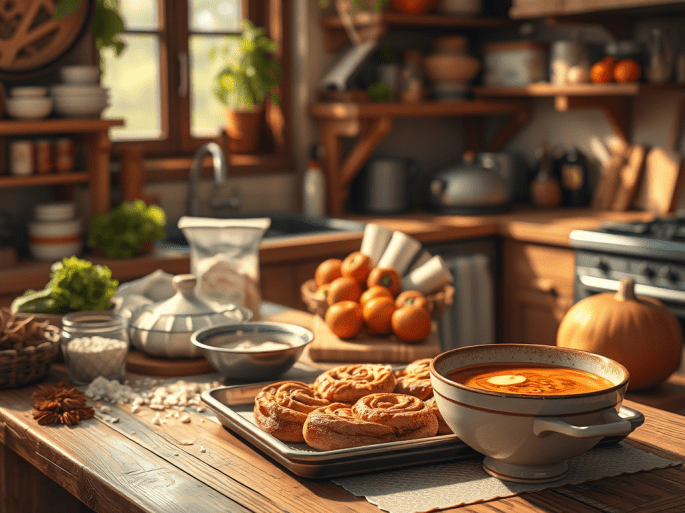
Therapeutic Cooking: Finding Peace in Recipes

Finding Peace in the Kitchen: Cooking My Way Through the Chaos

Lately, I’ve been spending a lot of time in the kitchen — testing recipes, adjusting ingredients, and finding creative ways to use what I already have on hand. It’s not just about food; it’s about coping. It’s how I manage the discombobulation of my feelings, the uncertainty of the world, and the heaviness that sometimes tries to creep in. Cooking keeps my hands busy, my mind focused, and my heart grounded.

My kids are loving this little culinary journey — they’ve become my official taste testers. Not every recipe is a winner, but that’s part of the fun. My cinnamon rolls, for example, turned out tough and not fluffy at all. Instead of tossing them, I chopped them up, added a custard base, and turned them into a cinnamon roll French toast bake. It was a hit! Proof that even “failed” recipes can have delicious second lives.

I’ve been challenging myself to waste less and create more. Leftover taco meat, beans, Spanish rice, and corn turned into a comforting fall soup — some went straight into the freezer for another day. A close-dated can of fruit cocktail became the unexpected star of my “sweet heat salsa” when I mixed it with some red pepper flakes. I poured it over a pork roast, served it with mashed potatoes, and let me tell you — it was so good. Simple, cozy, belly-filling goodness.

Cooking every day — baking bread, making tortillas, mixing my own seasonings — has become more than a necessity. It’s a form of therapy. It helps me stay present and productive while I navigate this time of year, which has been difficult for me for a number of years. Recently, I restocked my pantry: flour, sugar, baking powder, cocoa, beans, potatoes, meats… all the staples that keep a kitchen humming. It gave me a strange sense of comfort and accomplishment — a reminder that even when life feels uncertain, there’s something deeply grounding about being able to nourish my family.

Sometimes, I think about my mom, Granny, Aunt Mertie, my former mother-in-law, and my Daddy. They all enjoyed my cooking, especially when my experiments turned out well. I think they’d be proud of me now — keeping their traditions alive while adding my own twist.

This — the mixing, the kneading, the simmering — this is how I cope. It’s how I manage the overwhelm, the grief, the unknown. It’s creative, it’s practical, and it fills both the stomach and the soul.

So if you’re feeling weighed down by the world or by your own thoughts, maybe try stirring something up in your kitchen. You might just find a bit of peace in the process, too.

Love and light, y’all.
And remember — you matter.

The Impact of Loss: Lessons in Love and Resilience

“It’s Just Going to Keep Happening” — Thoughts from a Hard Day

Had the displeasure of making one of the worst phone calls recently — calling an old friend to let him know that someone we both knew had passed away. At the funeral he mentioned: “It’s just going to keep happening.” Raw and honest, those words hit me like a brick.

He’s right. And in that moment, I don’t think I fully appreciated how true those words were. People are going to keep dying. And we’re going to keep seeing each other in these moments of loss — in funeral homes, church pews, or standing around telling old stories while blinking back tears. I hate it. I did not like it, Sam I Am.

I don’t like thinking about them — or myself — continuing to experience more loss.
It sucks. Plain and simple.

Losing someone cracks you open. Then, as if that isn’t enough, it rips open the memories of everyone you’ve already lost. Wowsers, indeed.

At this particular funeral, my heart hurt the most for the younger folks.
Boys left without a father at such pivotal ages.
That kind of loss leaves a scar that never quite fades. You can only hope they’re surrounded by love and support, and yes — that there’s at least some life insurance to help carry the burden financially. I didn’t sales pitch anyone (ew, that would be gross), but as someone who works in that world, I can’t help but think about it. Even just enough coverage to help with the cost of the funeral can make a world of difference when grief already feels like too much.

But I digress…

Life just keeps going, doesn’t it?
We pause, we grieve, we say goodbye — and then, somehow, we go right back to the hamster wheel. Back into the day-to-day of it all.
Loss is hard. Devastating. But we, the ones left behind, can’t let it drag us too far down. That’s the real danger of grief — it can pull old habits back to the surface. It can make you want to numb everything out, to self-medicate, to escape.

So, here’s a reminder to myself and to you:
That doesn’t work.

Shoving the feelings down, pretending they aren’t there — that won’t help.
The only way is through it.

Both of my parents were the last of their siblings. I can’t imagine how lonely that must’ve been. But they didn’t wallow. They were a special kind of tough, and they taught us that you never truly get over a loss. You just learn to carry it. Some days you’ll do great. Some days you won’t. That’s the truth.

So let’s remember something today:
People are out here doing the best they can.
Maybe today, you can give someone a little extra grace, a little more patience, a touch more compassion. We need more of that. Because, like it or not, none of us are getting out of here alive.

And that dash on the tombstone — you know the one.
The dash between your birth and your death?
That’s what counts.

Let’s go out there and make that dash matter.

Peace. Love. And Pickle Juice.
– Julie

Embracing Imperfection: Finding Grace in Struggle

I’m Letting You in on a Little Secret…

I’m going to let you guys in on a little secret: I do not have all of my ducks in a row!

Shocking, right? I know a little bit (or maybe a whole lot) about a great deal of things — cooking, baking, sautéing, homemaking, making money stretch — you name it. I’ve built real skills over the years, and I take pride in them. But even with all that knowledge, I still have those days. The ones that make me want to crawl back into bed and pull the covers over my head. The days that drag on so long and hard that I catch myself wishing the time away.

Yes, I know how to make money work for me, but I’ll be honest — once the needs are covered, I still struggle. Do I treat myself to something nice? Save it for later? Spend it on my kids? The internal debate is real.

I live with PTSD and anxiety. I get “blue” days — not what I’d call depression, but heavy enough that I feel it in my bones. I’ve seen true depression up close — in my children, in my ex-husband, in others I love — and it has taught me a lot about compassion, patience, and grace.

Some days, I’m full of energy and optimism, ready to take on the world. And other days… I’m lucky if I can get supper cooked. And that’s okay. I’ve learned that even with all my knowledge — about money, about mental health, about coping — some days just aren’t it.

On those days, I have to remind myself: give yourself grace. Say, “Enough. Be still. Rest.” You don’t have to do it all — especially today.

But here’s the tricky part: rest can easily turn into avoidance if we’re not careful. It’s important to recognize what’s going on and act accordingly. Listen to your instincts. Listen to your body. Rest when you need to — but also, when it’s time, get up and move.

Take the shower. Bake the bread. Step outside and touch grass.

We’re all learning in this life — every second, every day. We just have to keep showing up.

And if you ever feel like you fell short or owe someone an apology — do it, mean it, and move on. Know better, do better. Every. Single. Day.

Love and light,
💛 Julie

Conquer Financial Stress: Budgeting Strategies for Mental Wellness

Too Much Month at the End of Your Money? Let’s Fix That

Money stress hits hard — and not just your wallet. It weighs on your mind, affects your mood, and can make even simple decisions feel overwhelming. If you’ve ever found yourself staring at your bank account wondering how there’s still so much month left at the end of your money, you are not alone.

The truth is, financial strain can take a serious toll on your mental health. But with the right plan, some practical tools, and a little bit of grace, you can turn that stress into confidence and stability.


Step One: Understand Where Your Money Is Going

Before you can get ahead financially, you have to get real about where your money is going. Start by dividing your spending into two main categories:

✅ Needs

The essentials that keep you and your family safe and secure — food, housing, clothing, transportation, insurance, and healthcare.

💸 Wants

The things that add fun, convenience, or comfort — eating out, streaming subscriptions, impulse purchases, hobbies, or luxury items.

When you clearly see the difference between needs and wants, you can make smarter choices about where your money goes — without feeling deprived.


Step Two: Create a Flexible Financial Game Plan

A budget shouldn’t feel like a punishment. It’s a tool that helps you take control. And I can help you build one that actually works for your lifestyle.

Here’s how we can start:

  • 🍲 Budget-friendly meal ideas that taste great and stretch your grocery dollars.
  • 🛒 Meal planning and prep strategies to save you time (and reduce stress).
  • 📱 Smart grocery hacks — couponing, delivery services, and avoiding impulse buys.
  • 💰 Insurance and legal guidance, from understanding coverage to writing your will.
  • 🧓 Retirement planning, even if you feel “behind.”

And when life throws a curveball — like a surprise car repair or medical bill — your plan should be strong and flexible enough to adjust without derailing your progress.


Step Three: Protect Your Mental Health

Money stress can creep into every corner of your life if you let it. That’s why it’s so important to take care of you while you’re taking care of your finances.

Here are a few simple ways to stay grounded:

  • Take a walk and get some fresh air.
  • Try deep breathing or shoulder rolls to release tension.
  • Do yoga or stretch for a few minutes.
  • And yes — go outside barefoot and touch grass. It really does help.

For me personally, grocery delivery has been a sanity-saver. I avoid impulse buys, stick to my list, and save time and energy. The delivery fee? Totally worth it. Plus, meal planning keeps our household running smoothly — we rarely eat out, and rotating a few favorite meals keeps things simple and affordable.


Step Four: Give Yourself Grace

Financial change doesn’t happen overnight. It’s about progress, not perfection. Some weeks will go smoothly, and others will feel messy — and that’s okay. What matters is that you’re trying, learning, and adjusting along the way.

Remember: you don’t have to do this alone.


Let’s Take the Stress Out of Your Finances — Together

If you’re tired of feeling overwhelmed and ready to take control of your money and your mental health, I’m here to help.

Whether you need:

  • A custom budget plan that fits your life
  • Affordable meal ideas and grocery strategies
  • Guidance on insurance, legal, or retirement planning

…I’ve got you. Let’s work together to build a plan that gives you peace of mind and helps you breathe easier — financially and emotionally.

👉 Schedule a Consultation : Julie Kilcrease

JKILCREASE@primerica.com United States Texas : ‪(254) 677-7510‬

Understanding Domestic Violence: More Than Just Leaving

October: Domestic Violence Awareness Month — It’s Not as Simple as “Just Leave”

October is more than pumpkin spice and falling leaves — it’s also Domestic Violence Awareness Month. A time to shine a light on a shadow that exists in too many homes, behind too many closed doors, often in silence.

I have loved people who were involved in domestic violence situations. I have witnessed the pain, the confusion, the trauma — and the resilience. And I want to be very clear: It is never as simple as “just leave.”

We often hear that phrase from the outside looking in. It’s easy to believe that leaving an abusive partner should be a quick decision — that once the abuse is recognized, the path forward is obvious. But those of us who have walked alongside someone in that situation — or have lived it ourselves — know better.

Domestic violence isn’t always black eyes and bruises. It can be emotional manipulation, financial control, isolation, threats, gaslighting — or a combination of all these things. Abusers often wear masks to the world, and behind closed doors, they strip their partners of safety, confidence, and independence.

The truth is, leaving can be the most dangerous time. According to the National Coalition Against Domestic Violence (NCADV), more than 70% of domestic violence-related murders happen after the victim has left or is in the process of leaving. That’s not just a statistic — that’s a heartbreaking reality.


The Complexity of Abuse

Here’s why “just leave” doesn’t cut it:

  • Emotional ties: Abusers often use manipulation and trauma bonding, making the victim question their own worth, memories, and even reality.
  • Financial dependence: Many survivors have no access to money, bank accounts, or employment. Financial abuse traps them in fear of homelessness or inability to care for children.
  • Fear: Of retaliation. Of the unknown. Of the legal system. Of being believed.
  • Children: Survivors worry about custody battles, safety of their kids, or the trauma of uprooting their lives.

The cycle of abuse is real. It’s not linear. Survivors might leave and return multiple times before finding a way out for good. That doesn’t mean they’re weak — it means they’re surviving the best they can in an incredibly complex and dangerous situation.


What You Can Do

You don’t have to have all the answers to help someone. You don’t need a magic solution. Sometimes, just being there is the most powerful act of love.

  • Listen without judgment. Let them speak. Let them cry. Let them not talk about it if they’re not ready.
  • Let them know you’re a safe place. Say: “I believe you. You don’t deserve this. You’re not alone.”
  • Don’t pressure them to leave. Instead, help them build a plan when they’re ready. Offer resources. Offer your presence.
  • Be patient. Healing and action take time.

If You or Someone You Know Needs Help

There are organizations ready to support survivors — with safety planning, emergency shelter, legal help, therapy, and more.

📞 National Domestic Violence Hotline

1-800-799-SAFE (7233)
Or text “START” to 88788
http://www.thehotline.org

Available 24/7. Confidential. Free.

🟣 Love is Respect (for young people/teens)

Text “LOVEIS” to 22522
http://www.loveisrespect.org


A Few More Statistics to Remember

  • 1 in 3 women and 1 in 4 men have experienced some form of physical violence by an intimate partner.
  • On a typical day, more than 20,000 phone calls are placed to domestic violence hotlines across the U.S.
  • Domestic violence is the leading cause of injury to women — more than car accidents, muggings, and rapes combined.

To anyone who is in a violent or emotionally abusive relationship:
You are not alone. You are worthy of safety. You are not crazy. You are not weak. You are loved.
You may not be ready yet — and that’s okay. When you are, we will be here.

To the rest of us: Be the safe place. Be the soft landing. Be the friend who listens and believes — without pushing, without judgment.

Because love isn’t supposed to hurt.
Because silence doesn’t heal.
Because awareness leads to action.

Love and Light, People. 💜