Following up on our reflection about the “Three Gs” and the reality of a forced pause, I’ve been thinking a lot about what happens after you hit the brakes. When you’re used to running full steam ahead, a sudden slowdown can make you feel completely untethered. The grand routines and massive project plans you mapped out suddenly feel impossible to touch.
That is exactly where the beautiful intersection of Habits, Home, and Harmony comes in.
When life is running smoothly, we tend to treat habits like productivity hacks to get more done. But when you are dealing with health challenges, unexpected grief, or the heavy weight of a shifting season, habits look entirely different. They cease to be a checklist for achievement and instead become the gentle framework that protects your peace.
True “mother-sense” isn’t about maintaining a rigid, unbreakable schedule when your body or heart is screaming for rest. It’s about creating harmony in the space you inhabit.
When your big plans are paused, try shifting your focus to these three connected pillars:
Habits ⚓️(The Anchors): When you can’t run full steam, let your habits shrink to match your actual capacity. It’s no longer about a massive morning routine; it’s just sitting with a hot mug for five minutes of intentional quiet, or a tiny, five-minute evening sweep to clear off one countertop. These small acts are the quiet evidence that you are still tending to your world.
Home 🏡(The Sanctuary): Your home shouldn’t feel like a demanding boss with a never-ending list of chores—especially when you are trying to heal. Right now, let your home be a soft place to land. Organizing and maintaining order isn’t about perfection; it’s about creating a space that wraps its arms around you and gives your mind a quiet place to rest.
Harmony 🎶(The Flow): Harmony is what happens when your habits and your home align with your current reality, rather than your expectations. It’s the sweet spot where you stop fighting the pause and instead learn to flow with it. It’s knowing when to tighten up the systems and when to simply let things be, trusting that the balance will return.
When you can’t run, these small focus areas ensure you don’t drift away. They keep your spirit in order while your body catches up.
If you are navigating a season of forced rest or shifted expectations, let go of the pressure to conquer the world. Turn inward. Look at your immediate surroundings. What is one tiny, comforting habit you can practice today to bring a little more harmony into your home?
Tag: health
The Soundtrack of May: Finding the Melody in the Transition

There is a specific frequency to May in this part of Texas. The “blackland” is vibrant, the mornings still hold a lingering coolness, and the world feels like it’s humming a brand-new tune. As a songwriter, I can’t help but listen for the rhythm in it all—the way the wind catches the fence line or the steady, rhythmic chirping of the birds before the afternoon heat settles in.
By May 1st, we aren’t just “planning” for growth anymore; we are living right in the middle of it. If April was about the quiet work of the roots, May is the full-blown chorus.
Listening to the Layers
In a good song, the layers have to work together. You have the steady beat of the drums (the daily chores, the family schedules, the “must-dos”) and the soaring melody (the dreams, the creative sparks, the “could-bes”).
Lately, I’ve been practicing the art of listening to those layers without getting overwhelmed by the noise.
The Steady Beat: The familiar sounds of a full house—the laughter, the front door swinging open, the clatter of life. It’s the anchor that keeps everything else grounded.
The Creative Counterpoint: That sudden lyric that hits you while you’re folding laundry or the melody that starts to form while you’re out walking. It’s the reminder that even in the busiest seasons, there is room for a new song.
Changing the Key
Sometimes, life asks us to change the key. Maybe the pace is picking up, or the “sound” of your season is shifting from a quiet acoustic ballad to something a bit more upbeat and demanding. That shift isn’t a bad thing; it’s just a transition.
I’m learning that you don’t have to fight the change in tempo. You just have to find your footing in the new rhythm.
Whether you are navigating a career shift, a creative milestone, or just the changing needs of your family, there is a melody there if you’re quiet enough to hear it.
What is Your Song Today?
Take a second today to really listen—not just with your ears, but with your heart.
What is the “hook” of your life right now?
Is it a song of peace, a song of hustle, or a song of quiet resilience?
As we step into May, I’m keeping my notebook close and my heart open to the music of the everyday. There is so much beauty in the transition if we just stop to hear it.
I’d love to know: if your life had a soundtrack right now, what would the genre be? Let’s talk about the music of our lives in the comments!
The Second Half of the Season: Finding Our Bloom
There is a specific kind of quiet that happens right before spring really takes hold. In the songwriting world, we talk a lot about “the hook”—that moment where everything clicks and the story finds its rhythm. Life has those moments, too, but they often come after a season of being dormant.
As we move into late April, I’ve been thinking a lot about what it means to enter the “second half” of a journey. Whether it’s a creative project, a career shift, or just a new chapter in a family’s story, the transition isn’t always loud and flashy. Sometimes, it’s just a steady, quiet reclaiming of who you are meant to be.
Resilience in the Roots
In this part of the country, the earth is tough. It takes a certain kind of strength for a seed to push through that heavy soil. I think we’re a lot like that. We carry the weight of our past seasons—the winters that felt a little too long or the storms that shook our fences—but we still find a way to reach for the light.
Defining Your Narrative
One of the most powerful things we can do is decide how our story is told. For me, that’s happening through music and words, finding the melody in the transitions. But you don’t have to be a songwriter to rewrite your rhythm.
Listen to the change: What is the “new song” in your life right now?
Honor the growth: Even if you aren’t exactly where you planned to be, look at how far the roots have gone down.
Accept the timing: Some things bloom early; some take their time. Both are beautiful.
Looking Ahead
As the days get longer and the “Mother-Sense” kicks in, I’m leaning into the gratitude of being right here, right now. The heaviness of winter is lifting, and there is a lot of music yet to be written. And I am preparing for the worst and hoping for the best. ❤️
How are you finding your rhythm this month? Is there a part of your story that is finally starting to bloom?
Do you have things you need to protect if the storms do come??
Let’s chat!
The Becoming : Pride in the midst of chaos
Both Things Can Be True
This past week felt like a culmination of so many moments for my niece.
She is my older sister’s only child, and she is truly a gem of a human—kind, smart, hardworking, and quick with a perfectly timed sassy comeback when the moment calls for it. It’s her senior year, and with that comes all the lasts of high school, not just for her, but for her mom too. Anyone who has parented a senior knows those endings hit in unexpected ways.
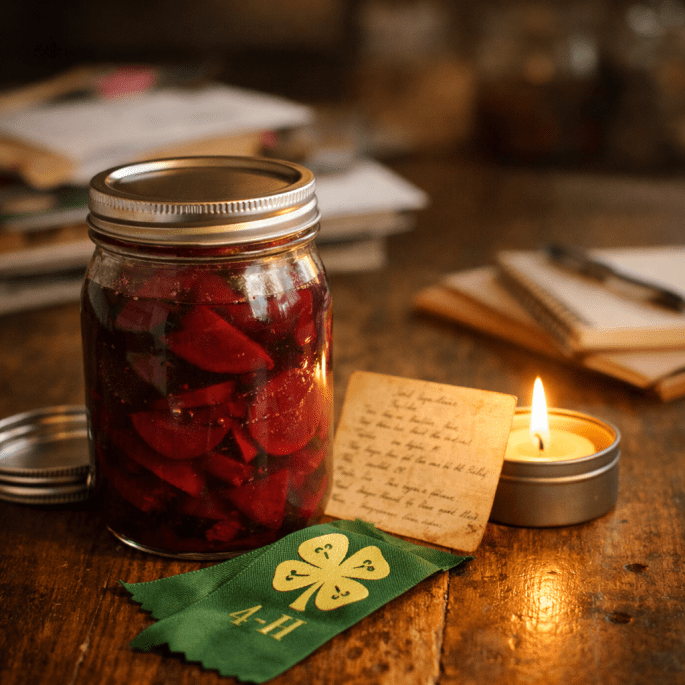
My niece is a 4-H and FFA gal, a band kid, and a Girl Scout. Through these programs she has learned responsibility, leadership, grit, creativity, and how to show up even when things are hard. I am so incredibly proud of her accomplishments. At her last county show, she earned Reserve Champion with pickled beets (yes—pickled beets!), and her market broilers made the sale. Those are not small wins. They are the result of years of early mornings, late nights, dirty boots, careful planning, and persistence.
Another “last” arrived quietly when I had the chance to talk with my sister about what comes next for her baby—her everything. And make no mistake, this kid has options. Several schools have already accepted her, and some came with scholarship packages. That is huge. That is exciting. That is the payoff for all those years of busyness and commitment.
It sent me straight back in time to my own years as a mom with kids who showed. The careful choosing of recipes. The guarding of certain ones like state secrets (banana butter, I’m looking at you). The pride of watching your kids take ownership of their work. Even my two older daughters—without any guidance from me—entered items and won prizes. There is something deeply satisfying about watching your children surprise you with who they are becoming.
All of that nostalgia, love, and pride has been swirling around me this week… while my own life looks a bit like a shit show.
Our water heater quit and is limping along on a temporary fix after days without hot water. I’m dealing with a kidney infection and a pharmacy run that couldn’t come soon enough. Our car is broken down and has a flat tire. My husband had a job lined up, attended orientation, only to be told days later that the position had already been filled. And just to round things out, I sliced my fingers open trying to pry a tin can (yes, I absolutely should know better), which earned me an ER visit, a tetanus shot, glued fingers, a wrapped thumb, and the loss of a good portion of my thumb pad. Goodbye thumbprint.
And yet—both things can be true.
I can feel immense love and pride for my niece and her accomplishments while my own world feels messy, loud, painful, and frustrating. I won’t fall into woe is me. This is my life. It is complicated and exhausting and sometimes downright ridiculous. There are days I want to strangle someone (figuratively… mostly). But then there are days when I glance in the rearview mirror and realize how far I’ve come.
I’ve survived every single thing I thought would break me.
That survival rate? 100%.
Am I the same person I once was? Absolutely not. But isn’t that the point? Life is about the becoming. About collecting skills, wisdom, scars, and stories. About learning how to stand back up. About making the world a little better where we can—just like my lovely niece is already doing.
And yes, you’d better believe I can still recite the 4-H pledge, parts of the FFA Creed, and the Girl Scout Promise.
Here’s to the becoming in 2026.
Love and light, y’all 🕯️

Christmas Togetherness: Embracing Love and Laughter
Christmas This Year
This Christmas season started off a bit heavy for me. I’ll be honest — I was sad for quite a bit, pretty much right up until our family’s Christmas Eve celebration.
That night, I sat at the end of the kitchen table and turned my head toward the living room as the littles opened their gifts. The sound that filled the house — the giggles, the pure laughter of children — there truly isn’t a better sound in the world. I teared up for a moment because that right there is exactly why I came.
I thought to myself, Mom and Daddy would be proud. They must be smiling down on us, because this—this togetherness, this joy—is all they ever wanted for us: to be together, to be present in each other’s lives, and to genuinely enjoy it.
Once the kids finished opening their gifts, it was the adults’ turn to shine as we mingled and prepared for our “Chinese Christmas” gift exchange. It was a blast — there were surprises, steals, laughter, and that wonderful mix of chaos and cheer that only family can create.
Then my sisters introduced a new game — one where you pass a gift left or right as a silly story is told, customized with everyone’s names. Each player put in a dollar, and a “Golden Ticket” prize would go to the winner, collecting the cash from everyone’s entry. It was silly and fun and full of laughter, just the way it should be.
My youngest got a few really thoughtful gifts this year, and at one point, he realized he only has two more years left of being “one of the kids.” That hit me — it made me pause and reflect. I have seven kids I call my own: five I gave birth to and two girls I’ve loved like my own for years. Four of them now have incredible partners — kind, caring, compassionate individuals who truly see who my children are and love them, flaws and all.
Even with a few behind-the-scenes hiccups (let’s just say there was a grocery order debacle, a brief moment of running out of gas, and yes, my husband losing his job), it was still a blessed Christmas.
Because at the end of the day, being surrounded by love, laughter, and the people who matter most — that’s what Christmas is all about.

