
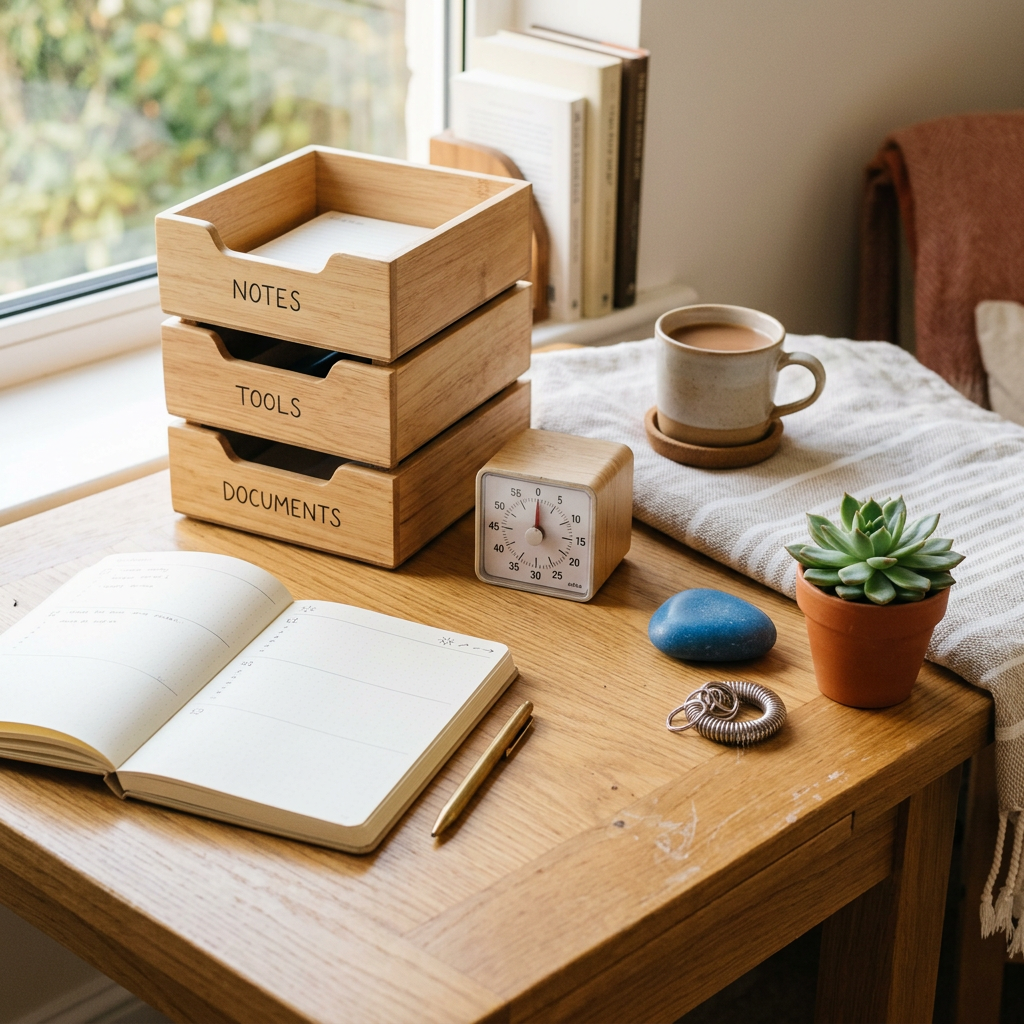
If you’ve ever felt like your brain has 50 browser tabs open—and five of them are playing different music you can’t pause—you know the intense world of ADHD and executive dysfunction.
As we celebrate National ADHD Awareness Month this October, we’re peeling back the layers on how neurodivergent brains process the world. Today, the letter S brings us to two deeply interconnected concepts: Sensory Overload and Structure.
1. Recognizing Sensory Overload: When the World Gets Too Loud
For many people with ADHD, the brain’s “sensory filter” works differently. Bright fluorescent lights, overlapping background conversations, a buzzing refrigerator, or a cluttered desk aren’t just minor distractions—they physically dysregulate your nervous system.
- What it feels like: When too much sensory input hits at once, your executive function freezes. It can trigger sudden irritability, emotional fatigue, brain fog, or an urge to completely retreat.
- Why it happens: ADHD involves differences in how the brain filters incoming stimuli. Instead of background noise automatically being muted, your brain tries to process everything at maximum volume simultaneously.
Recognizing these triggers is the first step toward self-advocacy. You aren’t being “overly sensitive”; your nervous system is simply overwhelmed.
2. Building Structure (Without the Shame)
When sensory overload sets in, traditional advice like “just buy a planner” or “make a rigid schedule” often fails—and leaves behind a cloud of shame.
Real structure for an ADHD brain isn’t about rigid perfection; it’s about creating scaffolding that protects your energy and reduces baseline cognitive load.
Here are four ways to build structure that actually works with your brain, not against it:
- Simplify the Visual Space: Clear off your immediate visual workspace before starting a task. Reducing visual clutter instantly lowers baseline “brain noise.”
- Externalize Everything: ADHD brains struggle with working memory. Get thoughts out of your head and onto sticky notes, whiteboards, or voice memos. If you can see it, you don’t have to spend energy remembering it.
- Support Your Senses: Proactively manage your sensory input. Pair focused work with noise-canceling headphones, a weighted lap pad, ambient lighting, or fidget tools to help ground your nervous system.
- Build Low-Friction Routines: Design “minimum viable routines” for hard days. If a 5-step morning routine feels impossible, reduce it to the one core step that grounds you (like drinking a glass of water or stepping outside for 2 minutes).
The Key Takeaway
Your brain isn’t broken—it just processes the world with heightened intensity.
Structure shouldn’t feel like a cage; it should feel like a support beam. Give yourself full permission to adapt your environment, change the rules, and build systems that make sense for your nervous system.

